CleanSpark's Data Center Pivot
CleanSpark Secures $11.6 Billion Georgia Data Center Lease, Signals Broader Texas Growth
Anonymous
Key Points
1
CleanSpark estimates landlord capex to build the Sandersville facility at roughly $10–12 million per megawatt, which supports a near-100% NOI margin and about $330 million in average annual NOI over the lease term.
2
The Sandersville campus has its origins in CleanSpark’s 2022 acquisition of a Mawson Infrastructure Group facility, originally intended to expand Bitcoin mining and now serving as the foundation for its data center platform.
3
Texas details: the exclusive Texas portfolio covers 718 acres with up to 885 MW of secured and planned power capacity, including 271 acres near Sealy with nearly 300 MW and 447 acres at Brazoria supporting an initial 300 MW load (with potential to expand to 600 MW).
4
The LOI and exclusivity in Texas are not binding production leases at this time; the Georgia lease provides the clearer near-term cash flow signal, with the larger-scale Texas relationship contingent on whether exclusivity converts to signed leases and actual delivery milestones.
CleanSpark has signed a 20-year triple-net lease for its Sandersville, Georgia data center campus, locking in roughly $6.6 billion in contracted revenue with an unnamed high-investment-grade global technology company, according to Benzinga and Yahoo Finance. The deal covers 175 megawatts of capacity, with delivery planned for the fourth quarter of 2027.
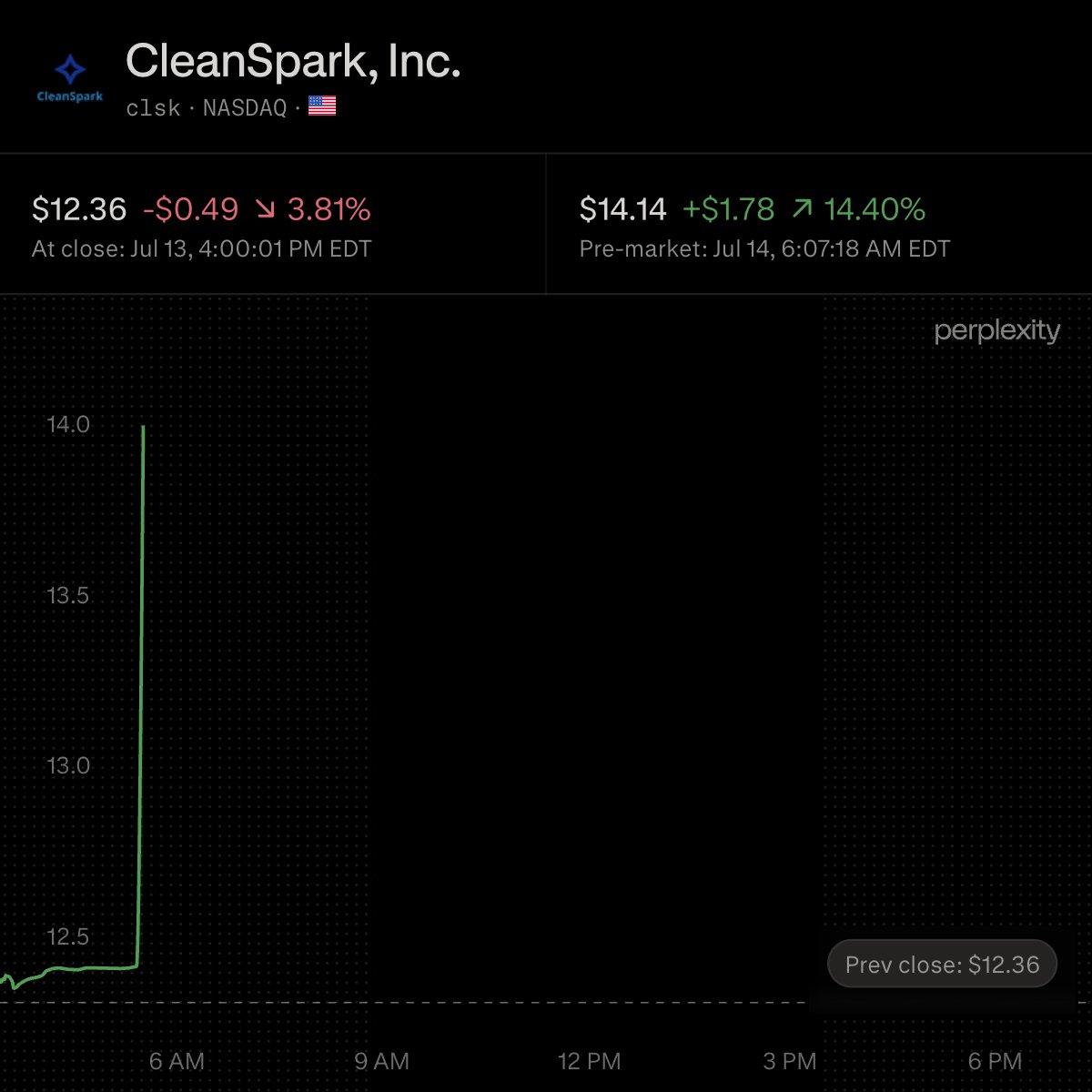
The lease could grow to $11.6 billion in total value if both five-year extension options are exercised, Yahoo Finance reported. The announcement sent CleanSpark shares surging more than 10% in a single session.
A $330 Million Annual Cash Machine in Georgia
The Sandersville lease is structured as a triple-net deal. That means the tenant pays most operating costs, leaving CleanSpark with nearly pure profit. The company estimates average annual net operating income of roughly $330 million over the lease term, according to Value The Markets.
CleanSpark pegs its landlord construction cost at $10 to $12 million per megawatt. At 175 MW, that puts total build-out spending at roughly $1.75 to $2.1 billion. The near-100% NOI margin means almost every dollar of rent flows straight to the bottom line, Value The Markets noted.
Sandersville Campus Roots in a 2022 Bitcoin Mining Buy
The Georgia site was not originally built for AI or cloud computing. CleanSpark acquired it in 2022 from Mawson Infrastructure Group, intending to expand its Bitcoin mining footprint, according to Value The Markets. The campus has since been repositioned as the foundation for a broader data center platform.
That pivot from crypto miner to digital infrastructure landlord is the central story here. CleanSpark is now monetizing land and power assets, not just hashing blocks. The Georgia lease is the clearest proof yet that the strategy is real and generating binding cash flows, Benzinga reported.
Texas Letter of Intent Signals a Much Bigger Relationship
Alongside the Georgia lease, CleanSpark announced a letter of intent and exclusivity covering its entire Texas portfolio. That footprint spans 718 acres and up to 885 megawatts of secured and planned power capacity, according to Yahoo Finance. The Texas sites include 271 acres near Sealy with nearly 300 MW and 447 acres in Brazoria supporting an initial 300 MW load, expandable to 600 MW.
Analysts caution that the Texas commitment is still just a letter of intent — not a binding production lease. No delivery milestones or revenue figures are locked in yet. The Georgia deal provides the clear near-term cash flow signal; Texas is the upside scenario if exclusivity converts to signed leases, Benzinga noted.
From Crypto Miner to Digital Infrastructure Company
If the Texas exclusivity converts to full leases, CleanSpark's revenue profile would look far more like a real estate or infrastructure company than a Bitcoin miner. That shift matters for valuation. Infrastructure companies typically trade at higher multiples than crypto miners, Value The Markets noted.
The unnamed tenant is described only as a high-investment-grade global technology company. Analysts and investors are speculating about which hyperscaler signed the deal. CleanSpark has not disclosed the name. The mystery tenant's identity, once revealed, could be a major catalyst — or a non-event — depending on the name, according to Market Screener.
Sentiment
Mostly PositiveNEGATIVENEUTRALPOSITIVE
Publishers
29
Articles
75
Reach
104
A
AnonymousAuthor


