China's Rolling Mill Breakthrough
China's Rolling Mill Sector Reaches 1800 m/min Era with Key Domestic Innovations and Patents
Anonymous
Key Points
1
MCC Jingcheng's domestically designed high-speed pickling and rolling unit reached 1800 m/min in a trial at Shandong Huichuang, marking a concrete step into the 1800 m/min high-speed era with local equipment.
2
The forging tooling system patent, developed through collaboration between Tianjin Chongyan and China First Heavy Industries, targets issues of internal flaw detection failure and surface cracks in forgings to cut production costs and improve reliability.
3
Shenke Co. is advancing core rolling-motor components, with sliding bearings designed to be compatible across multiple mills (hot and cold), enabling stable operation under ton-level rolling forces and supporting broader domestic substitution of key components.
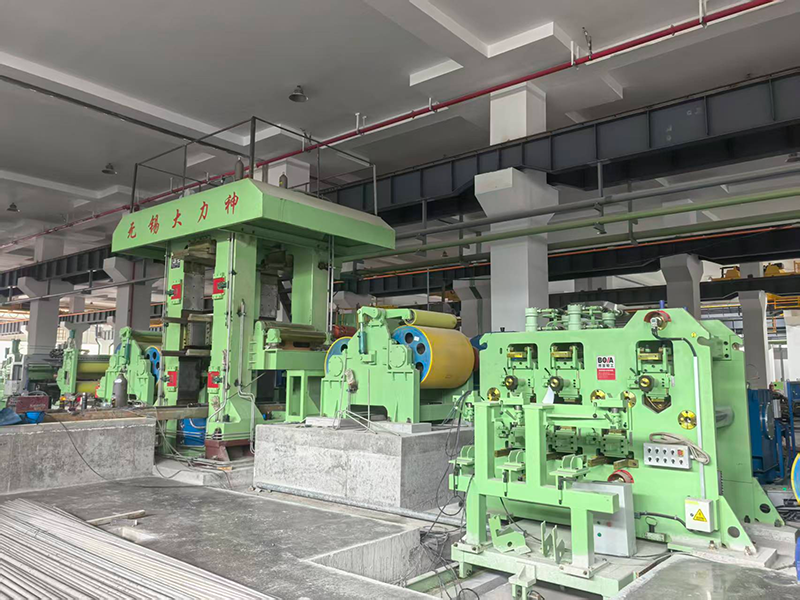
China's tandem rolling mill industry has hit a significant milestone: a domestically built high-speed pickling and rolling unit reached 1,800 meters per minute during a trial run at Shandong Huichuang, according to Financial Content. That speed matches the world's fastest cold-rolling lines — and this one was built with local equipment, not imported technology.
The breakthrough is part of a broader wave of progress since May 2026, Press Release CC reported. Chinese steelmakers and engineers are pushing hard to replace foreign high-end machinery with homegrown alternatives — a drive known as domestic substitution.
MCC Jingcheng Hits 1,800 m/min in Live Trial
MCC Jingcheng designed the high-speed unit entirely in-house. The trial at Shandong Huichuang proved the line could sustain 1,800 m/min — a speed previously only achieved using imported equipment. Financial Content called it China's entry into the "1,800 m/min high-speed era."
Pickling lines remove rust and scale from steel strips before cold rolling. Doing that at 1,800 m/min without defects demands extreme precision. Pulling it off with domestic machinery signals a major leap in Chinese engineering capability.
New Patents Target Cracks, Costs, and Strip Cleanliness
Shougang Zhixin filed a patent to reduce residual oil and iron left on cold-rolled steel strips after processing. Dirty strips cause defects in finished products. The fix directly improves quality without adding major cost, according to Financial Content.
Separately, Tianjin Chongyan and China First Heavy Industries jointly developed a forging tooling system for rolling mill support rolls. The patent targets two persistent problems: failed internal flaw detection and surface cracks in large forgings. Both issues drive up production costs and force mills to scrap expensive parts. The new system cuts those risks, Press Release CC reported.
Shenke Sliding Bearings Built to Work Across Multiple Mills
Shenke Co. is developing sliding bearings — a core component inside rolling motors — that work in both hot and cold rolling mills. That cross-compatibility matters. Most bearings are built for one type of mill. Shenke's design allows a single part to serve multiple lines, cutting inventory and maintenance costs.
The bearings are rated to handle ton-level rolling forces during continuous operation. Press Release CC noted they support the wider national push to swap out foreign-made critical components for domestic ones — part of China's broader industrial self-reliance strategy.
Wuhan Ganye Process Boosts Silicon Steel Magnetic Quality
Wuhan Ganye unveiled an eighteen-roll, six-stand cold rolling process aimed at grain-oriented silicon steel. That type of steel is used in power transformers, where magnetic efficiency is critical. The new process improves the steel's magnetic properties, meaning less energy is lost during electricity transmission, according to World News.
Together, these advances — faster lines, cleaner strips, stronger bearings, and better silicon steel — point to a Chinese steel industry that is moving up the value chain fast. Multiple projects are already implemented or nearing final milestones, Financial Content reported.
Sentiment
Mostly PositiveNEGATIVENEUTRALPOSITIVE
Publishers
10
Articles
10
Reach
20
A
AnonymousAuthor