Venue Ejections Spark Debate
Portland Sports Venues Eject Fans Wearing Apparel Questioning Transgender Policies
Anonymous
Key Points
1
Jennifer Sey, founder and CEO of XX-XY Athletics and a former Levi Strauss executive, criticized the ejection on X: “So basically you can’t attend a NWSL Portland Thorns game if you know what a woman is. You don’t even have to say it loud. All you have to do it is wear a t-shirt.”
2
The NWSL fan code cited in reports prohibits threatening, abusive or discriminatory language, unauthorized pyrotechnics, field intrusions, entry into restricted areas and other misconduct, but does not specifically list political slogans or clothing among the examples provided.
3
Video from the stadium confrontation showed Amy Sousa questioning security after the group had reached its assigned seats; reports said the group was handed a card notifying them of an alleged Providence Park and NWSL Code of Conduct infraction, with possible additional penalties including a ban.
4
At The Sports Bra, staff said patrons had complained and asked the group either to cover the messaging on their clothing or leave; the bar later emphasized its position that “trans girls are girls, and trans women are women.”
5
XX-XY Athletics describes its mission as protecting women’s sports and spaces, stating that “for women to compete safely and fairly, women’s sports need to remain female” and that “sex matters.”
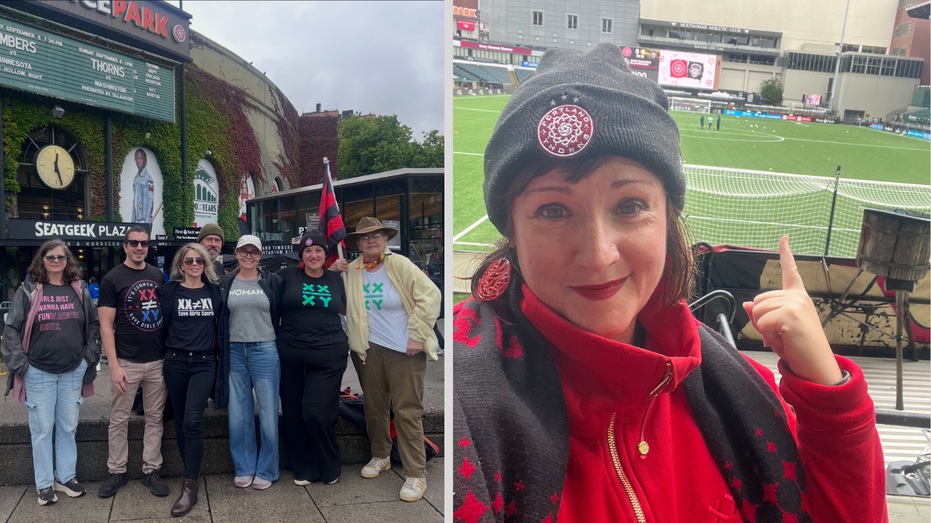
Eight fans were ejected from the Portland Thorns' Sept. 6 match against Washington Spirit for wearing XX-XY Athletics apparel with slogans like "Save Women's Sports" and "Woman." The Thorns said the group distributed unauthorized materials; the fans denied it and said they were targeted for political views. Hours later, five of the same group were asked to leave The Sports Bra bar in Portland after customers complained about their clothing.
The dual ejections have ignited a national debate over transgender participation in women's sports, free expression, and how private venues enforce conduct rules. Jennifer Sey, founder of XX-XY Athletics and former Levi Strauss executive, accused the Thorns of banning attendance based on political beliefs. The Sports Bra later affirmed its support for transgender women and girls.
Conflicting Accounts at Providence Park
The Portland Thorns stated the eight fans were removed for distributing unapproved materials during the Sept. 6 match. Video footage shows Amy Sousa questioning security after the group had reached its assigned seats. The fans denied distributing anything and said they were ejected solely for wearing political apparel.
Security handed the group a card citing an alleged Providence Park and NWSL Code of Conduct infraction, with possible additional penalties including a stadium ban. The NWSL fan code prohibits threatening language, abusive behavior, and unauthorized pyrotechnics, but does not specifically list political slogans or clothing as violations.
Sey Condemns Enforcement as Viewpoint Discrimination
Jennifer Sey criticized the ejection on social media, saying fans cannot attend a Thorns game if they wear XX-XY Athletics apparel. "You don't even have to say it loud. All you have to do is wear a t-shirt," she posted. Sey framed the removal as punishment for expressing a political position on sex-based sports categories.
XX-XY Athletics describes its mission as protecting women's sports by keeping competition female-only. The group states that "for women to compete safely and fairly, women's sports need to remain female" and that "sex matters." The group views the Thorns' actions as suppression of legitimate advocacy.
Sports Bar Offers Choice to Cover or Leave
The same afternoon, five group members entered The Sports Bra, a women-focused bar in Portland. Customers complained about their clothing, and staff asked them to either cover the messaging or leave. The bar did not eject the group immediately but gave them a choice to remain if they hid the apparel.
The Sports Bra later released a statement affirming its position that "trans girls are girls, and trans women are women." The bar's approach differed from the Thorns' direct removal: it offered the group an option to comply with inclusion standards while remaining on premises. Both venues treated the apparel as incompatible with their stated values.
Broader Tensions Over Venues and Political Speech
Private venues have broad legal power to set conditions of entry and remove attendees who violate conduct codes. The challenge lies in distinguishing targeted harassment from political expression. The Thorns and The Sports Bra treated the apparel as violating inclusion policies. The fans and their supporters viewed it as legitimate advocacy for sex-based sports categories.
The incident highlights a core tension facing women's-sports organizations: allowing contested messaging risks alienating fans who view it as anti-trans, while removing it invites accusations of censorship and national backlash. The operational decision to eject the fans generated social-media videos and activist attention, amplifying reputational risk. Consistency, transparency, and clarity in enforcement rules become critical to managing such disputes.
Sentiment
Mostly NegativeNEGATIVENEUTRALPOSITIVE
Publishers
13
Articles
53
Reach
66
A
AnonymousAuthor


