Lyria 3.5: Music's Next AI Leap
Google Enhances Flow Music with Lyria 3.5, Offering Advanced AI Musicality and Creative Tools
Anonymous
Key Points
1
Lyria 3.5 rolls out to all Flow Music users at no additional cost, underscoring Google's intent to treat AI music as a core, widely available product.
2
Google emphasizes that two main rivals remain in copyright litigation, highlighting that Lyria 3.5 and its rollout are positioned in a legal landscape Google says it has structured to avoid such disputes.
3
Beyond tempo and track length, Lyria 3.5 adds explicit control over drums and bass, giving creators more flexible mixing and arrangement options.
4
Flow Music users can rewrite lyrics, translate them into another language, change instruments, or restyle a beat without altering the rest of the track, enabling selective edits across sections.
5
Google has not disclosed the training data specifics for Lyria 3.5, though earlier Lyria models were described as trained on materials Google and YouTube had rights to use under terms and agreements.
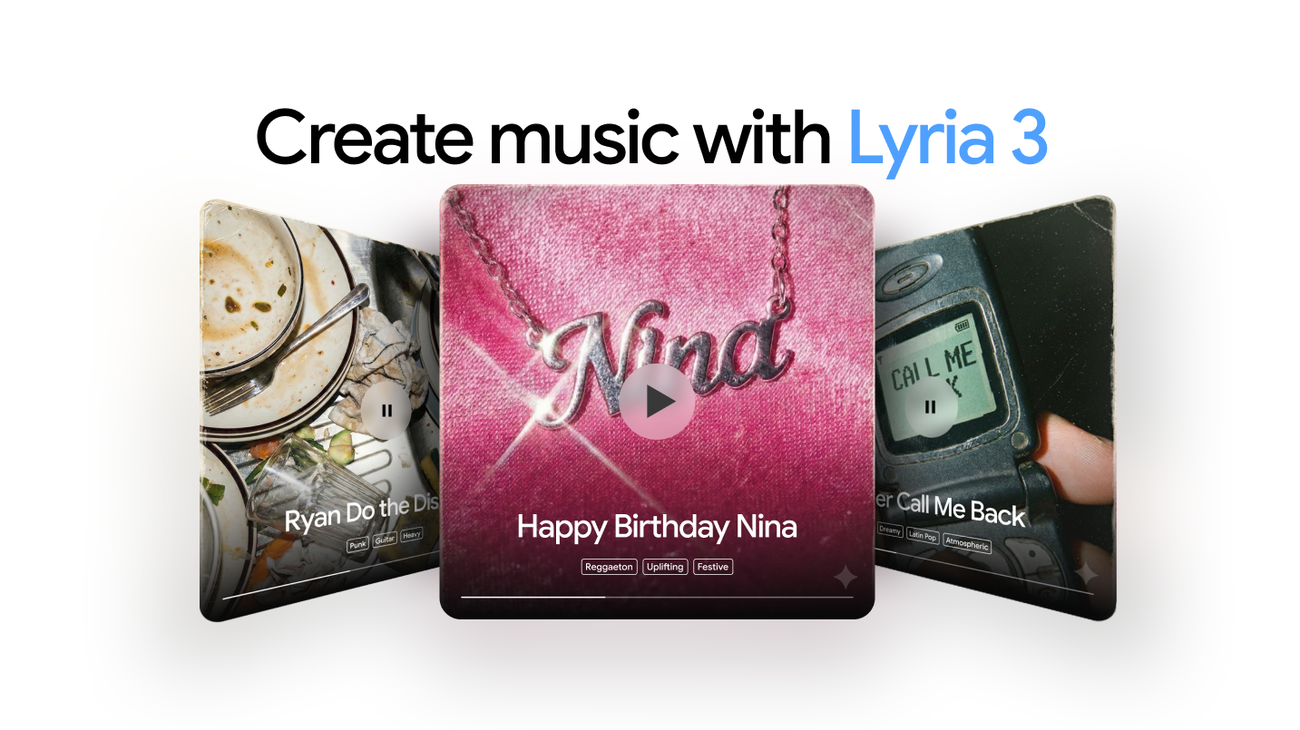
Google has released Lyria 3.5 inside its Flow Music platform, marking what the company calls its most capable AI music model yet. The update rolls out to all Flow Music users at no extra cost, according to Android Central.
The new model extends track lengths from 30 seconds up to three minutes and adds precise controls over tempo, drums, and bass. It also introduces a feature called Selective Section Painting, which lets users edit one part of a song without touching the rest, according to The Decoder.
Selective Section Painting Changes How Creators Edit Songs
The standout new tool in Lyria 3.5 is Selective Section Painting. It lets users pick a specific part of a track and change it — rewrite lyrics, swap an instrument, or restyle a beat — without altering anything else. Before this, editing one section often meant rebuilding the whole song from scratch, according to The Decoder.
Users can also take a short musical idea, called a motif, and expand it into a full song. They can rewrite lyrics, translate them into another language, or change the feel of a section on its own. Google says this makes the creative process much more flexible, according to Yahoo Tech.
Vocals Sound More Natural, Lyrics Follow Prompts More Closely
Lyria 3.5 improves how vocals sound and how closely lyrics match what a user asks for. Google says melodies feel more natural and pronunciation is more expressive. The model also keeps better structure across a full track, so songs sound more like a finished piece and less like a rough draft, according to Neowin.
Lyrics now follow text prompts with greater accuracy. That means if a user asks for a chorus about loss or a verse with a specific mood, the model is more likely to deliver it. Google highlighted these vocal improvements as a key step forward for the platform, according to Android Central.
Google Positions Lyria 3.5 While Rivals Face Copyright Lawsuits
Google notes that two of its main competitors in AI music are currently tied up in copyright litigation. The company says it has built Lyria around materials it and YouTube had the rights to use under existing terms and agreements. Google has not revealed what specific data trained Lyria 3.5, according to TechTimes.
That legal contrast is not accidental. By highlighting rivals' court battles, Google signals that its approach to training data is meant to be safer for creators and businesses. Still, without full transparency on training sources, questions remain open, according to TechTimes.
Longer Tracks and Deeper Controls Expand Use Cases for Producers
The jump from 30-second clips to three-minute tracks is a big deal for working producers. Longer songs can hold a verse, chorus, and bridge — the basic building blocks of most commercial music. This makes Lyria 3.5 more useful for real production work, not just quick demos, according to Yahoo Tech.
Beyond length, users now have direct control over tempo, drums, and bass. Those three elements shape how a song feels and moves. Having precise control over them gives creators far more flexibility when mixing and arranging, according to Android Central.
Sentiment
Mostly PositiveNEGATIVENEUTRALPOSITIVE
Publishers
13
Articles
7
Reach
20
A
AnonymousAuthor


