Europe's wildfire crisis
France activates EU civil protection as raging wildfires force 23,000 evacuations
Anonymous
Key Points
1
Cap-Ferret peninsula faced a total evacuation, with authorities conducting defense 'island by island, house by house' as the Basin d’Arcachon area burned; overall evacuations in the Biscarrosse area reached about 23,000 people.
2
Witnesses described the scene in the Gironde as apocalyptic, with residents recalling that fires could reach homes next door as they fled to safety.
3
Spain activated a national state of emergency and put the crisis under the Military Emergencies Unit (UME), centralizing response. Around 10,000 residents were evacuated in the Madrid region, with other provinces including Ávila, León and Toledo also affected and rainfall forecasted to be scant for about ten days.
4
In the Lège-Cap-Ferret area west of Bordeaux, authorities reported roughly 5,000 hectares burned, underscoring the scale of the fire in the region.
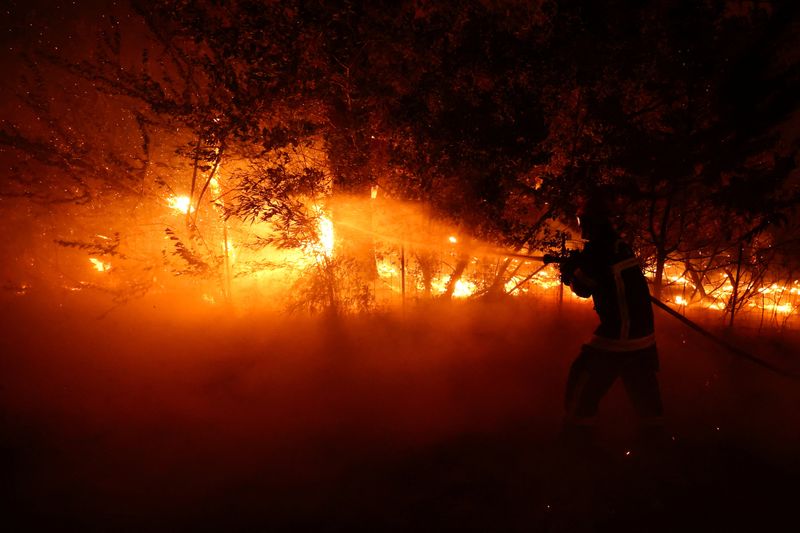
France has called on the European Union for emergency help as wildfires tear through its Atlantic coast, forcing about 23,000 people to flee their homes. President Emmanuel Macron said the situation remains "extremely tense" and that aerial reinforcements from EU partners are on the way, according to Free Malaysia Today.
The crisis is not limited to France. Spain has declared a national state of emergency in Madrid and Ávila, putting the Military Emergencies Unit in charge. Sicily is also battling fires amid soaring temperatures. A brutal summer of heat and drought is pushing fire services across Europe to their limits.
23,000 Evacuated as Gironde Fires Turn Apocalyptic
In France's Gironde region, fires have scorched roughly 5,000 hectares near Lège-Cap-Ferret, west of Bordeaux. Authorities ordered a total evacuation of the Cap-Ferret peninsula, fighting the blaze "island by island, house by island, house by house." Evacuations in the wider Biscarrosse area climbed to about 23,000 people, with more than 10,000 forced out overnight alone, according to WDSM 710.
Witnesses called the scenes apocalyptic. Residents described fleeing as flames reached the house next door. Hundreds of firefighters are on the ground. The extreme heat and dryness that sparked the fires show no sign of letting up soon.
Macron Activates EU Civil Protection Mechanism for Air Support
Macron formally activated the EU's civil protection mechanism — a system that lets member states share emergency resources quickly. France expects two Canadair water-bombing planes from Croatia, two Air Tractor aircraft from Portugal, and two heavy-lift helicopters from the Czech Republic and Slovakia, according to Mezha.
The EU mechanism exists precisely for crises like this one. Getting aircraft from multiple countries into French skies fast requires a single coordination point. By triggering the mechanism, France can draw on shared European assets without negotiating separate bilateral deals under pressure.
Spain Puts Military in Charge as 10,000 Flee Madrid Region
Spain declared a national state of emergency and handed control to the Military Emergencies Unit, known as the UME. Around 10,000 residents were evacuated in the Madrid region. The provinces of Ávila, León, and Toledo were also hit. Rainfall is not expected for roughly ten days, according to 963 Jack FM.
Centralizing the response under the UME gives Spain a unified command instead of fragmented regional efforts. The move signals how seriously officials are treating the threat. With no rain in the forecast, fire teams across the country face a long and difficult fight ahead.
A Broader European Climate Crisis Demanding Cross-Border Action
France, Spain, and Sicily are all burning at the same time. That is not a coincidence. Scientists link the growing frequency and intensity of summer wildfires to climate change — hotter temperatures and longer droughts leave forests dry and ready to ignite. No single country has enough planes and crews to handle fires at this scale alone, according to WQXC.
The EU civil protection mechanism is the main tool Europe has for cross-border fire response. But this summer is testing it hard. As fires grow bigger and seasons grow longer, leaders across the continent face pressure to invest more in shared firefighting capacity before the next crisis hits.
Sentiment
Mostly NegativeNEGATIVENEUTRALPOSITIVE
Publishers
20
Articles
44
Reach
64
A
AnonymousAuthor


