Treasury Yields Near 4.8%, Pressuring Global Markets
Treasury Yields Near 4.8%, Pressuring Global Markets
Anonymous
Key Points
1
The 10-year and 30-year Treasury yields had risen to their highest levels in nearly two decades, with investors also citing inflation risks from Middle East energy disruptions and resilient economic growth as factors pushing long-term rates higher.
2
The Treasury’s planned buyback operation is set to double in size, and the upcoming 10-year auction is expected to provide an important read on investor demand for government debt at elevated yields.
3
Goldman Sachs raised its forecast for 2026 U.S. investment-grade corporate bond issuance to $2.3 trillion, while strategists said September could become a record month for high-grade issuance.
4
The market’s successive yield thresholds have shifted higher—from 4.4% and 4.5% to 4.6% and 4.7%—although 5% remains a closely watched level for the long end of the Treasury curve; any near-term Treasury rally could therefore be tactical rather than a lasting reversal.
5
The consumer impact is uneven: variable-rate credit-card debt is less directly sensitive to the 10-year yield, while homeowners with fixed-rate mortgages may not feel the effects until refinancing, even as higher rates reduce purchasing power for new homebuyers.
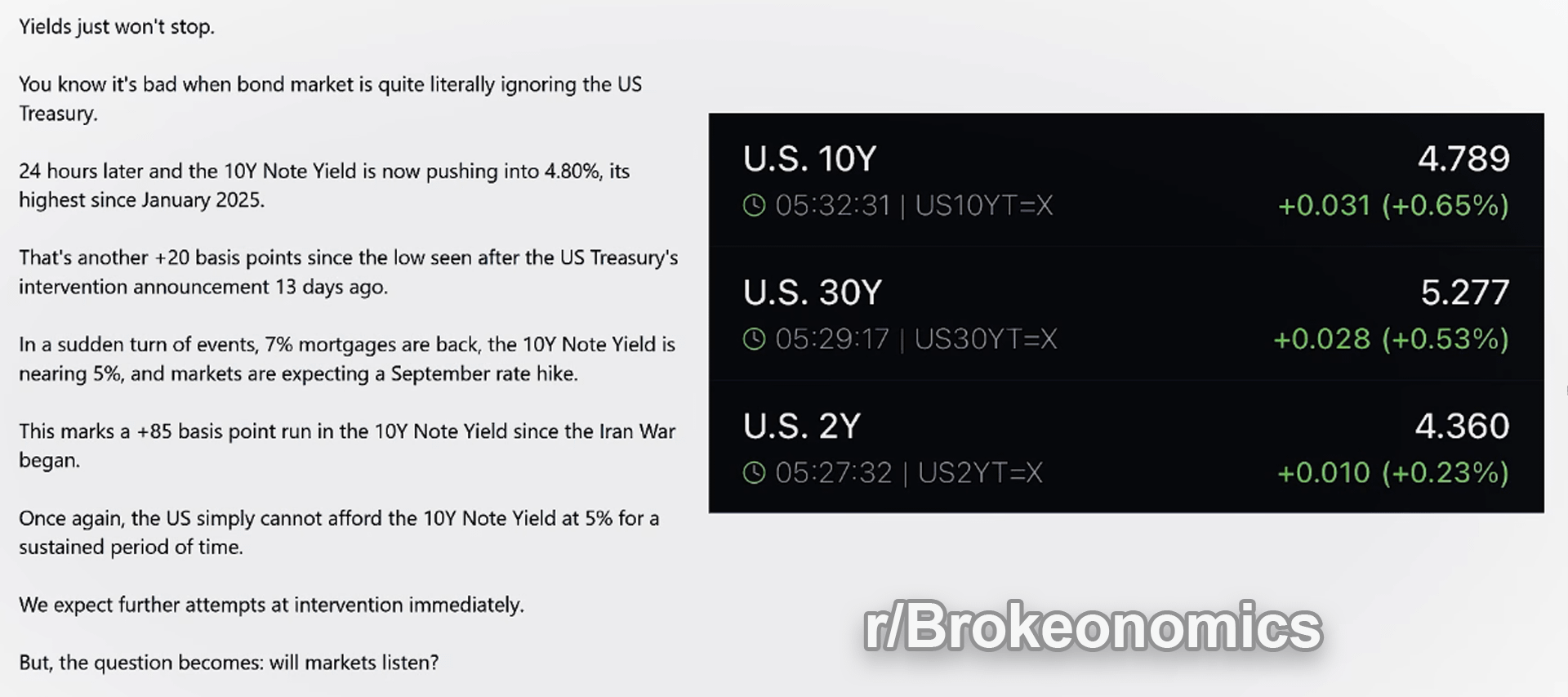
The U.S. 10-year Treasury yield is knocking on the door of 4.8%, a level that could upend markets if it sticks. Trading Economics reports the yield topped 4.8% — the highest since October 2023. If this threshold holds, strategist Matt Maley warns it could trigger a major repricing of bonds, high-growth stocks, real estate, and other assets sensitive to interest rates. The culprits: record federal deficits, over $8.4 trillion in Treasury debt due by year-end, and heavy corporate borrowing to fund AI infrastructure.
Investors are increasingly skeptical about the government's fiscal health, with total U.S. debt now exceeding $40 trillion. IBTimes notes the yield stayed elevated at 4.78% on October 4, driven by higher oil prices and inflation concerns from Middle East disruptions. For regular people, this means higher mortgage rates, car loans, and tougher financing for big projects. The real test comes next: Treasury auctions and potential record corporate bond issuance could reveal whether investors still have appetite for this debt at these elevated yields.
Why 4.8% Is the Magic Number
The 4.8% threshold isn't arbitrary. GuruFocus quotes Miller Tabak + Co. Chief Market Strategist Matt Maley saying it could trigger a broader repricing of rate-sensitive assets if breached persistently. Long-duration bonds would sell off. High-growth stocks would lose appeal. Real estate would face headwinds. Right now, the market is watching this level like a hawk — each time it tests the mark, investors brace for spillover effects.
The yield has already cleared several stepping stones. It jumped from 4.4% to 4.5%, then 4.6% and 4.7%. ArchyNetys warns that Treasury ETFs and companies already stretched on credit are at risk. Once the barrier breaks, refinancing costs spike across the board. The Treasury Department's efforts to talk rates lower haven't worked. Investors care more about the government's fiscal picture than reassuring speeches.
Debt and Deficits Push Yields Higher
Federal deficits are ballooning, forcing the Treasury to issue record amounts of debt. Over $8.4 trillion in Treasury maturities are due through year-end. At the same time, corporations are borrowing heavily — especially tech companies funding AI buildouts. This competition for capital is fierce. There's only so much investor money to go around. Yields rise to attract buyers. The government's total debt exceeds $40 trillion, a staggering sum that weighs on bond prices and keeps yields elevated.
Corporate Borrowing at Record Pace Strains Demand
Corporate bond issuance is reaching all-time highs. Goldman Sachs raised its 2026 forecast for U.S. investment-grade bond issuance to $2.3 trillion. September is shaping up to be a record month for high-grade offerings. All this new debt needs buyers. But with Treasury yields at near-20-year highs, investors are picky. They demand better returns. Companies must pay higher rates to borrow. Upcoming Treasury auctions and buybacks — with the buyback doubling in size — will test whether there's enough demand to absorb all this debt without pushing yields even higher.
Who Feels the Pressure and Who Doesn't
Higher rates hit different people differently. Homeowners with fixed mortgages don't feel the pain until they refinance — but that day will come, and they'll face steeper monthly payments. New homebuyers already feel the squeeze: higher rates slash purchasing power. Credit-card debt is less directly tied to the 10-year yield, so credit-card holders may not see immediate impacts. But auto loans and adjustable-rate debt get pricier fast. Capital-intensive projects — infrastructure, manufacturing plants, real estate development — become less attractive as financing costs climb.
Sentiment
Mostly NegativeNEGATIVENEUTRALPOSITIVE
Publishers
12
Articles
10
Reach
22
A
AnonymousAuthor


