Bank Indonesia Rate Hold
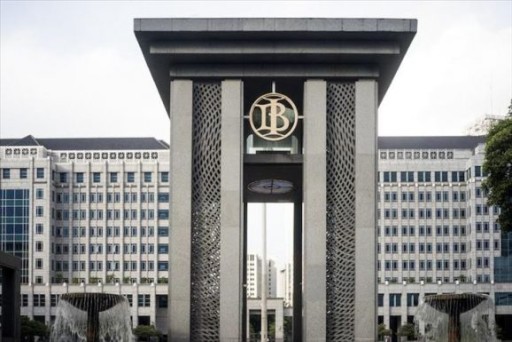
Bank Indonesia holds its benchmark interest rate steady at 5.75% amid ongoing currency risks.
Anonymous
Key Points
1
Bank Indonesia had raised its policy rate by a combined 100 basis points in May and June, bringing it to its highest level since April 2025 to attract foreign inflows and support the rupiah.
2
The rate decision was strongly anticipated: 33 of 36 economists surveyed by Bloomberg expected the BI-Rate to remain at 5.75%, while the other three forecast a 25-basis-point increase.
3
A Wall Street Journal poll showed nine of 10 economists expected no change, with only one economist predicting a 25-basis-point increase.
4
The decision came as Bank Indonesia’s newly appointed Governor Destry Damayanti faced heightened concerns about rupiah stability while balancing currency support with inflation and growth objectives.
Bank Indonesia held its benchmark interest rate at 5.75% on September 23, keeping borrowing costs unchanged for a third consecutive meeting. Bloomberg reported that 33 of 36 economists surveyed expected this decision, with only three predicting a 25-basis-point increase. The hold came as Governor Destry Damayanti, in her first policy decision as permanent leader, balanced competing pressures: defending the rupiah from global headwinds while supporting Indonesia's economy.
The central bank held the overnight deposit facility at 4.75% and the lending facility at 6.50%. August inflation rose to 3.19%, remaining safely inside Bank Indonesia's target band of 1.5% to 3.5%. The Jakarta Post noted the decision reflects BI's strategy to stabilize the rupiah while maintaining support for the 4.9%–5.7% economic growth forecast for 2026.
Why BI Raised Rates Earlier This Year
Bank Indonesia delivered 100 basis points of rate increases spread across May and June. Morningstar reported the moves were designed to defend the rupiah and attract foreign investment as global oil prices climbed and U.S. Treasury yields stayed elevated. The rate hikes pushed the benchmark to its highest level since April 2025, successfully helping the rupiah rebound from a low of 18,209 per dollar.
Damayanti Shifts to Non-Rate Tools Instead
Governor Damayanti emphasized that BI will now rely on alternatives to rate hikes. ANTARA News quoted her saying the central bank will "strengthen incentive policies to attract foreign capital inflows, stabilize the rupiah, and accelerate the deepening of the money and foreign exchange markets." On September 1, BI had already enhanced its Macroprudential Liquidity Incentive Policy, raising swap hedging discounts to 25% for 12-month tenors and boosting banking intermediation.
This approach prioritizes supporting domestic credit growth without pushing rates higher. Commerzbank analysts noted that private sector bank lending surged 13.65% year-on-year in August, and overall undisbursed loans reached 2.548 trillion rupiah. Non-rate incentives allow BI to help Indonesia's economy while defending the currency through market operations.
Rupiah Pressure From Global Headwinds Persists
The rupiah faces relentless downward pressure from multiple sources. Briefs Finance reported that crude oil prices exceeded $100 per barrel and U.S. Treasury yields remained elevated, both driving capital away from emerging markets. TradingPedia noted that USD/IDR extended its advance for a second consecutive day even after the rate decision, pushing the pair near 17,900.
However, capital inflows provided some relief. ANTARA News reported that foreign portfolio net inflows reached $1.8 billion in Q3 2026, helping the rupiah stabilize. Briefs Finance said the rupiah strengthened 0.4% to roughly 17,800 per dollar following the announcement, suggesting markets viewed the steady-rate decision combined with liquidity incentives as a credible policy mix.
What Comes Next for Indonesia's Central Bank
Commerzbank analysts expect BI to hold rates at 5.75% for the rest of 2026 unless the rupiah depreciates sharply or inflation breaks above its target band. Goldman Sachs warned that global macro risks still open the door to future tightening if external pressures intensify. Damayanti's appointment following former Governor Perry Warjiyo's resignation highlighted the tension between supporting growth and defending the currency—a balancing act that will define BI's 2026 strategy.
Sentiment
Mostly NegativeNEGATIVENEUTRALPOSITIVE
Publishers
28
Articles
58
Reach
86
A
AnonymousAuthor


