Gulf Oil Tankers Destroyed
U.S. Forces Destroy Five Iranian Oil Tankers Following Missile Attacks in Gulf
Anonymous
Key Points
1
Iran has effectively closed the Strait of Hormuz since the war began in February. Tehran established a shipping route along the Iranian coastline and warned that vessels using a U.S.-backed route near Oman would be targeted.
2
The United States and Iran are engaged in broader economic pressure campaigns: Washington is seeking to choke Iran’s ports and economy, while Tehran maintains control over the Strait of Hormuz, according to the report.
3
Iran claimed its missile strike on Jordan’s Al-Azraq air base damaged maintenance and repair facilities, deployment areas and fighter-jet shelters; those damage claims were not independently confirmed in the report.
4
Reports circulating about the confrontation included claims that two U.S. Navy destroyers came under fire in the Strait of Hormuz, but the account explicitly cautioned that damage to the warships had not been independently verified.
The United States destroyed five Iranian oil tankers in the Gulf of Oman and near Kharg Island on September 8 after Iran fired ballistic missiles at a U.S. Navy warship, according to CENTCOM. No American casualties were reported, and crews were ordered to abandon the ships before strikes disabled them. The tankers — *M/T Kaviz*, *M/T Charminar*, *M/T Horizon 1*, *M/T Riesco*, and *M/T Derya* — were targeted because they fund Iran's Islamic Revolutionary Guard Corps and its regional allies, U.S. Secretary of State Marco Rubio said.
Iran responded by launching 20 ballistic missiles at Jordan's Al-Azraq Air Base, according to Jordanian Armed Forces. Jordanian air defenses intercepted 18 missiles, with two landing in unpopulated areas and causing no reported casualties. The escalation — part of a six-month conflict — has choked commercial shipping through the Strait of Hormuz and pushed Brent crude to or above $100 per barrel, raising alarm over global oil supplies and maritime security.
Eight Tankers Destroyed in Four Days of Strikes
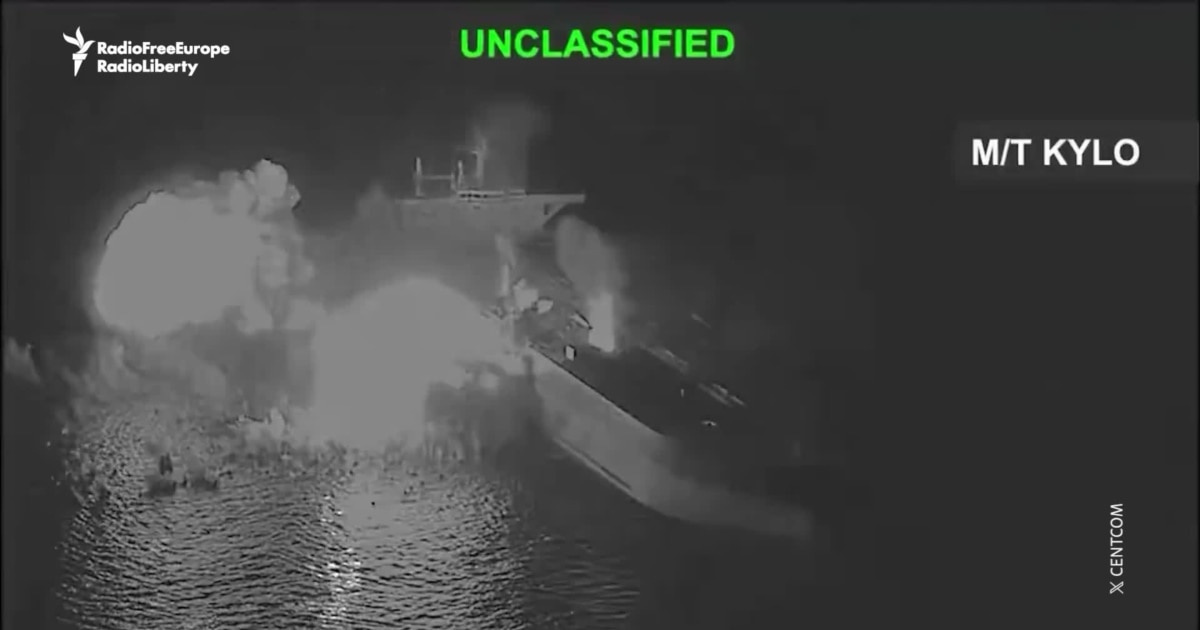
This latest strike follows an earlier U.S. strike on September 5 that destroyed three Iranian tankers — *M/T Downy*, *M/T Stark 1*, and *M/T Kylo* — after the IRGC fired missiles at U.S. Navy warships, according to RFE/RL. In four days, the U.S. has systematically dismantled eight Iranian crude carriers. The strategy appears deliberate: U.S. Secretary of State Marco Rubio declared, *"Iran continues to try to hit U.S. naval ships. And for every time they do that or try to do that, they're going to lose tankers."*
Washington is using tanker destruction as economic leverage against Tehran's military funding networks. CENTCOM confirmed that crews received advance warning to abandon ship, minimizing loss of life while disabling Iran's ability to export crude and finance the IRGC's operations and proxy forces across the Middle East.
Iran Expands Retaliation Beyond Maritime Targets
Rather than limit strikes to the Gulf, Iran extended retaliation into neighboring territory. On September 8–9, the IRGC fired 20 ballistic missiles at Al-Azraq Air Base in Jordan, claiming damage to maintenance facilities, deployment areas, and fighter-jet shelters, according to Reuters. Jordanian Armed Forces stated that air defenses intercepted 18 incoming missiles, with only two reaching ground in uninhabited zones.
The IRGC also issued direct threats to commercial tanker crews off Kuwait and Bahrain, effectively widening pressure on U.S. partner nations. Iran claimed it struck two U.S. Navy destroyers in the Strait of Hormuz, though these damage claims have not been independently verified, according to reports.
Strait of Hormuz Becomes Economic Chokepoint for World Oil
Iran has effectively closed the Strait of Hormuz since February by restricting commercial traffic to a coastal shipping lane along Iranian waters while threatening vessels using U.S.-backed routes near Oman, according to RFE/RL. Roughly one-fifth of global petroleum consumption and more than one-fifth of global liquefied natural gas trade passed through the waterway in 2024, making disruption a global economic threat.
Brent crude has surged to or above $100 per barrel due to supply fears. Commercial shipping has plummeted, forcing firms to reroute or halt operations. Energy analysts warn that sustained strikes near Kharg Island—Iran's primary oil export hub—risk completely halting Iranian exports and creating severe maritime insurance bottlenecks across the Persian Gulf, multiplying costs for fuel and electricity worldwide.
Economic Warfare and Alliance Pressures Intensify
The U.S. strategy targets Iran's revenue streams while the IRGC leverages geography to disrupt global energy markets. According to military analysts, Washington has shifted toward "tit-for-tat economic targeting"—destroying high-value Iranian commercial assets for every asymmetrical threat against U.S. Navy warships. This approach aims to choke IRGC funding without direct strikes on Iranian soil.
Expanding attacks beyond maritime exchanges creates pressure on U.S. partners. Jordan hosts critical Western military infrastructure, while Kuwait and Bahrain sit near major Gulf logistics and naval operations. According to regional analysts, broader targeting of allied nations and commercial shipping raises alliance-management risks and can trigger wider collective responses, potentially drawing neighboring Gulf Arab states deeper into the conflict.
Sentiment
Mostly NegativeNEGATIVENEUTRALPOSITIVE
Publishers
41
Articles
55
Reach
96
A
AnonymousAuthor


