US Considers Mali Strikes
US Weighs Military Strikes Against Al-Qaeda Affiliate JNIM in Mali Amid Internal Divisions
Anonymous
Key Points
1
Sebastian Gorka, the National Security Council's counterterrorism director, is among the administration officials pushing for military strikes against JNIM in Mali.
2
Officials describe securing overflight rights in Mali as a key objective, which would enable US surveillance and other operations over Malian territory.
3
Analysts warn that direct US involvement in Mali could risk confrontations with Russian forces in the region and would require deconfliction efforts.
4
The ambush near Tabankort was claimed by JNIM and the Azawad Liberation Front, illustrating a tactical alliance between Islamist militants and Tuareg separatists with shifting coalitions on the ground.
5
JNIM is described as the region's strongest militant force and has been expanding across West Africa, intensifying the security challenge in the Sahel.
The Trump administration is weighing direct military strikes against JNIM, an al-Qaeda affiliate in Mali, according to The Washington Post. If approved, Mali would become the eighth country where President Trump has authorized military action since taking office — despite campaign promises to end "endless wars."
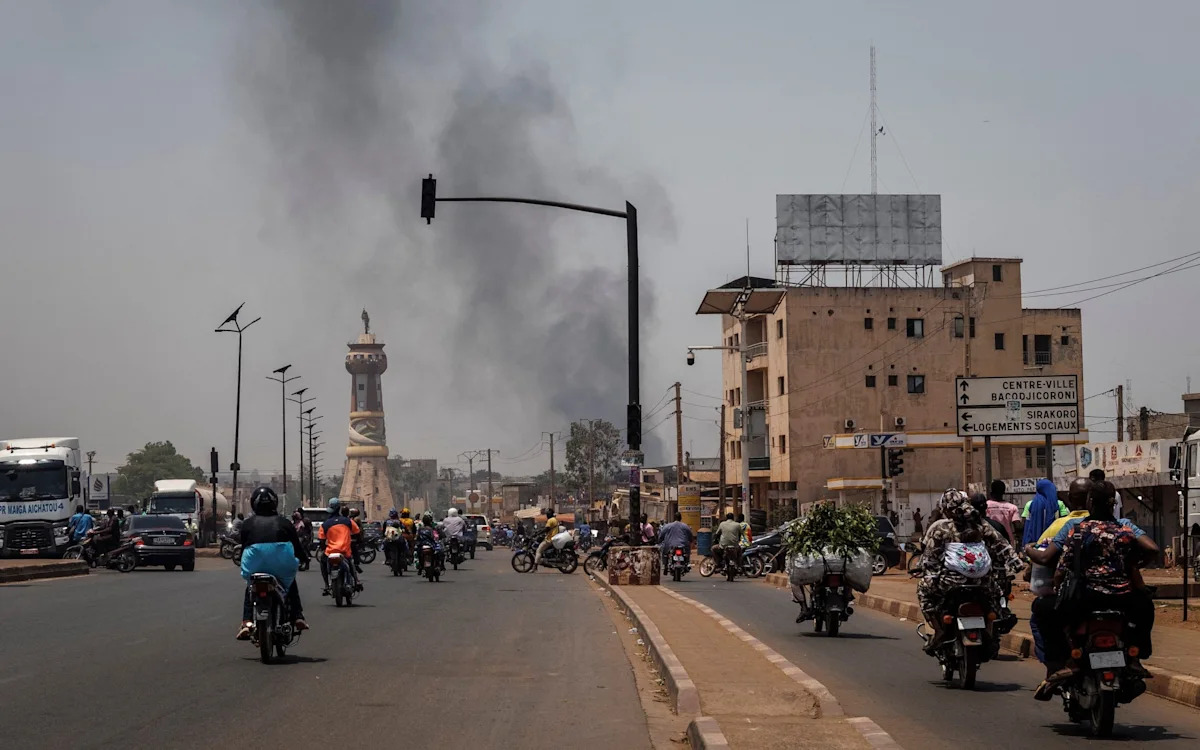
The discussions were triggered by a deadly ambush near Tabankort that killed at least 50 Malian soldiers, according to Eastern Herald. JNIM and the Azawad Liberation Front, a Tuareg separatist group, jointly claimed the attack — a sign of shifting and dangerous alliances on the ground.
Sebastian Gorka Leads Push for Mali Strikes
Sebastian Gorka, the National Security Council's counterterrorism director, is among the officials pushing hardest for strikes, according to Newsmax. The internal debate is active, but no final decision has been made. Supporters argue that hitting JNIM would help disrupt one of the most dangerous jihadist networks in the world.
One key goal in any operation would be securing overflight rights in Mali. These rights would let US aircraft fly over Malian territory for surveillance and possible strike missions, according to Yahoo News. Getting that access is seen as a critical first step before any military action can begin.
JNIM's Growing Reach Across West Africa
JNIM stands for Jama'at Nusrat al-Islam wal-Muslimin. It is the largest al-Qaeda-linked group in West Africa, according to AOL News. The group has been expanding rapidly across the Sahel — the wide band of land south of the Sahara Desert — and is now considered the region's strongest militant force.
Mali is already in turmoil. A military junta rules the country after a coup, and Islamist violence has surged for years. JNIM has exploited this instability to grow its influence, recruit fighters, and launch attacks like the deadly Tabankort ambush that killed dozens of soldiers in a single strike.
Russian Forces in Mali Complicate Any US Action
A major concern inside the administration is Russia. Russian forces — known as the Africa Corps — are already operating in Mali, helping the junta fight militants, according to Eastern Herald. US officials warn that American strikes could accidentally put US and Russian forces in direct conflict.
Deconfliction — the process of coordinating with another military to avoid accidental clashes — would be required. Some officials see that as a serious obstacle. The presence of Russian troops adds a layer of risk that does not exist in most other countries where the US has launched strikes.
Trump's Eighth War Would Break a Core Campaign Promise
Trump ran for president partly on a pledge to stop getting the US into new conflicts abroad. Yet since January 2025, he has authorized military operations in seven countries, according to Raw Story. Mali would be the eighth. Critics say this pattern directly contradicts what Trump told voters.
The Sahel has become a test case for US counterterrorism strategy with fewer troops on the ground. America pulled advisers from Mali in 2023 after the junta expelled them. Any new action there would mark a sharp reversal — and could drag the US deeper into one of the world's most unstable regions.
Sentiment
Mostly NegativeNEGATIVENEUTRALPOSITIVE
Publishers
30
Articles
39
Reach
69
A
AnonymousAuthor


