F1's LEGO Race Chaos
LEGO F1 Mini-Race Brings Chaotic Fun to British Grand Prix Drivers' Parade
Anonymous
Key Points
1
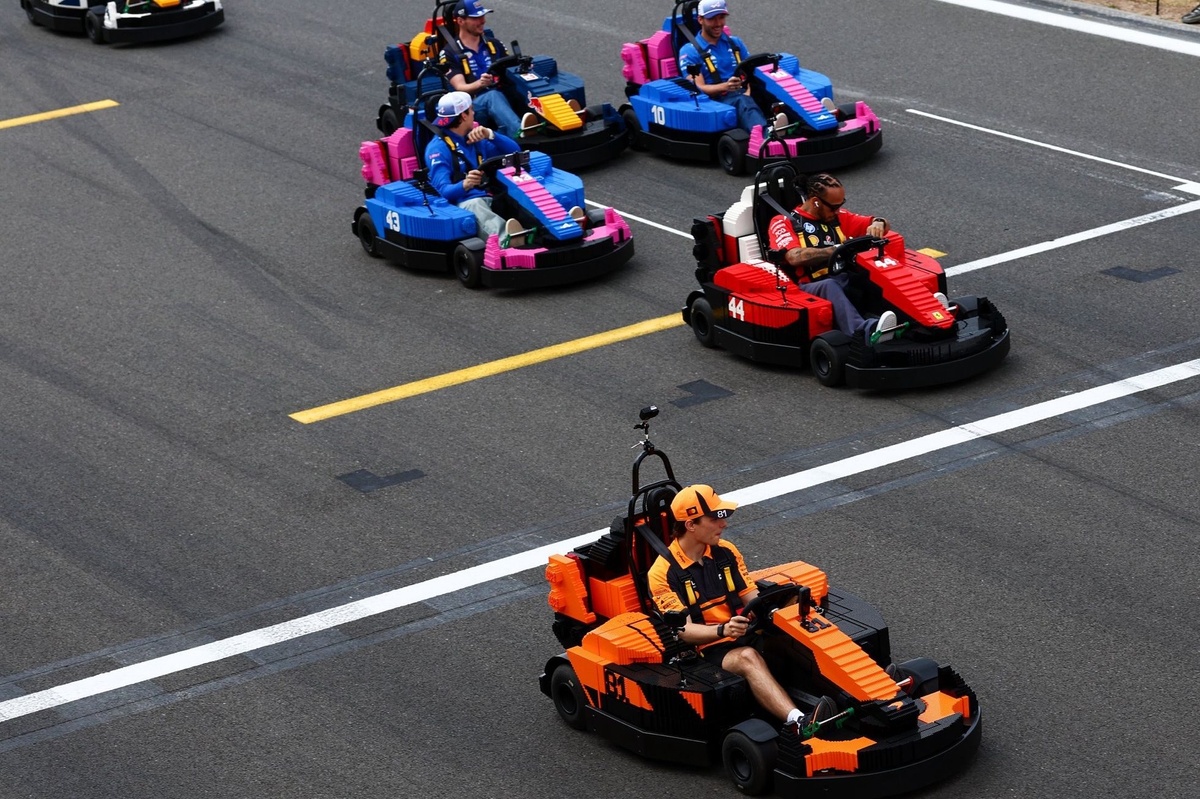
The LEGO mini cars used in the British Grand Prix were built from more than 28,000 bricks and could reach up to 25 km/h, created by a team of around 20 designers, engineers and LEGO builders in Kladno, Czech Republic, taking over 6,400 hours to complete (cars carried 2026 liveries and driver numbers).
2
Nine drivers—and FIA President Mohammed Ben Sulayem—were beached in the gravel at Turn 1 after attempting to cut the corner, with Carlos Sainz hopping onto Lando Norris’s kart to continue the parade.
3
Kimi Antonelli, the current championship leader, was among the first to suffer a rookie error on the LEGO parade lap at Silverstone.
4
Charles Leclerc and Gabriel Bortoleto were involved in the chaotic action, with multiple drivers bumping into one another as they cut across the track during the lap.
5
The LEGO Drivers’ Parade at Silverstone was a revival of the Miami concept, with all 22 drivers taking part in individual LEGO go-kart style cars replacing the usual pre-race trucks.
F1 drivers brought joyful mayhem to Silverstone on Sunday as the LEGO Drivers' Parade returned for the British Grand Prix, sending 22 drivers across the track in miniature brick-built cars — and sending several of them straight into the gravel. Nine drivers, plus FIA President Mohammed Ben Sulayem, got beached at Turn 1 after attempting to cut the corner, turning the pre-race spectacle into one of the most chaotic — and entertaining — moments of the F1 season. Motorsport.com reported the scene went viral almost instantly.
The LEGO cars, each built from more than 28,000 bricks and capable of reaching 25 km/h, were made by a team of around 20 designers, engineers, and builders in Kladno, Czech Republic. The project took over 6,400 hours to complete, according to Yahoo Sports.
Turn 1 Carnage Beaches Nine Drivers and the FIA President
The chaos peaked at Turn 1, where drivers spotted a shortcut and went for it — mostly with disastrous results. Nine drivers ended up stranded in the gravel. Even FIA President Mohammed Ben Sulayem got stuck, though he jumped out to help wrestle the beached karts back onto the track. It was a rare and comic sight: the head of world motorsport pushing a LEGO car out of a gravel trap.
Carlos Sainz was among those beached. Rather than wait for help, he hopped onto Lando Norris's kart to continue the parade. Fernando Alonso pulled off the cheekiest move of the day, timing a late shortcut perfectly and emerging as the unofficial winner of the LEGO mini-race, according to Sacramento Bee. Kimi Antonelli, the current championship leader, was among the first to suffer a rookie mistake on the parade lap.
28,000 Bricks, 6,400 Hours, and 2026 Liveries on Display
Each LEGO kart was a serious engineering feat. The cars carried 2026 liveries and driver numbers, giving fans an early look at next season's designs. The build team of roughly 20 people worked out of the Czech Republic and logged more than 6,400 hours to finish all 22 vehicles in time for Silverstone. Top speed was capped at 25 km/h — enough to cause plenty of trouble, as the parade proved.
Verstappen and Hamilton Signal Mixed Feelings About the Format
Not every driver was thrilled. Max Verstappen said he would prefer a traditional parade, where drivers wave to fans from trucks or open-top cars. Lewis Hamilton said he had thought about skipping the event entirely but ultimately decided to take part. Road & Track noted that several drivers had threatened a boycott before the event began.
Charles Leclerc and Gabriel Bortoleto added to the mayhem, bumping into other drivers as they cut across the circuit. Some critics argued the slapstick format clashes with the sport's high-speed, high-stakes image. But for the tens of thousands of fans packed into Silverstone, the LEGO parade delivered something the regular race rarely can — pure, unscripted laughs before a single real lap was run.
A Miami Concept That Has Already Become a Silverstone Tradition
The LEGO parade first debuted at the Miami Grand Prix, where it became an instant fan favourite. Silverstone's version was its direct revival, with all 22 drivers given individual kart-style LEGO cars instead of the usual shared trucks. The format is designed to give fans a longer, more personal look at their favourite drivers before race day begins.
Whether the format sticks around depends partly on driver buy-in. But after the scenes at Turn 1 on Sunday — a sitting FIA president pushing a brick-built car out of a gravel trap — it is hard to imagine F1's commercial partners walking away from a concept that generates this much organic attention.
Sentiment
Mostly NegativeNEGATIVENEUTRALPOSITIVE
Publishers
12
Articles
20
Reach
32
Topics
A
AnonymousAuthor


