Road-Legal Rally Beast
Land Rover Unveils Road-Legal Defender Dakar V8 Rally Racer at Monterey Car Week
Key Points
The Defender Dakar uses an eight-speed automatic transmission with both high- and low-range gears, giving enhanced gearing options for on- and off-road use.
It employs the same body structure as the Dakar-winning D7X-R and is built off the Defender Octa platform, signaling a production-based upgrade rather than a purely bespoke one-off.
Inside, the Dakar is configured for four occupants, with two front racing seats and dedicated storage space for helmets and a spare wheel, reflecting its rally-derived focus.
Pricing and total production quantities have not been announced; Land Rover has described it as a limited-run model with order books expected around 2027, but specific figures were not disclosed.
A notable design detail is the rear, where a blanking plate is used instead of the traditional boot-mounted spare tire, underscoring the race-inspired, performance-focused aesthetic.
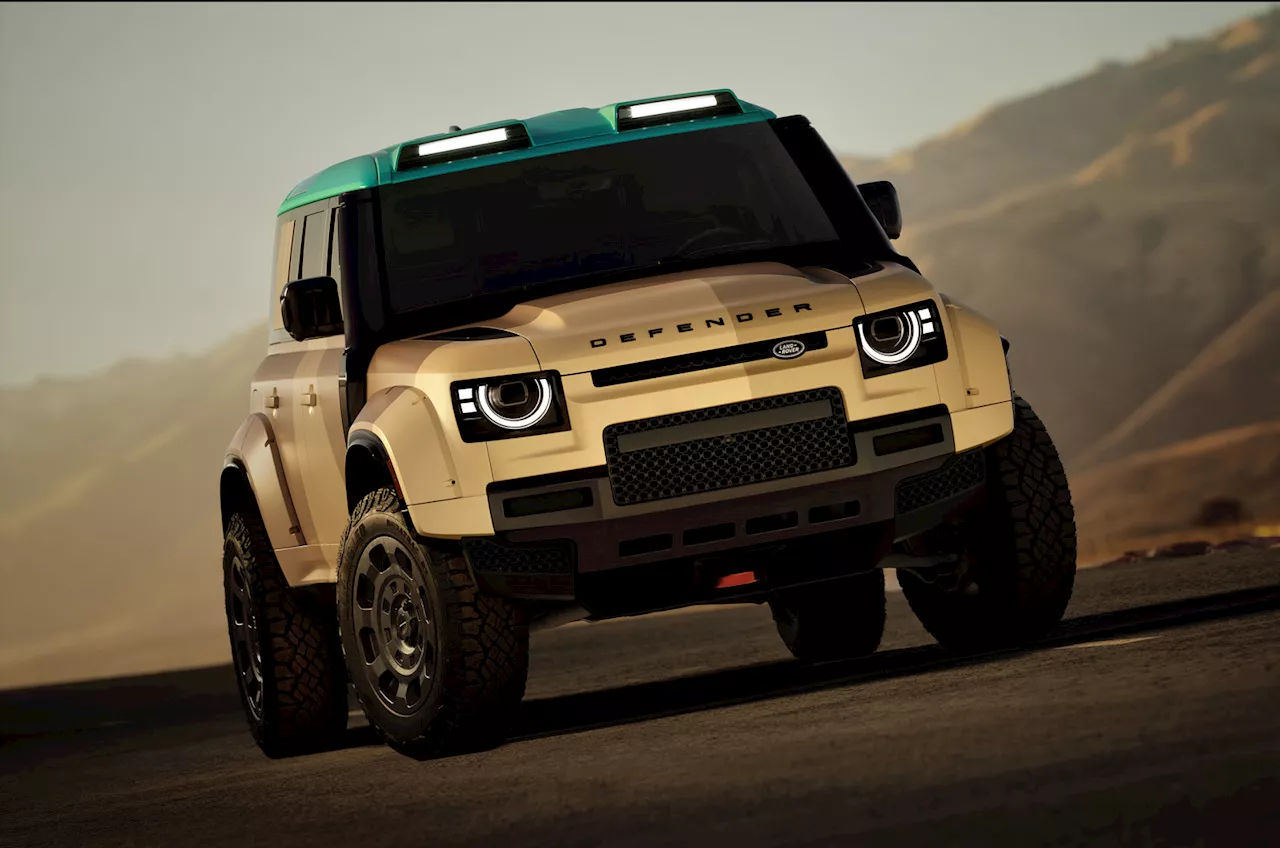
Land Rover has unveiled the Defender Dakar, a road-legal version of the Dakar Rally-winning D7X-R race truck, at Monterey Car Week in California. The production model packs a 4.4-liter twin-turbo V8 making 626 horsepower and 553 lb-ft of torque — and you can drive it to the grocery store. Auto Express called it "a rally hero you can actually drive on the road."
Land Rover is billing the Dakar as a limited-run model built on the same Defender Octa platform as its race-winning sibling. Order books are not expected to open until around 2027, and pricing has not been announced. But the specs are already turning heads.
Same Body as the Race Winner, Built for Real Roads
The Defender Dakar shares its body structure with the D7X-R — the truck that won the Dakar Rally outright. It is built on the Defender Octa platform, so this is not a one-off show car. It is a production-based upgrade. DirtFish noted that Prodrive, the famed motorsport preparation firm, helped develop the road car alongside 14-time Dakar winner Stéphane Peterhansel.
Key hardware carries over from the racer. The Dakar rides on 35-inch tires mounted on forged 20-inch wheels. It gets a reinforced underbody skid plate, roof-mounted light pods, and carbon fiber body panels. Power goes through an eight-speed automatic with both high- and low-range gears — a setup that handles sand dunes and city streets alike.
Flight Mode and Three New Drive Settings for Extreme Terrain
The Defender Dakar adds three new drive modes not found on any other Land Rover: Dunes, Gravel, and Flight. Flight mode is the standout. It is specifically tuned for jumps — letting the truck leave the ground and land softly without breaking the suspension or unsettling the chassis. Head Topics described it as an "off-road supercar" feature built for desert racing conditions.
Each mode changes how the engine, gearbox, and suspension respond. Dunes mode loosens traction control for deep sand. Gravel mode sharpens steering and braking for loose rock. Together, the three modes give the Dakar a toolkit that goes far beyond what a standard Defender Octa can manage.
Four Seats, Helmet Storage, and a Race-Ready Interior
Inside, the Dakar seats four people. The two front seats are full racing buckets. Behind them, Land Rover carved out dedicated storage space for helmets and a spare wheel. The rear of the car uses a blanking plate instead of the traditional boot-mounted spare tire — a small detail that signals this car is built around performance, not practicality.
Color options include Dakar Sand and Yanbu Turquoise, both nods to the rally's desert roots. The interior trims and aero bits carry the same rally-inspired look as the race car. Land Rover wants buyers to feel the Dakar connection every time they sit down.
Limited Production, No Price Yet, Orders Open Around 2027
Land Rover has not said how many Defender Dakars it will build or what they will cost. The company confirmed it is a limited-run model. Detailed plans, including pricing and exact production numbers, are expected in early 2027. Auto Express reported that order books will open around that same time, leaving potential buyers in a holding pattern for now.
The reveal at Monterey Car Week was timed to capture attention from wealthy car enthusiasts. The event is known for big-money debuts. Land Rover is betting that its Dakar Rally success — and a 626-horsepower V8 — will be enough to justify whatever price tag it eventually announces.
Sentiment
Mostly PositivePublishers
12
Articles
2
Reach
14


