Advanced Russian Drones Requested
Iran Seeks Advanced Russian Geran Strike Drones Amid Evolving Military Tech
Anonymous
Key Points
1
The reported request illustrates a reversal in the two countries’ military-technology relationship: Iran supplied the original Shahed designs, Russia established localized mass production and refined them through battlefield use in Ukraine, and Tehran is now seeking those Russian upgrades.
2
The upgraded drones could be used against a broad range of high-value targets, including airfields, energy infrastructure, logistics centers, radar sites and command nodes, potentially enabling relatively inexpensive saturation attacks.
3
Pro-Kremlin media have reported that the Geran-5 may be launched from Russian Su-25 fighter jets, aircraft Iran reportedly purchased in 2025; the claim has not been independently confirmed.
4
The newer systems reportedly incorporate Chinese mesh-radio network modems alongside Russian anti-jamming antennas, thermal vision and AI-powered targeting—an expansion of capabilities beyond the older drones’ relatively rudimentary guidance systems.
5
Ukrainian President Volodymyr Zelenskyy said in March that Russia had supplied Iran with Shahed drones for attacks on U.S. bases, describing the claim to CNN as “100% facts”; this allegation is separate from the unconfirmed report that Iran requested the newer Geran models.
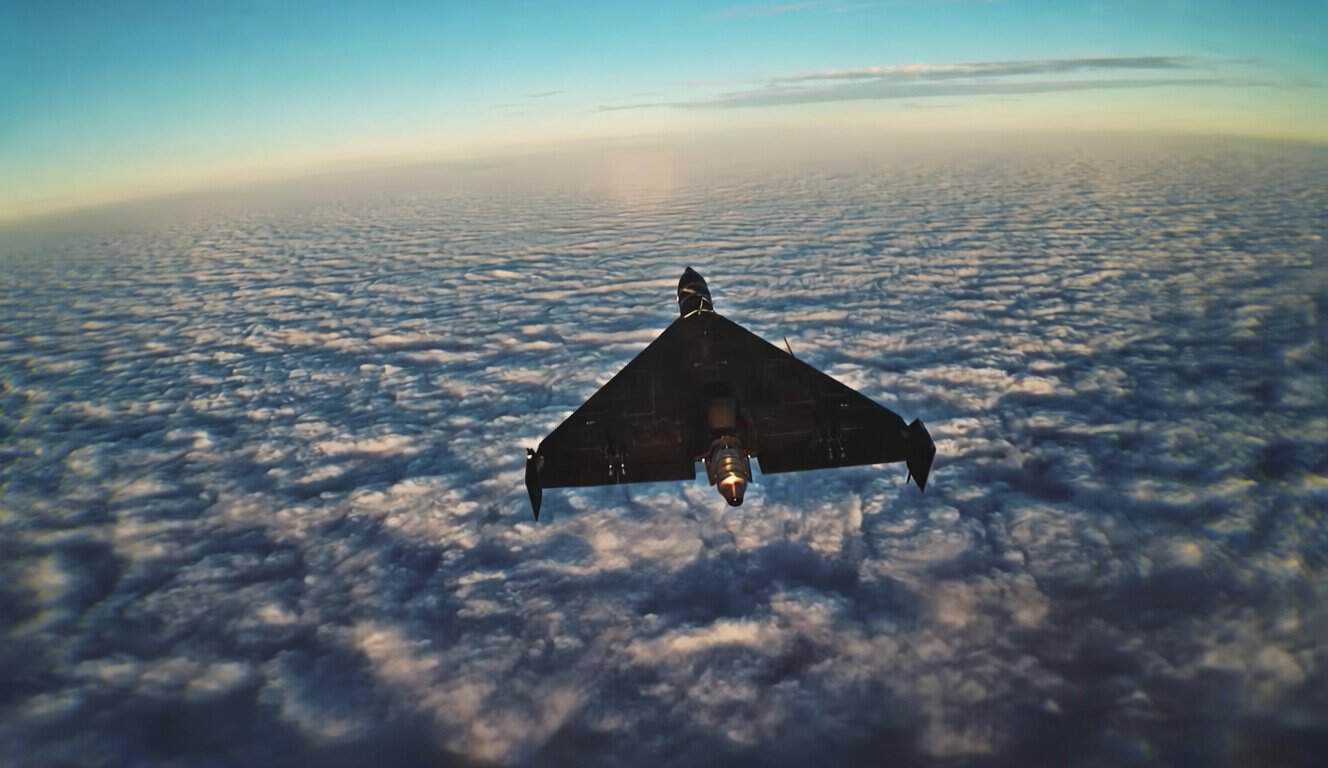
Iran has asked Russia for advanced Geran-4 and Geran-5 attack drones to use against Israel and the United States, according to Euromaidan Press and Western security officials. The request marks a stunning reversal: Iran originally supplied Russia with the Shahed drone design, Russia then mass-produced and upgraded them in combat over Ukraine, and now Tehran wants those improved versions back.
The jet-powered Geran-5 flies at up to 600 km/h, carries a 90-kilogram warhead, and can strike targets 1,000 kilometers away, according to Defence Security Asia. These upgraded drones are harder to intercept than older models—Ukrainian officials report interception rates of only 60 percent compared to 90-95 percent for earlier versions.
From Tehran to Moscow and Back Again
The drone saga began with Iran supplying Russia the original Shahed design. Russia then built factories to mass-produce them and upgraded the drones through real combat use in Ukraine. Euromaidan Press reports that Russia has now created jet-powered versions far more capable than the originals Iran sold.
This technology flow reversal shows how closely the two countries cooperate on weapons. Iran designed the concept. Russia refined it on the battlefield. Now Iran wants access to Russia's battlefield-tested improvements for its own conflicts.
Faster, Smarter, Harder to Stop
The newer Geran models pack serious upgrades. They combine Chinese mesh-radio network modems with Russian anti-jamming antennas, thermal imaging, and AI-powered targeting systems, according to militarnyi.com. The older drones relied on basic guidance. These new ones think for themselves in flight.
Speed makes them deadly. At 600 km/h, the Geran-5 acts like a cruise missile, not a slow propeller drone. Defence Security Asia notes this jet-powered design makes interception far harder—Ukrainian air defenses only stop 60 percent compared to 90-95 percent of the older, slower models.
Cheap Weapons That Pack Expensive Firepower
The Geran drones cost far less than conventional cruise missiles, yet deliver similar destructive power. Voice of Emirates reports that Russia is expanding production of advanced weapons that combine high technical capability with low costs. This combination poses a major challenge to Ukraine and the United States.
Iran could use these drones to swamp air defenses through saturation attacks—sending so many drones at once that defenders cannot stop them all. Potential targets include airfields, energy infrastructure, radar sites, and command centers. Ukraine says more than 60 companies are now racing to develop defenses against the upgraded systems.
The Connection to Chinese Tech and Su-25 Jets
Pro-Kremlin media claim the Geran-5 can launch from Russian Su-25 fighter jets, which Iran reportedly bought in 2025, according to Daily Beirut. This claim has not been independently confirmed. If true, it would give Iran mobile launch platforms and make the drones even harder to track and intercept.
The inclusion of Chinese components signals deeper tech-sharing among Iran, Russia, and China. Neither Iran nor Russia has officially confirmed the drone request or any transfer. Western officials say they are watching closely for signs the advanced drones have actually moved between the countries.
Sentiment
Mostly PositiveNEGATIVENEUTRALPOSITIVE
Publishers
22
Articles
14
Reach
36
A
AnonymousAuthor


