Strategic Gallium Production
Sojitz-Led Consortium Secures Final Investment for Strategic Gallium Plant at Alcoa Wagerup
Anonymous
Key Points
1
Final investment decision for the gallium project was reached by end-2025, with production slated to begin in 2026 at about 100 metric tons per year at Alcoa's Wagerup refinery.
2
The Alcoa Wagerup gallium facility could supply as much as 10% of global gallium demand, underscoring its potential significance in high-tech and defense supply chains.
3
Plans are moving toward a structured, government-backed financing model via a special-purpose vehicle, with governments providing capital and taking gallium offtake proportional to their stakes.
4
There is at least $2 billion in bilateral government support for critical-minerals initiatives linked to the project, illustrating policy-level backing beyond the plant itself.
Alcoa has made a final investment decision to build a gallium production plant at its Wagerup alumina refinery in Western Australia, backed by the governments of Australia, Japan, and the United States, according to Mining.com. The plant is expected to start production in 2026 at roughly 100 metric tons per year.
The move is a direct response to China's dominance of global gallium supply. Newshub Medianet reported that the three governments and Alcoa made the decision jointly, framing it as a critical step to secure supply chains for semiconductors, 5G technology, and defense electronics.
Why a Byproduct Refinery Beats a New Mine
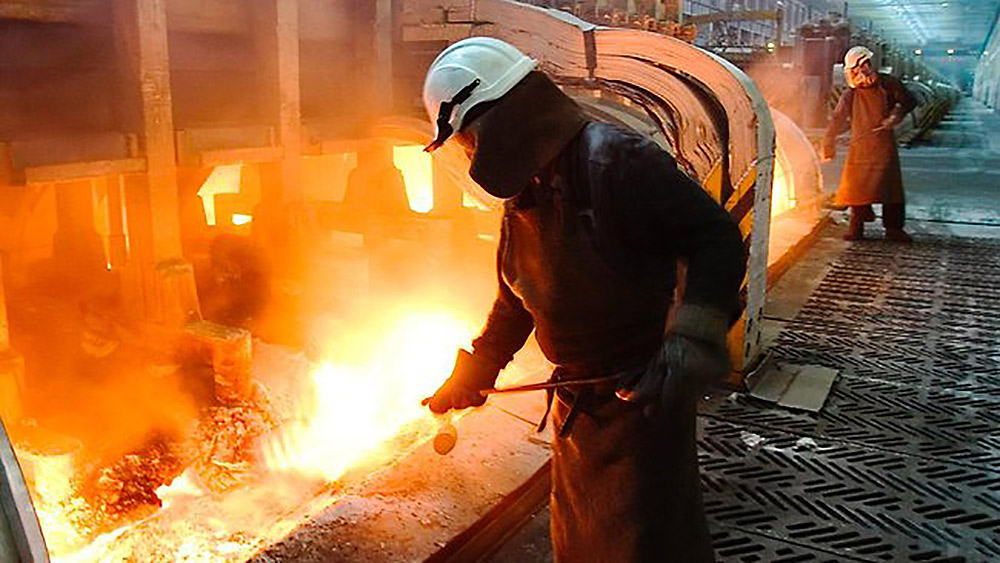
Gallium is not mined directly. It is extracted as a byproduct of refining bauxite into alumina. That means the Wagerup plant does not need a new mine — it simply captures material already flowing through Alcoa's existing refinery. Discovery Alert noted this gives the project a structural cost advantage that a standalone gallium mine cannot match.
At 100 metric tons per year, the Wagerup plant could supply roughly 10% of total global gallium demand, according to Discovery Alert. That is a significant slice of a market currently dominated by China, which controls an estimated 80% or more of world output.
Three Governments Put Money and Policy Behind the Deal
The project is structured around a special-purpose vehicle, with Australia, Japan, and the United States each contributing capital and receiving gallium offtake proportional to their stakes. Gurufocus reported that at least $2 billion in bilateral government support for critical minerals is linked to the broader initiative surrounding this project.
A consortium led by Sojitz and JAGA is anchoring the Japanese side of the deal. Mining.com reported that backing from all three governments gives the project a financing structure rare for an industrial facility of this scale. Government involvement also reduces the commercial risk for Alcoa.
Gallium's Role in Chips, Radar, and 5G Networks
Gallium is a key input for gallium nitride and gallium arsenide semiconductors. These materials power 5G base stations, military radar, and electric vehicle components. Without gallium, many high-tech and defense supply chains stall. That is why all three governments treated this plant as a national security priority, not just an industrial investment.
China moved to restrict gallium exports in mid-2023, sharpening Western urgency. Discovery Alert described the Wagerup facility as one of the most strategically significant industrial plants to be commissioned this decade. The 2026 start date means allied nations could have a reliable non-Chinese gallium source within roughly 18 months.
What Comes Next Before First Production in 2026
The final investment decision clears the path for detailed engineering and procurement. Gurufocus noted that offtake arrangements tied to each participant's government stake are still being finalized. Feasibility work is also ongoing to confirm plant specifications and refinery integration at the Wagerup site.
Alcoa has not disclosed the total capital cost of the plant. But with three sovereign governments co-investing and committing to buy the output, the commercial structure is more secure than a typical mining project. If the 2026 timeline holds, Wagerup could reshape how allied nations think about critical mineral self-reliance.
Sentiment
Mostly PositiveNEGATIVENEUTRALPOSITIVE
Publishers
10
Articles
25
Reach
35
A
AnonymousAuthor


