One-in-15-Million Quads
Brisbane hospital celebrates birth of naturally conceived identical quadruplets, a one-in-15-million event
Anonymous
Key Points
1
RBWH’s Dr. Alexa Bendall suggests this may be the first naturally conceived identical quadruplets case in Australia, underscoring its rarity in the country.
2
The quadruplets were born on July 14, delivering at 28 weeks and four days, a detail highlighted in international coverage.
3
Jenitar Na’amoana is 34 years old, and she and husband Jortham already have four children, making the newborns part of a now larger family of 10.
4
The newborns’ weight spread was exceptionally tight, with only about 100 grams separating them at birth.
5
The family has launched a GoFundMe campaign specifically to fund a larger 10- to 12-seat van and cover ongoing medical and living costs related to caring for four newborns.
An Australian couple welcomed four identical baby girls at the Royal Brisbane and Women's Hospital on July 14 — an event doctors say may be the first of its kind in Australia. Jenitar and Jortham Na'amoana, who already had four children, now have a family of ten after the girls — Emily, Harriet, Alexa, and Catherine — arrived via emergency C-section at just 28 weeks and four days. Today reported that doctors put the odds of such a birth at around one in 15 million.
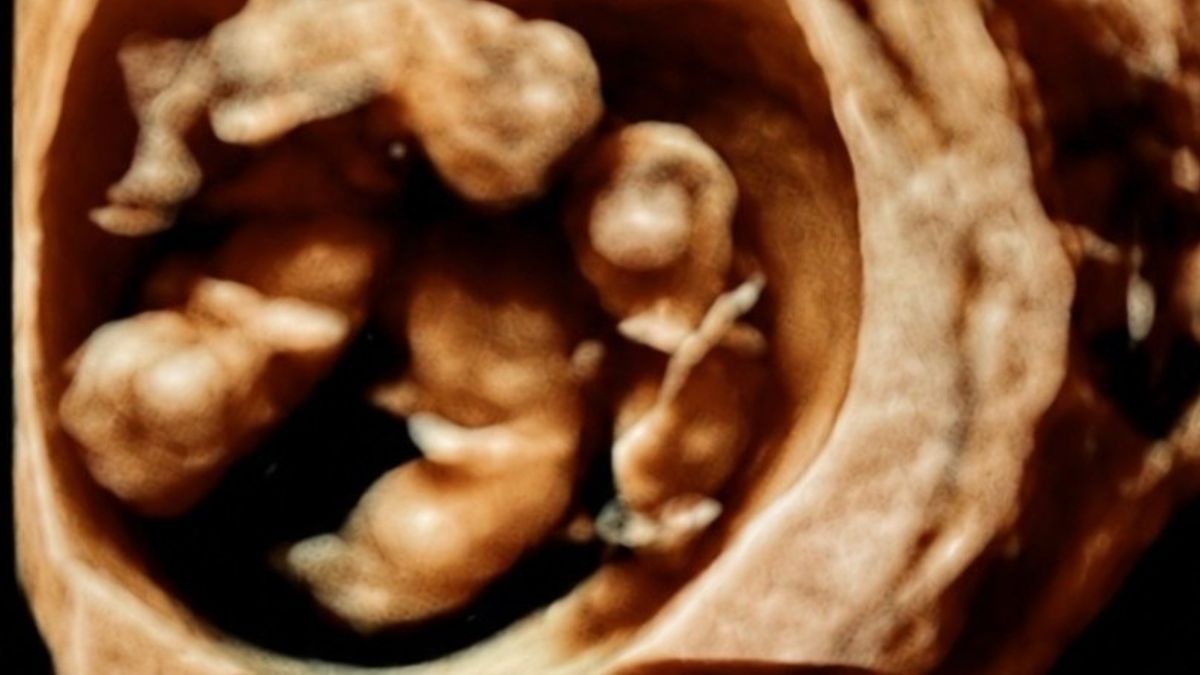
The quadruplets are monozygotic — meaning they came from a single fertilised egg that split four ways. They share one placenta but each has her own amniotic sac. Dr. Alexa Bendall, who helped care for the mother, said the case may be the first naturally conceived identical quadruplet birth in Australia, according to Yahoo Style.
Four Girls from One Egg: What Made This Pregnancy So Rare
Identical quadruplets happen when one fertilised egg splits into four separate embryos. This is extraordinarily rare on its own. What made this case even more unusual is that all four babies shared a single placenta. Doctors describe that combination as practically unheard of. AOL noted that the pregnancy was monitored closely from 25 weeks due to the extreme risks involved.
Sharing one placenta raises serious danger for both mother and babies. Blood flow and nutrients must stretch across all four fetuses, which raises the risk of complications at every stage. Jenitar, 34, carried the babies to 28 weeks and four days before doctors delivered them by emergency C-section. At birth, the four girls weighed within about 100 grams of each other — a remarkably tight range.
One Baby Named After the Doctor Who Helped Save Them
The Na'amoanas gave one of their daughters a very special name. The girl named Alexa was named after Dr. Alexa Bendall, the maternal fetal medicine specialist who cared for Jenitar during the high-risk pregnancy. Today reported on the touching tribute, noting Dr. Bendall praised Jenitar's strength and resilience throughout the process.
Dr. Bendall described the birth as a remarkable medical event. She said cases like this are so rare that medical literature offers little guidance. The four girls are now in the neonatal intensive care unit at RBWH, where doctors will monitor them as they grow toward full term. Premature babies born at 28 weeks typically spend several months in hospital before going home.
Family of Six Becomes Family of Ten Overnight
Before July 14, Jenitar and Jortham had four children at home. The arrival of four more babies at once means the family jumped from six to ten people in a single day. Yahoo Style reported that the couple called the girls "our four precious miracles." The birth has drawn international attention and an outpouring of public support.
The Na'amoanas are also facing serious practical challenges. Caring for four premature newborns alongside four older children requires major logistical and financial resources. The family launched a GoFundMe campaign to help cover medical and living costs. One specific goal listed is buying a larger 10- to 12-seat van to transport the whole family, according to AOL.
What Comes Next for the Four Girls in Intensive Care
Babies born at 28 weeks face a long road. Their lungs, brains, and digestive systems are still developing. The girls will likely remain in the RBWH neonatal intensive care unit for weeks or months. Doctors will watch closely for complications that are common in premature and multiples births, including breathing problems and low birth weight challenges.
The medical team has not given a discharge timeline. The family's GoFundMe aims to ease the financial pressure of the coming months. For now, Jenitar and Jortham are visiting their daughters daily as they grow stronger. Yahoo Style reported that despite the hardship, the couple remains focused on the joy of welcoming four healthy new lives into their growing family.
Sentiment
Mostly PositiveNEGATIVENEUTRALPOSITIVE
Publishers
19
Articles
48
Reach
67
A
AnonymousAuthor


