AI Contrail Reduction Trials
Cathay Pacific and Google Expand AI Trials to Reduce Flight Contrail Warming
Anonymous
Key Points
1
Cathay Pacific is Google’s first commercial airline partner in the Asia-Pacific region to test the technology and the first airline worldwide to evaluate contrail avoidance on ultra-long-haul flights.
2
The Hong Kong–Singapore corridor accounted for more than half of the estimated reduction in contrail warming during the initial trial, highlighting how strongly the results were concentrated on particular routes.
3
Research cited in the trial indicates that just 2% to 3% of flights generate about 80% of contrail warming, suggesting that targeted avoidance could deliver most of the benefit without rerouting the majority of flights.
4
The operational trade-off can be measurable: an earlier 2023 study of 70 flights reduced contrails by 54% while requiring about 2% more fuel on rerouted flights, though researchers estimated the increase could amount to as little as 0.3% across an airline’s full schedule.
5
The project is intended to address a research gap because Asia-Pacific airspace has been less represented in previous contrail studies; Cathay’s operational data could reveal atmospheric and logistical challenges specific to one of the world’s busiest aviation regions.
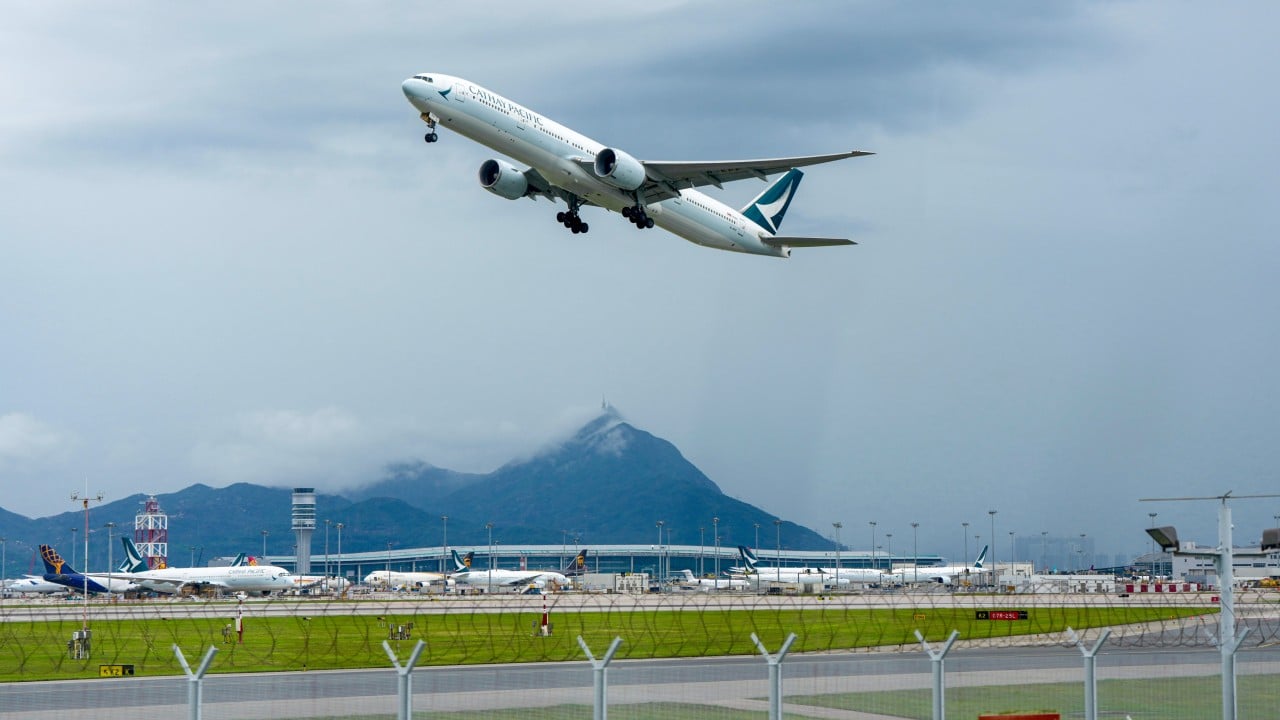
Cathay Pacific and Google are expanding trials of an AI system that predicts where persistent contrails will form, allowing pilots to make small altitude adjustments and avoid them Aviation Week. An initial trial in late 2025 covered more than 100 flights, with more than 80 using contrail-avoidance routes and reducing associated warming impact by roughly 40%, according to Google's satellite analysis. Cathay is Google's first commercial airline partner in Asia-Pacific testing the technology and the first airline worldwide to evaluate contrail avoidance on ultra-long-haul flights Aviation Week.
How AI Targets the Worst Contrail-Producing Flights
Contrails cause about one-third of aviation's climate impact, but only a tiny fraction of flights create the most harmful ones Aviation Week. Research shows just 2% to 3% of flights generate about 80% of contrail warming IJR. The AI system combines forecasts, weather data and satellite imagery to pinpoint those flights, then sends alerts to pilots and dispatchers through Cathay's electronic flight folders. Small altitude shifts of a few thousand feet can avoid warming without disrupting the wider flight network.
Hong Kong-Singapore Route Drove Most of the Early Gains
The Hong Kong–Singapore corridor accounted for more than half of the estimated contrail warming reduction during the initial trial Aviation Week. This concentration shows how strongly results clustered on particular routes, highlighting which flight paths benefit most from altitude changes. The finding points to why regional data matters: contrail formation depends on local temperature, humidity and aircraft patterns that vary by region.
The Fuel Burn Trade-Off Pilots and Schedulers Must Navigate
Altitude changes to avoid contrails can increase fuel use and carbon emissions, creating a climate trade-off rather than a clear win Aviation Week. A 2023 trial of 70 flights reduced contrails by 54% while requiring about 2% more fuel on rerouted aircraft. However, because only a minority of flights need rerouting, the increase across an airline's full schedule could be as little as 0.3%, researchers estimated IJR. The net benefit depends on atmospheric conditions, route economics and the warming avoided.
Next Phase Tests Effectiveness on Ultra-Long Routes
Cathay and Google's next step, working with Contrails.org, will use a randomized controlled trial on ultra-long-haul Asia-Pacific and transpacific routes Aviation Week. The expanded trials aim to measure real-world effectiveness, operational feasibility and costs. Asia-Pacific airspace has been less studied than other regions despite being one of the world's busiest aviation corridors. Operational data from Cathay could reveal atmospheric and logistical challenges unique to the region and improve forecasting for future deployments.
Sentiment
Mostly PositiveNEGATIVENEUTRALPOSITIVE
Publishers
30
Articles
101
Reach
131
A
AnonymousAuthor


