Next-Gen AI Hardware Unveiled
NVIDIA Unveils New Spectrum-X6 and Vera Rubin Platforms to Revolutionize AI Data Centers
Anonymous
Key Points
1
Spectrum-X6 delivers 102.4 terabits per second of bandwidth, twice the previous generation, and is positioned to anchor a broader Spectrum-X Ethernet platform that enables AI factories to operate as a single end-to-end computing system, improving utilization and reducing bottlenecks across large AI processor clusters.
2
Nvidia highlights OpenAI and Anthropic as collaborators on Vera Rubin, with Vera Rubin production ramping in May 2026 and initial shipments already reaching hyperscalers such as AWS, Google Cloud, and Microsoft in the second half of 2026.
3
The Vera CPU uses a monolithic die with Nvidia's second-generation Scalable Coherent Fabric interconnect (SCC) and is engineered specifically for agentic AI workloads, emphasizing high per-core performance and low memory latency to support continuous CPU–GPU task orchestration.
4
Real-world benchmarks indicate Vera Rubin delivers notable agentic AI gains, including about 1.9x faster agentic performance and a six-fold reduction in latency compared with x86-based systems in certain tests.
5
CoreWeave’s early results with Vera Rubin show up to 10x more tokens per watt on the DeepSeek R1 model compared with Blackwell, and more than a fourfold improvement in throughput per megawatt on the GB200 NVL72 system, based on extensive configuration and testing.
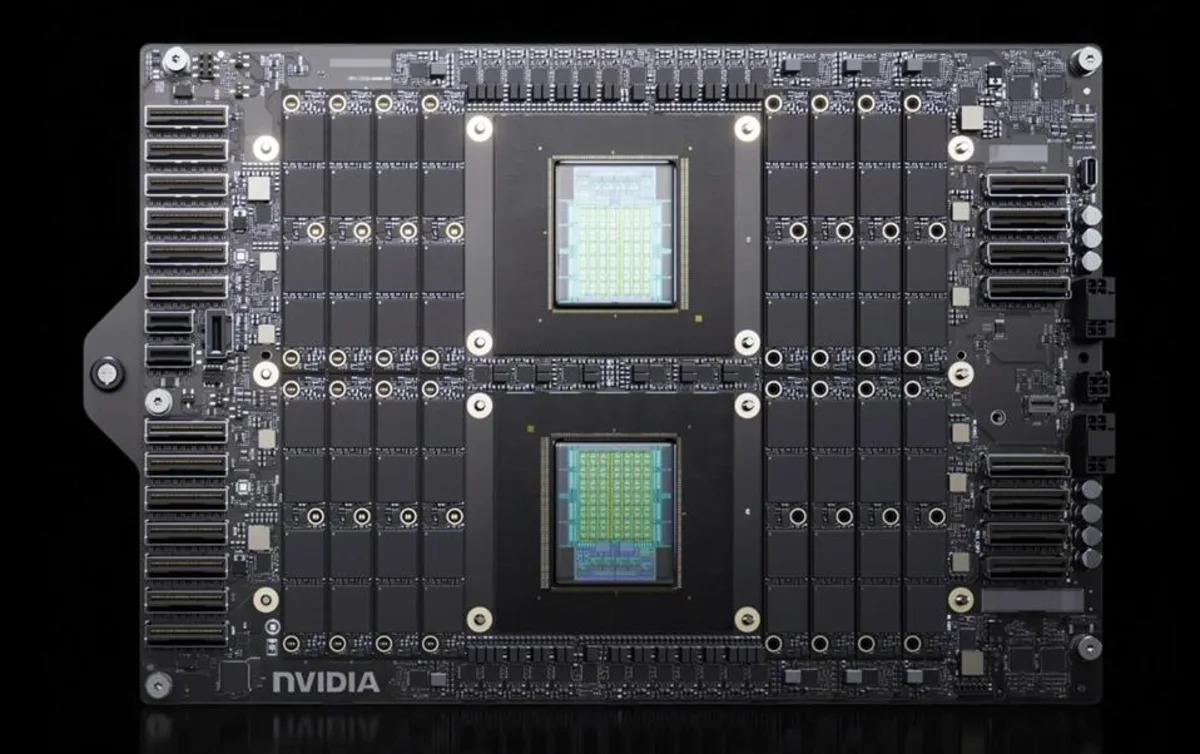
NVIDIA has unveiled sweeping details about its next-generation AI infrastructure stack, anchored by the Spectrum-X6 networking switch and the Vera Rubin computing platform. The Spectrum-X6, developed at NVIDIA's Israeli R&D center, delivers 102.4 terabits per second of bandwidth — twice the previous generation — and will be deployed by some of the world's largest AI operators, including Microsoft, xAI, Tesla, CoreWeave, and Nebius, according to Calcalist Tech.
Meanwhile, NVIDIA's Vera Rubin platform is already in customers' hands for testing. The company says it cuts inference costs by up to 10x compared to its current Blackwell chips, with full production ramping in May 2026 and shipments to hyperscalers like AWS, Google Cloud, and Microsoft following in the second half of 2026, Crypto Briefing reported.
Spectrum-X6 Turns AI Clusters Into One Giant Computer
The Spectrum-X6 switch is the backbone of what NVIDIA calls an "AI factory" — a data center where thousands of AI chips work as a single system. By delivering 102.4 terabits per second of bandwidth, the switch cuts communication bottlenecks that slow down large AI training runs. Calcalist Tech noted that the switch anchors the broader Spectrum-X Ethernet platform, improving how efficiently chips share data across massive clusters.
Top AI infrastructure operators are already moving to deploy it. Microsoft, xAI, Tesla, CoreWeave, and Nebius are among the first customers. The switch was built entirely at NVIDIA's R&D center in Israel, highlighting the growing role of that facility in NVIDIA's hardware roadmap.
Vera CPU Built From the Ground Up for Agentic AI
NVIDIA's Vera CPU combines 88 custom "Olympus" cores, 176 threads, and a 164MB unified cache on a single chip — known as a monolithic die. It connects to up to 1.2 TB/s of LPDDR5X memory. VideoCardz reported that the design uses NVIDIA's second-generation Scalable Coherent Fabric to move data quickly between the CPU and GPU.
The chip is built for agentic AI — systems where software agents make decisions and hand off tasks between CPU and GPU constantly. Yahoo Tech explained that NVIDIA optimized the Olympus core for fast per-core speed and low memory latency, because agentic tasks can't afford to wait on slow data movement. Early tests show about 1.9x faster agentic performance and a six-fold drop in latency versus standard x86 systems.
CoreWeave Results Show 10x More Tokens Per Watt
Real-world results are already turning heads. CoreWeave ran extensive tests on the Vera Rubin platform using the DeepSeek R1 AI model. Their results showed up to 10x more tokens per watt compared to Blackwell — meaning the new system produces far more AI output for every unit of electricity used. Throughput per megawatt on the GB200 NVL72 system improved by more than fourfold.
These gains matter because inference — running AI models to answer queries — is now the dominant cost for most AI companies. Cutting that cost by 10x changes the economics of building AI products. NVIDIA named OpenAI and Anthropic as collaborators on the Vera Rubin platform, signaling that the industry's top AI labs helped shape what the hardware needs to do.
Production Ramp Puts Hyperscalers First in Line for 2026
NVIDIA plans to start full Vera Rubin production in May 2026. Shipments to hyperscalers — AWS, Google Cloud, and Microsoft — will follow in the second half of 2026. The platform pairs Vera CPUs with Rubin GPUs and uses advanced liquid cooling to handle the extreme heat that comes with this level of computing power, according to Crypto Briefing.
The broader message from NVIDIA is clear: the company is no longer just a GPU maker. With Spectrum-X6 networking, Vera CPUs, Rubin GPUs, and its software stack all tied together, NVIDIA is positioning itself as the full-stack provider for next-generation AI data centers. VideoCardz noted that the monolithic die design and high-speed interconnects are core to making that vision work at scale.
Sentiment
Mostly PositiveNEGATIVENEUTRALPOSITIVE
Publishers
18
Articles
19
Reach
37
Topics
A
AnonymousAuthor


