Redistricting Injunction Denied
Tennessee Redistricting Map Takes Effect as Court Denies Injunction, Voters Allege Diluted Black Power
Anonymous
Key Points
1
The Sherman v. Hargett case is brought by three Memphis voters alongside civil rights groups, including the Black Clergy Collaborative of Memphis, the Memphis A. Philip Randolph Institute, and the Equity Alliance, and is being represented by the American Civil Liberties Union.
2
Plaintiffs’ advocates argued that Black voters in Memphis face disenfranchisement and that the new map unlawfully dilutes their political power; Amber Sherman said, 'The decisions by this court continue to further the disenfranchisement of Black voters in Memphis,' and Ari Savitzky added that the map is designed to suppress voting power ahead of another critical election.
3
The three-judge panel denied the preliminary injunction, stating that the plaintiffs are unlikely to succeed on the merits and that the map’s design appears aimed at partisan advantage rather than a racial motive, reflecting factors beyond immediate relief concerns.
4
The redrawing occurred in the broader context of a Supreme Court-era shift on the Voting Rights Act, with references to the Louisiana v. Callais decision that widened latitude for partisan gerrymandering; Tennessee officials argued the redraw fits that legal backdrop.
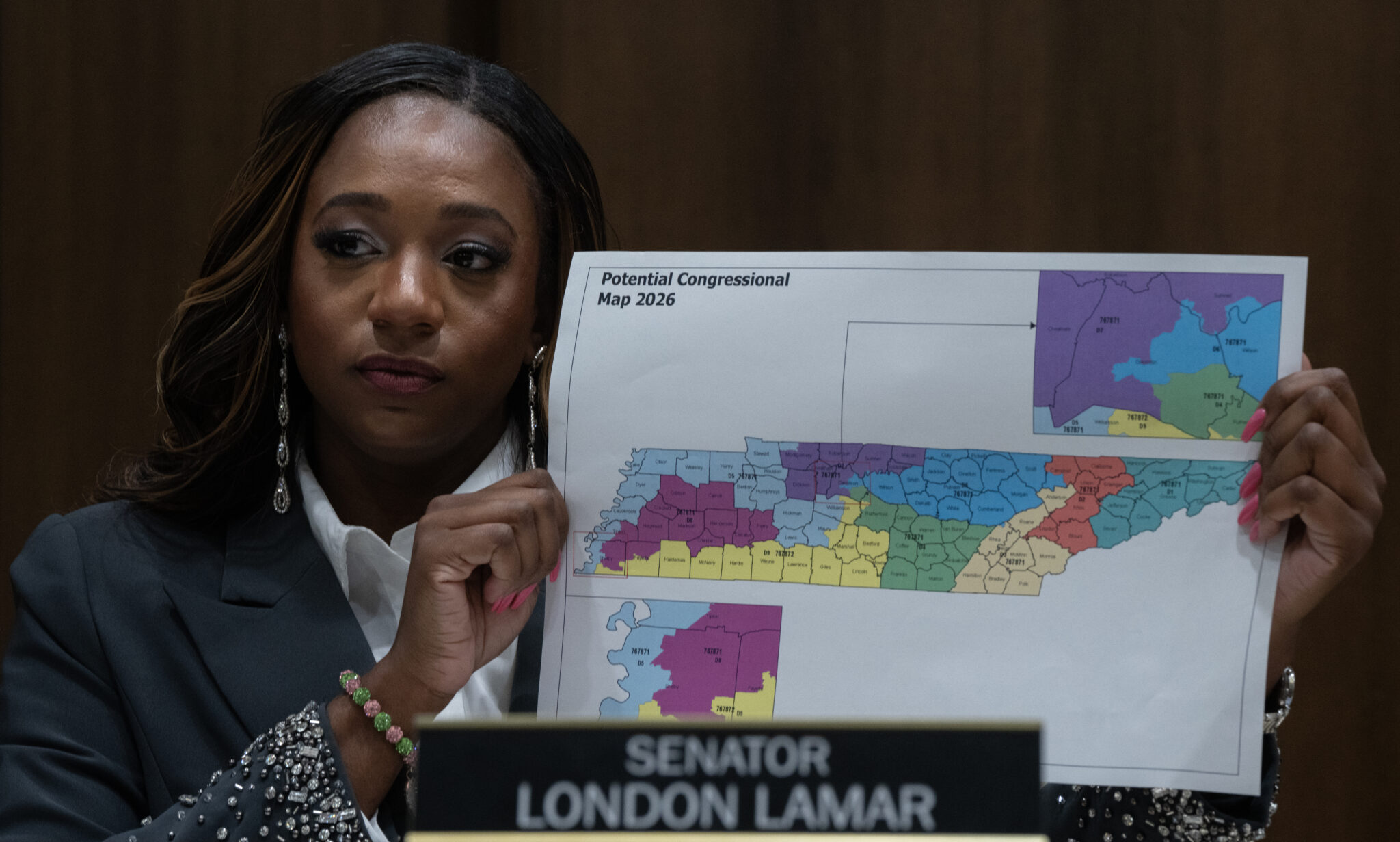
A federal three-judge panel has denied a request to halt Tennessee's new congressional map, allowing the Republican-drawn districts to take effect while lawsuits continue, according to Tennessee Lookout. The map splits majority-Black Memphis — once a single congressional district — into three separate districts, which plaintiffs say strips Black voters of political power.
The ruling came in Sherman v. Hargett, a case brought by three Memphis voters and civil rights groups including the Black Clergy Collaborative of Memphis and the ACLU, Action News 5 reported. Plaintiff Amber Sherman said after the ruling: 'The decisions by this court continue to further the disenfranchisement of Black voters in Memphis.'
How Memphis Was Split Into Three Districts
Tennessee Republicans redrew the congressional map after the 2020 census, breaking up the old 9th Congressional District. That district had been majority-Black and majority-Democratic. The new map divides Memphis among three separate House districts, each with a white majority, Democracy Docket reported.
Plaintiffs argued this was a deliberate move to cancel out Black voting power. ACLU attorney Ari Savitzky said the map 'is designed to suppress voting power ahead of another critical election.' The groups sought a preliminary injunction — a court order to pause the map before the next election cycle.
Judges Say Politics, Not Race, Drove the Redraw
The three-judge panel denied the injunction, saying plaintiffs are unlikely to win on the merits, Tennessee Lookout reported. The judges found no direct evidence that race was the primary reason for the redraw. Instead, they said the map appears aimed at partisan advantage — helping Republicans — rather than targeting Black voters as a group.
That distinction matters legally. Courts have allowed partisan gerrymandering — drawing maps to favor one party — even when it hurts minority communities. Tennessee officials argued the redraw fits squarely within that legal framework, Nashville Scene reported.
A Broader Post-Supreme Court Shift on Voting Rights
The ruling fits a wider pattern across the South, Democracy Docket reported. In recent years, the Supreme Court has narrowed what the Voting Rights Act can do. A key case — Louisiana v. Callais — gave states more room to draw maps that favor one party, even if minority voters lose representation as a result.
Tennessee officials leaned on that legal shift to defend their map. Other redistricting cases in Southern states have seen similar results, with courts refusing to block new maps on racial grounds when partisan intent can be cited instead, according to Red State.
Plaintiffs Vow to Keep Fighting as Elections Near
The denial of a preliminary injunction does not end the lawsuits. Plaintiffs said they will keep challenging the maps as the cases move forward, Nashville Scene reported. The fight matters because 2026 midterm elections are approaching, and the new districts will be used unless a court eventually rules against them.
The Memphis groups — including the Memphis A. Philip Randolph Institute and the Equity Alliance — say the stakes are high for Black political representation. With injunctions denied across related cases, the legal path forward is long, but advocates say they are not done, Democracy Docket reported.
Sentiment
Mostly NegativeNEGATIVENEUTRALPOSITIVE
Publishers
10
Articles
19
Reach
29
A
AnonymousAuthor


