New Sci-Fi Set Photos
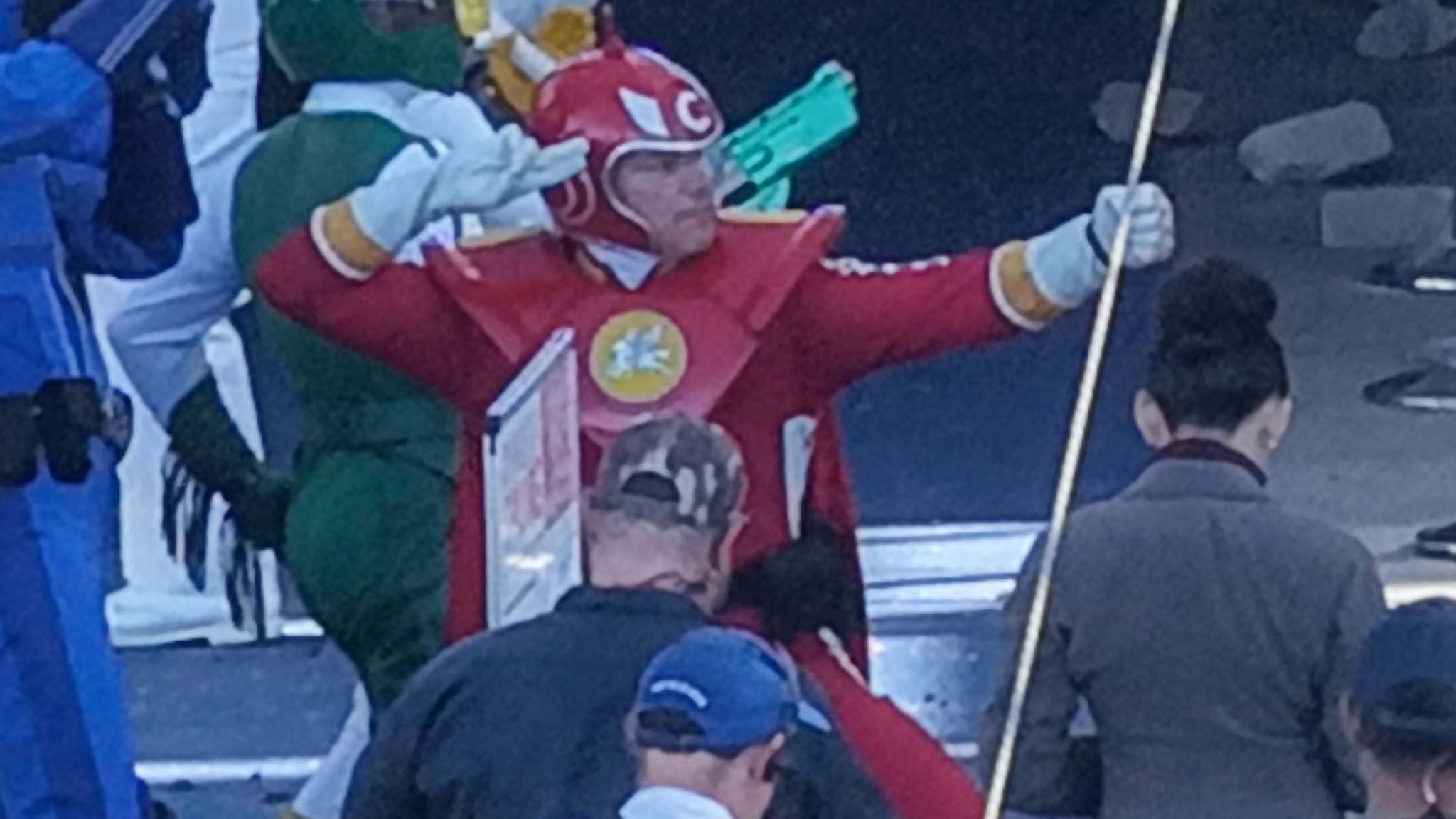
Matt Damon spotted filming new sci-fi project wearing a bright red suit
Anonymous
Key Points
1
TMZ-exclusive set photos (reported by multiple outlets) show Matt Damon in a bright red “Red Ranger”–style suit while filming alongside co-stars Sandra Oh and Charles Melton—Oh is described as playing an ally, and Melton is shown in a blue version of the costumed squad.
2
In leaked/posted set video, the footage lasts about three minutes and includes Daniel Kwan and Daniel Scheinert visibly directing and explaining the scene to Damon and the performers, suggesting the sequence is tightly choreographed with multiple superhero-like figures.
3
Multiple outlets add costume context beyond the red suit: one report says Damon was also seen clean-shaven in a plain black sleeveless shirt before later appearing in the red jumpsuit with matching gloves and futuristic headgear—implying preparation or a grounded phase before the costumed action.
4
One report frames the project’s villain thematically, describing it as a “superhero tentpole with global warming as the villain,” while still insisting the story is original and not officially tied to Power Rangers.
5
Beyond the initial two/three-token cast mentions, at least one report lists additional young leads by name for the color-coded ensemble: Sean Kaufman, Silvia Dionicio, Jackson Kelly, Kerrice Brooks, and Thalia Dudek.
Matt Damon is suiting up as a superhero for his next project with Oscar-winning directors Daniel Kwan and Daniel Scheinert. Set photos from Los Angeles show Damon in a bright red, Power Rangers–style costume with futuristic headgear, filming alongside co-stars in color-coded outfits. SuperHeroHype reports the working title is Thasnagar, a sci-fi film budgeted around $150 million and set for theatrical release on November 19, 2027.
The film is described as an original story with no official connection to the dormant Power Rangers franchise. Cosmic Book News notes Damon plays a guide role for a young ensemble of heroes, with Sandra Oh cast as an AI-like ally character. The narrative jumps between the 1980s and present day, following five young heroes across both timelines as they battle kaiju while tackling themes of climate change.
Why Trotsky's theory of Permanent Revolution was relevant for Russia
Leon Trotsky developed the theory of Permanent Revolution as a response to what he saw as an incomplete revolutionary situation in tsarist Russia. Wiki describes it as the idea that in economically backward countries, the working class must lead a socialist revolution without waiting for the bourgeoisie to establish capitalist development first. Rather than the orthodox Marxist progression of feudalism to capitalism to socialism, Trotsky argued that Russia could leap directly into a workers' state while simultaneously undergoing industrialization and modernization.
This theory directly challenged Stalin's alternative approach of 'Socialism in One Country,' which advocated building socialism within the Soviet Union first before exporting revolution elsewhere. History.com notes that Trotsky believed permanent revolution was the only way to prevent the Soviet Union from bureaucratizing and becoming a tool of the state apparatus rather than remaining true to workers' interests. The theory emphasized international coordination and continuous revolution to prevent counter-revolution, making it fundamentally internationalist in character.
How Stalin suppressed Trotsky's ideas and consolidated power
After Lenin's death in 1924, Stalin systematically worked to eliminate Trotsky as a political rival and suppress his theory of Permanent Revolution. Britannica documents that Stalin allied with other Bolsheviks like Zinoviev and Kamenev to defeat Trotsky in the internal party debates of the mid-1920s, portraying Permanent Revolution as adventurist and reckless. By 1927, Trotsky had been stripped of all major positions and eventually exiled from the Soviet Union in 1929.
Stalin's victory allowed him to implement a completely different strategy focused on rapid industrialization within Soviet borders, abandoning the international revolutionary mission. Marxists.org explains that Stalin used the party apparatus and secret police to eliminate not only Trotsky but also many of his followers, effectively erasing Permanent Revolution from Soviet communist orthodoxy for decades. This internal struggle defined Soviet communism and marked the beginning of the authoritarian bureaucratic state that Trotsky had warned against.
The lasting impact of Permanent Revolution on global communist movements
Although Trotsky was defeated in the Soviet Union, his theory of Permanent Revolution had significant influence on communist movements in China, Vietnam, and Latin America. Journal of Communist Studies notes that Maoist revolutionaries adapted elements of Trotsky's theory when leading peasant-based revolutions in economically backward nations, particularly the idea that socialist transformation could occur without waiting for capitalist development. This represented a strange irony: communist parties influenced by Trotsky's ideas were often fighting against Soviet-backed parties that followed Stalin's orthodoxy.
Trotskyist organizations continue to exist globally as minority movements within the left, keeping Permanent Revolution alive as a theoretical alternative to Stalinism. International Socialist Review documents that Trotskyists argue their theory better explains why anti-colonial and anti-capitalist revolutions occurred in the Global South without the industrial prerequisites that orthodox Marxism deemed necessary. While numerically small, Trotskyist groups have influenced debates about revolutionary strategy, international solidarity, and the relationship between national and world revolution.
Sentiment
Mostly PositiveNEGATIVENEUTRALPOSITIVE
Publishers
11
Articles
5
Reach
16
A
AnonymousAuthor


