Megalodon Tooth Discovery Confirmed
Pennsylvania Family Discovers Megalodon Tooth on New Jersey Beach Vacation
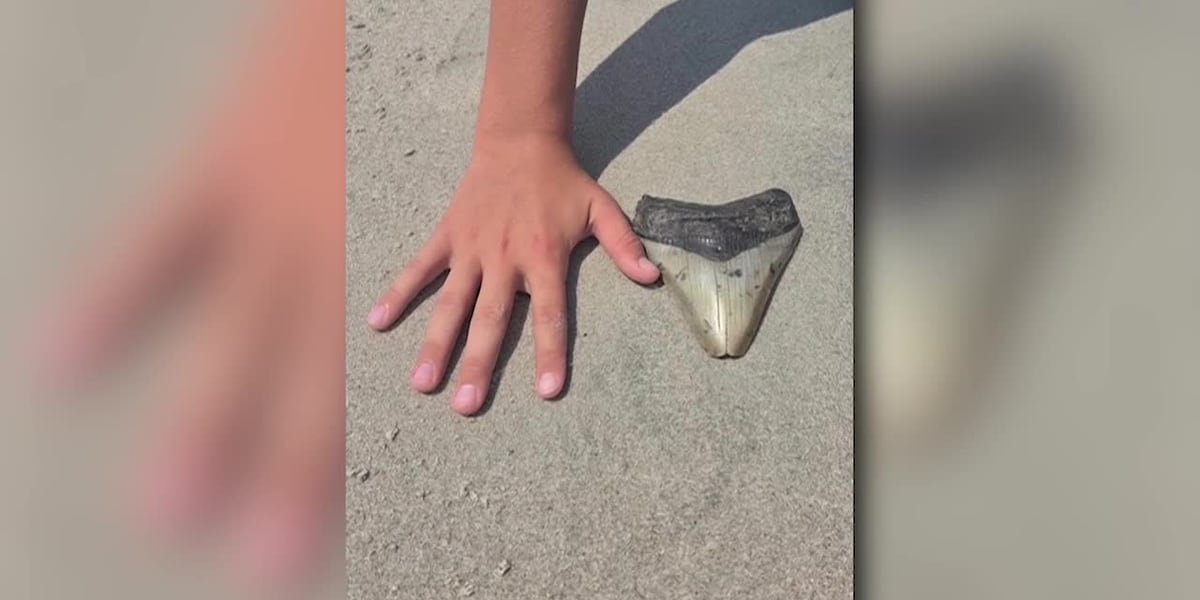
A Pennsylvania family stumbled upon a once-in-a-lifetime find during a routine beach vacation: a four-inch fossilized megalodon tooth buried in the rocks at Sea Isle City beach in New Jersey. Mike Bowers, a father from the Pittsburgh area, spotted the dark triangular object tucked inside a hole in a rock while shelling during low tide — and his son Bo's smaller hand was the only one that could reach it. Fox 8 reported the discovery has since been confirmed by experts at the Cape May Whale Watch and Research Center.
The Cape May Whale Watch and Research Center called it "a MEGA rare find at the Jersey Shore" and congratulated the Bowers family on "a once in a lifetime beach find." The family plans to keep the tooth, which Bo has officially claimed as his own. WSMV confirmed the center authenticated the specimen.
Son's Small Hand Pulled the Fossil Free
Mike Bowers had been searching for shells when he noticed a hole in a rock. He looked inside and saw a dark, triangular shape. "I looked down and I was just astonished, but I couldn't fit my hand in there," he said, according to KPTV. He called over his son Bo, whose smaller hand fit perfectly into the narrow gap.
Bo admitted he was nervous at first. "I was just really excited," he said. "I was scared to put my hand down to, like, see it." Mike added that timing was everything. "We had to be in the right place at the right time," he said. "Because if it wasn't low tide, I would have never found it," according to KCRG.
Why Megalodon Teeth Are So Rare on New Jersey Beaches
The megalodon was a massive prehistoric shark. It went extinct about 3.6 million years ago. It could grow up to 60 feet long and weigh up to 50 tons. A single shark shed around 40,000 teeth in its lifetime. That makes fossilized teeth fairly common in some parts of the world — but not on northeastern U.S. beaches. Fewer than 10 confirmed beach-found megalodon teeth exist in the New Jersey State Museum's entire collection, according to WISTV.
Experts say beach replenishment projects are a key reason these fossils ever surface at all. Crews dredge sand from deep offshore areas and pump it onto public beaches to fight erosion. That process pulls up ancient marine sediment — and the prehistoric fossils buried inside it — depositing them directly on the shore where beachcombers can find them. The chip on the tip of the Bowers' tooth likely came from the megalodon striking the bone of a large prey animal, such as a prehistoric whale, millions of years ago.
A Bucket-List Dream Come True for an Avid Diver
For Mike Bowers, this was no ordinary beach moment. The scuba diver from Monongahela, Pennsylvania, had long dreamed of finding a megalodon tooth. It was on his personal bucket list. WLOX reported that finding one on a public beach — rather than underwater — made the discovery even more surprising.
The family took the tooth to the Cape May Whale Watch and Research Center, where a fossil expert confirmed it was real and intact. The center shared the news publicly, sparking excitement up and down the Jersey Shore. Local beachcombers who had searched Sea Isle City for decades reported never seeing anything like it, according to KAIT 8.
Discovery Sparks Fossil Hunting Frenzy Along the Shore
The find quickly went national. News of the Bowers family's tooth spread across regional and national outlets within days. Amateur fossil hunters began flocking to nearby beaches, hoping to find their own piece of prehistoric history. Sea Isle City and surrounding towns along the southern Jersey Shore may see a short-term boost in tourism as a result, according to WLFI.
Scientists see a teaching moment in all the excitement. Naturalists at the Cape May Whale Watch and Research Center are using the buzz to explain Miocene and Pliocene epoch marine life to visitors. A tooth needs at least 10,000 years of mineral absorption to become a true fossil. This one is millions of years old — and now it belongs to a kid from Pittsburgh.
Sentiment
NeutralPublishers
39
Articles
39
Reach
39


