Diverse Berlin Fashion
Berlin Fashion Week Unveils Diverse Spring 2027 Collections, Blending History, Sustainability, and Gender Exploration
Anonymous
Key Points
1
GmbH’s 10th-anniversary collection is rooted in Modehauptstadt Berlin, a research-driven homage to Berlin's 1920s–30s fashion prominence and the Nazi destruction of Germany's textile industry, as documented by historian Gesa Kessemeier.
2
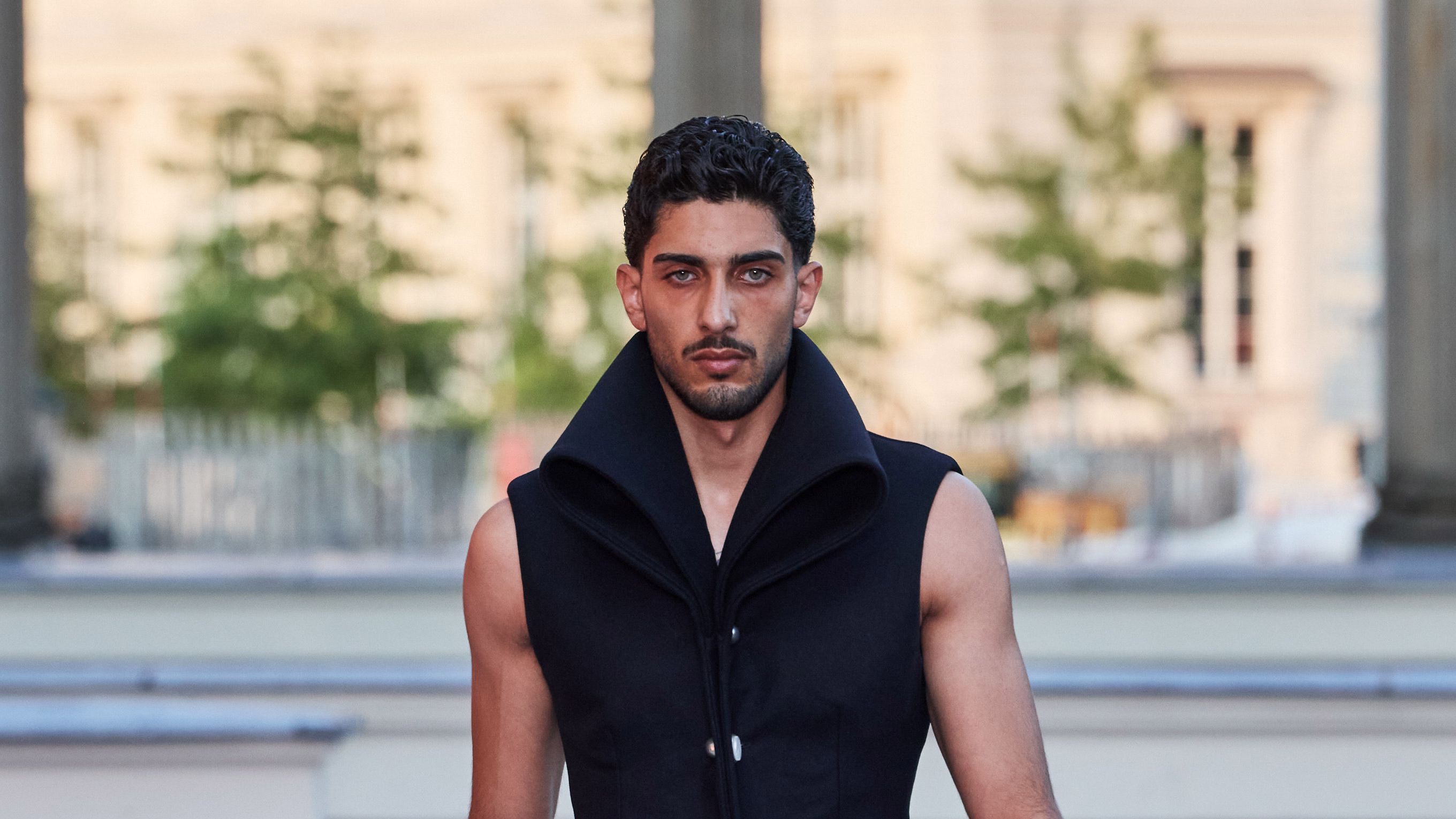
Yanagawa’s spring 2027 collection leans into androgyny with subtle feminine touches inspired by Bettina Rheims’s Modern Lovers; the designer, a former boxer, says he sought the space between masculinity and femininity, including men’s shoes with slender heels that remain almost invisible at first glance.
3
Buzigahill upcycles leftovers sourced from the US and Europe and brought into Uganda via the UAE, maintaining a zero-waste approach; the collection honors Africa’s independence era icons, including Kenneth Kaunda and his Kaunda suits, with founder Bobby Kolade stressing that the label 'don’t ever throw any textiles away when we upcycle'.
4
Richert Biel’s Kreuzberg store opening features a week-long auction of 10 Spring 2027 pieces, including a white shirt cut from 19th-century French bed linen, latex aprons, and a plaid linen kilt, illustrating the designers’ playful approach to valuing their craft.
5
Haderlump’s Atrium, shown at Hotel Adlon, fuses late 19th/early 20th-century silhouettes with hotel-themed motifs such as room keys and cutlery-inspired fastenings; the collection also features a strapless bias-draped faded denim dress that evokes the hotel guest experience.
Berlin Fashion Week returned with a wide-ranging Spring 2027 slate, showcasing labels from Berlin, Kampala, and Tokyo under one season. The shows covered everything from 1920s fashion history to zero-waste upcycling, making this one of the city's most diverse fashion weeks in recent memory, according to Vogue.
Six distinct collections headlined the week, each with a sharp point of view. Designers drew on historical memory, sustainability, and gender fluidity to push beyond seasonal trend cycles, Head Topics reported.
GmbH Revisits Berlin's Lost Fashion Golden Age
GmbH designers Serhat Işık and Benjamin A. Huseby used their 10th anniversary to look back. Their collection, titled "Desire Paths," draws on Berlin's status as a global fashion capital in the 1920s and 1930s, Vogue reported. Historian Gesa Kessemeier documented how the Nazi regime dismantled Germany's textile industry, erasing decades of design prestige. The collection is a research-driven effort to reclaim that legacy.
The label calls its research project Modehauptstadt Berlin — German for "fashion capital Berlin." The goal is to revive local design by reminding the industry what was lost. GmbH wants the city to reclaim a role it once held but was forcibly stripped of, according to Vogue.
Buzigahill Turns Discarded Global Textiles Into a Political Statement
Kampala-based label Buzigahill presented a zero-waste collection built entirely from upcycled garments. Founder Bobby Kolade sources discarded clothing from the US and Europe, brings it into Uganda through the UAE, and transforms it into new pieces. "We don't ever throw any textiles away when we upcycle," Kolade said, according to Head Topics.
The collection honors icons from Africa's independence era, including Zambian president Kenneth Kaunda and his signature Kaunda suits. Kolade frames the work as a direct challenge to colonial-era trade inequities that still flood African markets with Western cast-offs. The sharp, minimalistic silhouettes carry the weight of that history.
Yanagawa Finds the Space Between Masculine and Feminine
Japanese designer Arashi Yanagawa, who founded John Lawrence Sullivan in 2003, built his Spring 2027 collection around androgyny. He started with precise, structured tailoring — the backbone of his label — and wove in quiet feminine touches. Think lace, mesh, crushed velvet, and men's shoes with slender heels that are nearly invisible at first glance, Head Topics reported.
Yanagawa cited photographer Bettina Rheims's portrait series Modern Lovers as his key inspiration, according to Vogue. Rheims's work blurs gender lines through intimacy and gaze. Yanagawa, a former boxer, said he was searching for "the space between masculinity and femininity" — a tension his tailoring translates into clothing without resolving it.
Haderlump and Richert Biel Use Place as Their Canvas
Haderlump staged its Atrium collection inside the historic Hotel Adlon. The show fused late 19th and early 20th-century silhouettes with hotel-themed details — room keys, cutlery-shaped fastenings, and a strapless bias-draped faded denim dress. The setting turned the runway into a comment on service, memory, and how architecture shapes what we wear, Vogue reported.
Richert Biel took a different approach by opening a new store in Kreuzberg. For one week, the label auctioned 10 Spring 2027 pieces, including a white shirt cut from 19th-century French bed linen, latex aprons, and a plaid linen kilt. The auction made craftsmanship visible and gave buyers a direct stake in the collection's value, according to Head Topics.
Sentiment
Mostly NegativeNEGATIVENEUTRALPOSITIVE
Publishers
13
Articles
16
Reach
29
A
AnonymousAuthor


