O'Hare Flight Cap
FAA Extends Chicago O'Hare Flight Limits Another Year to Ease Congestion
Anonymous
Key Points
1
The cap is set around 2,700 movements per day for the peak 2026 summer, with airlines asked to trim or retime services to fit within the overall limit; carriers can decide which routes to adjust (regional, off-peak frequencies, or upgauging) rather than having specific flights mandated to be cut.
2
The FAA has extended the 10% flight reductions at O’Hare for another year, delaying a return to the previously targeted 3,080 daily operations; the initial restriction limited daily arrivals and departures to 2,708 from May 17 to Oct 24, 2024.
3
Even with the cap, delays persist at O’Hare due to runway construction and adverse weather, and recent performance data show only about 56% of departures and 58% of arrivals were on time last summer.
4
Some coverage frames the policy within broader political debate, noting the Trump administration’s stance on managing capacity at critical hubs, while officials emphasize the goal of minimizing passenger delays.
5
United Airlines and American Airlines praised the FAA’s decision for improving operational stability at Chicago O’Hare, a hub where both carriers are expanding rapidly.
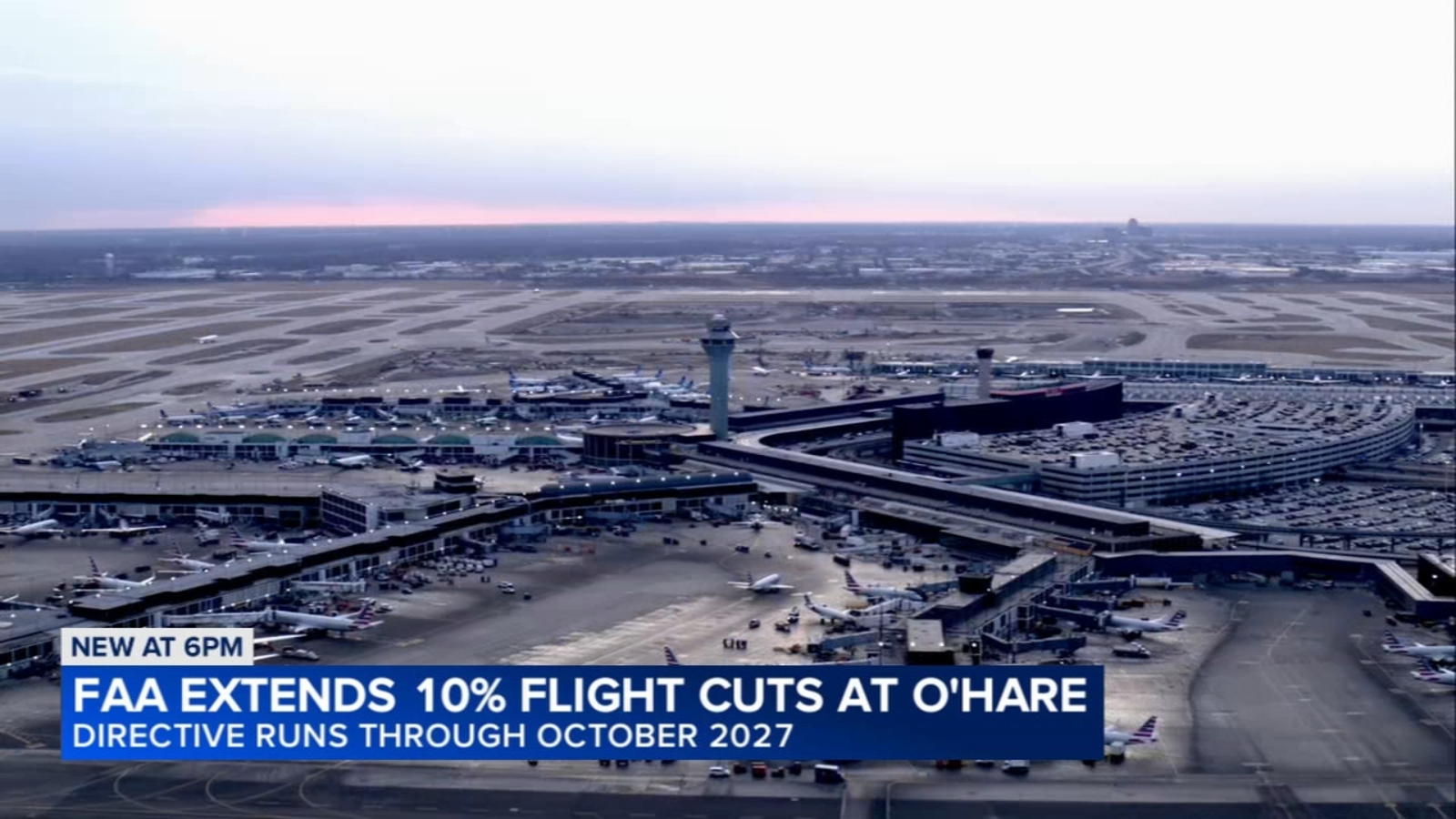
The Federal Aviation Administration has extended its flight cap at Chicago O'Hare International Airport through October 2027, keeping daily operations limited to 2,708 movements — about 10% below an earlier target of roughly 3,080 per day. The move delays any return to higher flight schedules for at least another year, according to ABC7 Chicago.
The FAA put the original cap in place starting May 17, 2024, covering both arrivals and departures. The goal is to cut cascading delays driven by runway construction and bad weather at one of the busiest airports in the country, Macon.com reported.
Why O'Hare Still Struggles Despite the Cap
Even with the 2,708-movement daily limit in place, O'Hare continues to struggle. Last summer, only about 56% of departures and 58% of arrivals were on time, according to ABC7 Chicago. The airport is juggling active runway construction alongside the usual pressure from storms and wind — both of which hit Chicago hard.
The cap was never designed to fix weather or construction. It was designed to stop one delay from snowballing into dozens. Without a hard limit, a single bottleneck at O'Hare can ripple across the entire national air system, officials have said.
Airlines Praise the Cap as a Stability Win
United Airlines and American Airlines — the two dominant carriers at O'Hare — publicly praised the FAA's decision. Both airlines are expanding fast at the airport and said the cap gives them more predictable operations. Greater predictability means fewer last-minute cancellations and fewer passengers left stranded, Head Top Topics noted.
Under the cap, airlines get to decide how to trim their own schedules. The FAA does not dictate which specific flights get cut. Instead, carriers can reduce regional hops, shift off-peak flights, or swap smaller planes for larger ones — a move called upgauging — to fit within the daily limit, according to Charlotte Observer.
The Extension Pushes Capacity Goals Years Back
Before the cap was introduced, O'Hare was targeting around 3,080 daily operations. That number is now off the table until at least late 2027. The extension runs from July 20, 2026 through October 2027, according to Star-Telegram. Airport planners and airlines will have to wait longer before scaling back up to pre-cap schedules.
The ongoing runway construction is central to the delay. The FAA has framed the cap as a temporary tool tied directly to that infrastructure work. Once construction wraps up and more runway capacity comes online, officials expect to revisit the flight limit, Macon.com reported.
Political Backdrop to an Operational Decision
Some coverage has placed the extension inside a broader political debate. The Trump administration has weighed in on managing capacity at major hubs, framing it as part of a wider effort to improve air travel reliability across the country, according to ABC7 Chicago. Officials have been careful to keep the focus on passenger delays rather than airline politics.
For now, the FAA's message is simple: fewer flights, fewer delays. Whether that holds up through two more summers of construction and weather at O'Hare remains to be seen.
Sentiment
Mostly NegativeNEGATIVENEUTRALPOSITIVE
Publishers
10
Articles
106
Reach
116
Topics
A
AnonymousAuthor


