Yen Strengthens Ahead of Fed, BOJ Decisions
Yen Strengthens Ahead of Fed, BOJ Decisions
Anonymous
Key Points
1
The expected Bank of Japan hike would lift its policy rate to 1.25%, a level not seen since April 1995, according to the report. The expectation was reinforced by BOJ official Kazuyuki Masu, who said underlying inflation was nearing the central bank’s 2% target and that rates remained below neutral.
2
The dollar’s support from higher oil prices was linked to a drone attack that forced Saudi Arabia to shut a major crude pipeline traditionally used to bypass the Strait of Hormuz. U.S. August CPI rose 0.4% month over month, while core CPI increased 0.3%, exceeding the 0.2% forecast and prior reading.
3
The European Central Bank raised interest rates as expected but offered no guidance on its next move. ECB President Christine Lagarde said policymakers had not discussed the future rate path and that the next decision could not be anticipated; ECB governing council member Peter Kazimir separately expressed concern about gas and electricity prices.
4
In South Korea, foreign investors had net sold 1.5227 trillion won in domestic equities early in the session, even as yen strength helped push the won-dollar exchange rate toward 1,340 won. Woori Bank economist Min Kyung-won said Asian currencies were likely to be influenced by the yen because markets were pricing BOJ tightening more aggressively than Fed tightening.
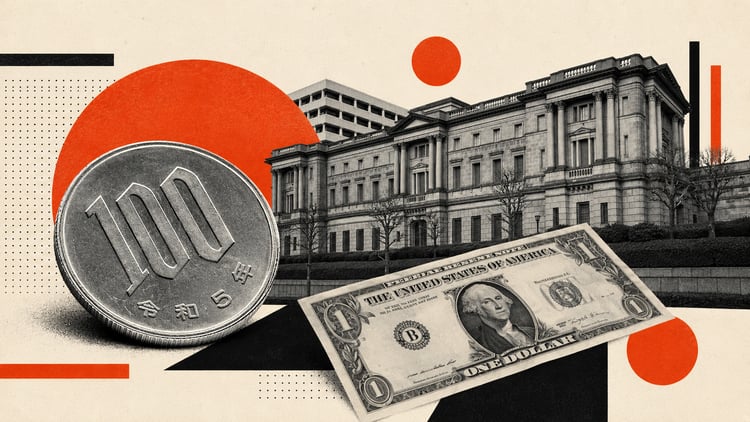
The Japanese yen has climbed to a seven-month high against the dollar as markets brace for major central bank decisions this week. FXStreet reports USD/JPY is trading near 154.40, with investors betting the Bank of Japan will raise its policy rate by 25 basis points to 1.25%—a level unseen since April 1995. BOJ Governor Kazuo Ueda's guidance on future tightening will be crucial, as will the Federal Reserve's decision, which could swing heavily on stronger-than-expected U.S. inflation.
Higher U.S. energy prices and hot inflation data have added support to the dollar, complicating the yen's advance. Mitrade notes that rising Middle East tensions and energy costs have kept inflation concerns elevated, even as the yen strengthens. Analysts warn that yen moves could swing sharply depending on how hawkish each central bank appears—a BOJ rate hike without hawkish signals could push USD/JPY back toward 157–160, while a more aggressive BOJ combined with Fed restraint could send it below 153.
BOJ Rate Hike Signals Major Policy Shift
The Bank of Japan is widely expected to raise its benchmark rate to 1.25% this week, marking the highest level in nearly three decades. FXStreet reports the move comes as BOJ official Kazuyuki Masu confirmed underlying inflation is nearing the central bank's 2% target and that current rates remain below neutral. This language suggests policymakers see room for further increases, which would cement a historic shift away from decades of ultra-loose monetary policy.
Hot U.S. Inflation Data Supports the Dollar
U.S. August inflation came in hotter than expected, with the consumer price index rising 0.4% month over month and core CPI climbing 0.3%—both beating forecasts. Mitrade reports these gains have fueled expectations for a Federal Reserve rate hike, which would support the dollar and potentially cap yen strength. Higher oil prices, partly driven by a Saudi Arabia pipeline closure after a drone attack, have added to inflation pressure and supported dollar demand across markets.
Asian Currencies Follow Yen Strength Higher
The yen's climb has lifted other Asian currencies, particularly South Korea's won. Woori Bank economist Min Kyung-won explained that markets are pricing in more aggressive BOJ tightening than Fed tightening, so the yen's strength naturally pulls other regional currencies along. However, foreign investors have remained cautious—FXStreet noted net sales of 1.5 trillion won in South Korean equities early this session, even as the won-dollar rate pushed toward 1,340 won per dollar.
Energy Costs Complicate Japan's Economic Picture
While yen strength offers some relief to Japanese importers, surging energy prices pose a serious challenge. Mitrade reports that higher oil and gas costs are widening Japan's trade deficit and forcing policymakers to balance competing pressures—supporting growth while controlling inflation. The European Central Bank raised rates as expected but offered no forward guidance, leaving markets uncertain about ECB President Christine Lagarde's next move and adding to the complexity facing regional policymakers.
Sentiment
Mostly PositiveNEGATIVENEUTRALPOSITIVE
Publishers
21
Articles
40
Reach
61
A
AnonymousAuthor


