K-1 Visa State Trends
K-1 Fiancé Visa Trends Show Significant State-by-State Variations and Local Impacts
Key Points
K-1 processing times and visa issuances vary significantly by state, indicating that local processing capacity and demand influence timelines for couples.
State profiles identify the leading countries of origin for K-1 applicants, showing how regional demographics drive state-level demand.
Several state reports tie K-1 activity to wider local economic and social effects—such as housing demand, education enrollment, and healthcare needs—as new families establish themselves.
Federal processing backlogs and policy shifts are shown to ripple into state-level wait times and visa issuance, underscoring the national character of these trends.
The K-1 fiancé visa — which lets foreign nationals engaged to U.S. citizens enter the country to get married — is drawing new attention as state-by-state data reveals sharp differences in processing times, visa issuances, and countries of origin, according to KTBS. Couples must marry within 90 days of arrival, after which the foreign partner can apply for a green card.
Analysis from Manifest Law, drawing on data from USCIS, the State Department, and DHS, shows that federal backlogs and policy shifts are rippling into local wait times across states from Louisiana to Montana, according to KULR8. The effects stretch beyond immigration — shaping housing demand, school enrollment, and healthcare needs in communities nationwide.
State Rankings Reveal Wide Gaps in Visa Activity
Not all states see the same K-1 activity. Minnesota ranks 14th in the nation for fiancé visa holders per capita, according to Voice of Alexandria. That puts it well ahead of less populous states like Montana and Wyoming, where raw numbers are lower but per-capita rates tell a more nuanced story.
Louisiana and Kansas also appear in state-level breakdowns, each with distinct profiles shaped by local demographics and demand. The Mercury notes that Kansas data tracks how petition approvals and visa issuances have shifted over recent years, reflecting both federal policy changes and changes in who is applying.
Country-of-Origin Patterns Differ Sharply by State
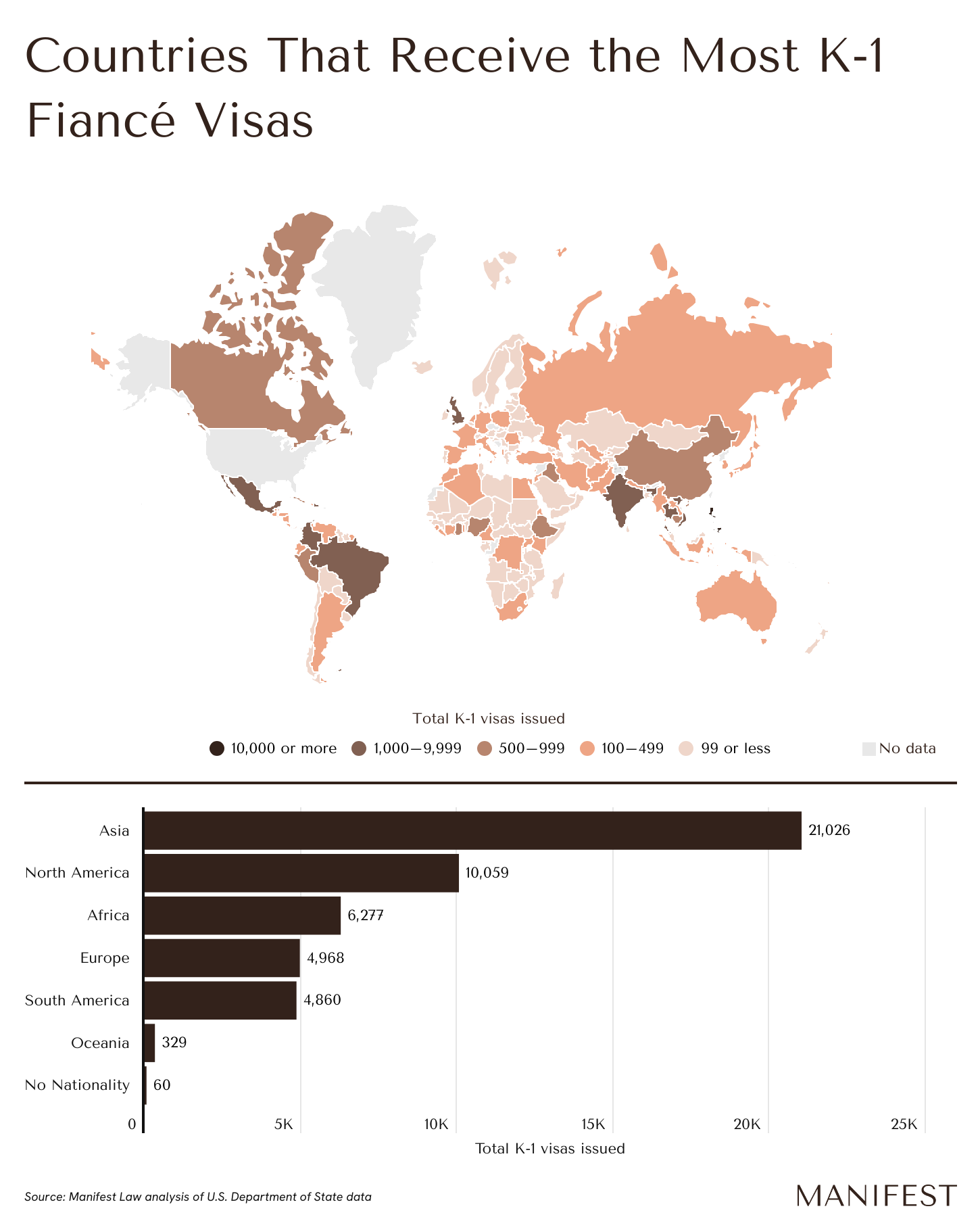
Each state draws fiancé visa applicants from different countries. Montana's top source countries differ from Louisiana's, reflecting regional ties and diaspora communities, according to KULR8. These origin patterns help explain why certain consulates face longer wait times — demand is not evenly spread across U.S. embassies worldwide.
Louisiana's profile skews toward applicants from specific regions tied to the state's historical and cultural links, according to KTBS. Tracking these origins matters because consulate capacity in the applicant's home country directly affects how long the process takes — sometimes adding months to an already lengthy timeline.
Federal Backlogs Push Local Wait Times Higher
USCIS processing times for K-1 petitions have stretched in recent years due to staffing gaps and rising application volumes, according to Shelby News. Those federal delays flow directly into state-level outcomes — couples in Arizona or Iowa wait just as long as couples in larger states, even if local demand is lower.
Policy shifts — including changes to interview requirements and documentation standards — have added steps to an already complex process. The K-1 visa requires coordination among at least three federal agencies: USCIS, the State Department, and DHS. Any slowdown at one agency creates a bottleneck felt by couples across every state.
New Families Drive Local Economic and Social Impact
When K-1 visa holders arrive and marry, their impact goes well beyond a wedding. New households create demand for housing, healthcare, and school enrollment, according to KTBS. In smaller states like Montana and Wyoming, even a modest rise in K-1 arrivals can noticeably shift local service needs.
Labor force participation is another factor. Many K-1 visa holders apply for work authorization after marriage, adding workers to local economies. Voice of Alexandria notes that Minnesota's relatively high per-capita ranking suggests a steady stream of new residents entering the workforce and contributing to the state's economy each year.
Sentiment
Mostly NegativePublishers
19
Articles
75
Reach
94


