Belarus's Diplomatic Spotlight
World Leaders Congratulate Belarus on Independence Day, Highlighting Deepening Diplomatic Ties
Anonymous
Key Points
1
Putin highlighted Minsk’s liberation from Nazi invaders as the root of the shared history and fraternal ties between Russia and Belarus.
2
He stressed that Moscow and Minsk coordinate their efforts to counter external threats and aim to expand multifaceted partnerships, including reinforcing the Union State’s institutions to protect their international interests.
3
The official date for Belarus’ Independence Day was established in 1996.
4
India–Belarus ties have been deepened since 1991 recognition, with the Indian Embassy in Minsk opening in 1992 and the Belarusian Embassy in New Delhi opening in 1998; the latest exchanges include the eighth round of Foreign Office Consultations co-chaired by Secretary (West) Sibi George and Belarusian Deputy Foreign Minister Evgeny Shestakov, and a meeting between India’s ambassador Ashok Kumar and Belarus’s president at the Palace of Independence.
5
Azerbaijan’s foreign ministry extended Independence Day greetings to Belarus, underscoring a robust diplomatic relationship characterized by strategic cooperation across political, economic and humanitarian spheres, with active dialogue within international organizations and high‑level visits.
Russian President Vladimir Putin led a wave of international congratulations to Belarus on July 3, its Independence Day, emphasizing the two countries' "fraternal ties" and their shared Union State framework, according to TASS. The holiday marks the 1944 liberation of Minsk from Nazi occupation — a date made official in 1996.
Beyond Moscow, leaders and officials from India, Azerbaijan, Armenia, the UAE, and the Eurasian Economic Commission all extended greetings to Belarusian President Alexander Lukashenko, making Belarus's foreign relationships a focal point of international diplomacy on the holiday.
Putin Stresses Union State as Shield Against External Threats
Putin's message went beyond pleasantries. He called on Moscow and Minsk to "coordinate efforts to counter external threats" and said both countries would work to expand their partnership, according to TASS. He specifically pointed to strengthening the institutions of the Union State — the political and economic union binding Russia and Belarus — to better protect their shared international interests.
Putin rooted his message in World War II history. He described the liberation of Minsk from Nazi invaders as the bedrock of the two nations' bond. That wartime memory remains central to how both governments frame their relationship today.
India Marks 30-Plus Years of Ties With Fresh High-Level Talks
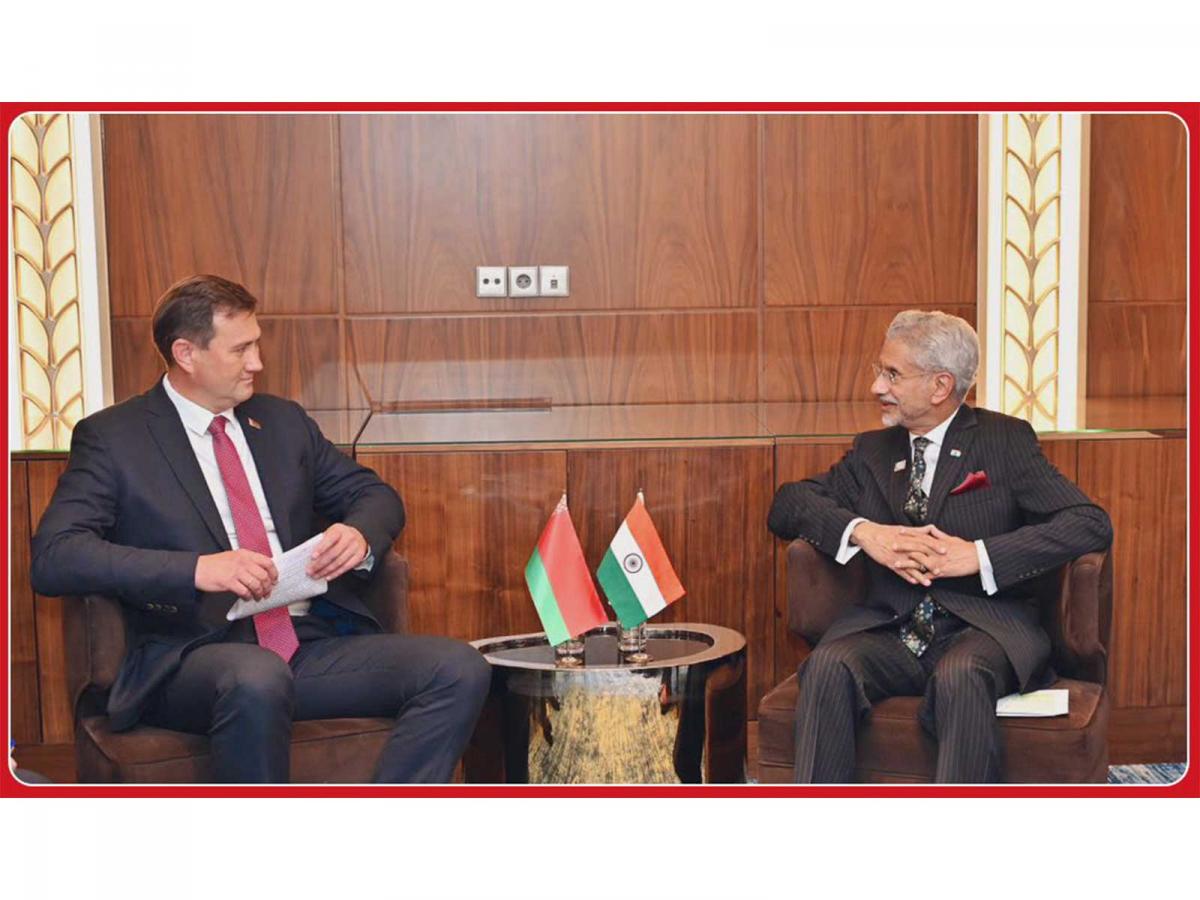
External Affairs Minister S. Jaishankar extended Independence Day greetings to Belarus, citing deep bilateral engagement going back to 1991, according to Lokmat Times. India recognized Belarus shortly after the Soviet Union collapsed. The Indian Embassy in Minsk opened in 1992, and the Belarusian Embassy in New Delhi followed in 1998.
The two countries recently held their eighth round of Foreign Office Consultations. The talks were co-chaired by India's Secretary (West) Sibi George and Belarusian Deputy Foreign Minister Evgeny Shestakov. India's ambassador Ashok Kumar also met Lukashenko at the Palace of Independence, with discussions focusing on expanding trade and broader cooperation.
Azerbaijan, UAE, and Armenia Join the Diplomatic Chorus
Azerbaijan's foreign ministry described its relationship with Belarus as a "robust diplomatic" bond built on "strategic cooperation" across political, economic, and humanitarian spheres. The ministry highlighted active dialogue inside international organizations and regular high-level visits as signs of the partnership's strength.
The UAE sent congratulations to Lukashenko as well as to Belarus's Prime Minister and Deputy Prime Minister, according to UAE Ministry of Foreign Affairs. Armenia's foreign ministry also posted greetings on social media, according to Armenpress. Bakytzhan Sagintayev, Chairman of the Eurasian Economic Commission, praised Belarus's achievements in a separate message to Lukashenko, according to EEC.
Why July 3 Matters: The History Behind the Holiday
Belarus celebrates Independence Day on July 3, not on a date tied to Soviet-era declarations. The date marks the day Soviet forces drove Nazi Germany out of Minsk in 1944 — one of World War II's most significant Eastern Front victories. Belarus was among the most devastated countries in that war, losing roughly a third of its population.
The July 3 date was formally established as Independence Day in 1996 under Lukashenko. It replaced an earlier post-Soviet independence date. The wartime framing gives the holiday deep national resonance and shapes how Belarus presents itself to both domestic audiences and international partners.
Sentiment
Mostly PositiveNEGATIVENEUTRALPOSITIVE
Publishers
14
Articles
11
Reach
25
A
AnonymousAuthor


