Expanding USDC Payment Network
Circle Agrees to Acquire Payment Firm Tazapay to Expand Global USDC Network
Anonymous
Key Points
1
Tazapay has been a design partner for Circle Payments Network since 2025, meaning the companies have already worked together on integrating their systems before the acquisition.
2
Circle had already invested in Tazapay’s Series B funding round, making the acquisition an expansion of an existing relationship rather than an entirely new partnership.
3
Tazapay primarily serves payment service providers and financial institutions, giving Circle access to wholesale distribution channels and the downstream transaction volume generated by those customers.
4
Circle payments executive Irfan Ganchi said the acquisition is intended to make USDC “the default payment rail for cross-border commerce” by expanding Circle’s ability to originate and terminate payments globally on a near-instant, 24/7 basis.
5
The remaining portion of Tazapay’s payment volume still uses conventional banking rails, and Circle has not said how those flows will be handled after the transaction closes.
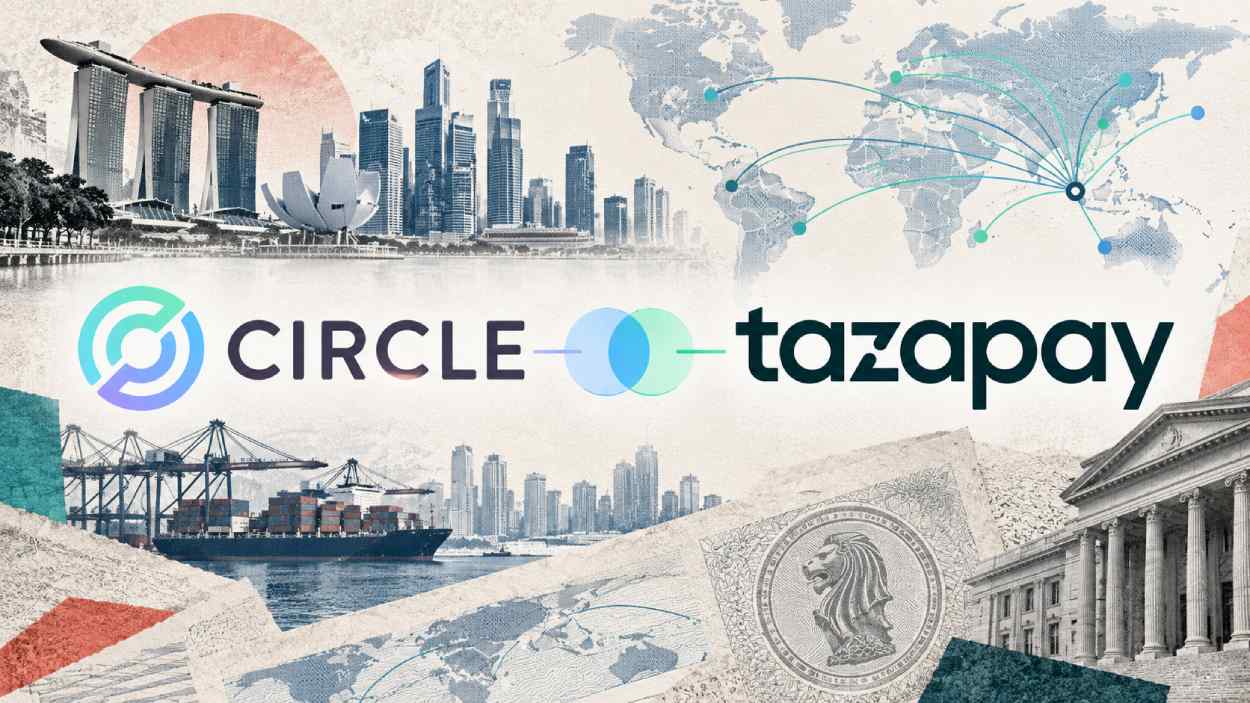
Circle, the company behind the USDC stablecoin, has agreed to buy Tazapay, a Singapore-based cross-border payments firm, for approximately $400 million FX Daily Report. The deal is expected to close in 2027, pending regulatory approval from Singapore's Monetary Authority. Tazapay processes over $25 billion in annual payment volume and operates payout systems across more than 100 markets, with stablecoins already moving about 60% of its transactions Coin Law.
Circle plans to use Tazapay's banking relationships and institutional customer base to make USDC the default payment rail for cross-border commerce PYMNTS. Tazapay customers will keep their existing services, APIs, pricing and support after the acquisition closes. The two companies have already worked together as design partners since 2025, and Circle had previously invested in Tazapay's Series B funding round.
Why Circle Wants Tazapay's Infrastructure
Tazapay serves payment service providers and financial institutions across Asia-Pacific and emerging markets. This wholesale customer base gives Circle access to major distribution channels and the downstream transaction volume those customers generate BigGo Finance. By acquiring Tazapay, Circle gains the ability to originate and settle cross-border payments on a near-instant, 24/7 basis using USDC.
Circle Payments executive Irfan Ganchi said the acquisition is intended to expand the company's global payment capabilities. The move lets Circle tap into Tazapay's network of over 60 banking and fintech partners. These relationships give Circle direct access to local payout rails in more than 100 markets without building those connections from scratch.
An Existing Partnership Now Becoming Permanent
Circle and Tazapay have been working together since 2025 as design partners on the Circle Payments Network BigGo Finance. This means the companies already tested integration and have proven they work well together. Circle also participated in Tazapay's Series B funding round, making today's $400 million acquisition an expansion of an established relationship.
The existing partnership reduces integration risk and gives both sides confidence in the deal. Tazapay customers will experience minimal disruption since the two platforms have already been designed to work together. The regulatory approval process in Singapore may take time, which is why the deal is scheduled to close in 2027 rather than sooner Bloom Bit
The Gap in Tazapay's Non-Stablecoin Payments
About 40% of Tazapay's $25 billion in annual transaction volume still moves through traditional banking rails rather than stablecoins Coin Law. Circle has not publicly explained how these conventional payment flows will be handled after the acquisition closes. This remaining volume could either migrate to USDC or continue using legacy banking systems alongside the new stablecoin infrastructure.
The transition plan for non-stablecoin payments is a key detail for Tazapay's existing customers. If Circle forces migration to USDC, some institutional clients may resist. If Circle maintains both rails, it adds operational complexity. The company will likely announce its strategy closer to the 2027 closing date once regulatory discussions with Singapore officials advance.
Sentiment
Mostly PositiveNEGATIVENEUTRALPOSITIVE
Publishers
19
Articles
23
Reach
42
A
AnonymousAuthor