White House Ballroom Ruling
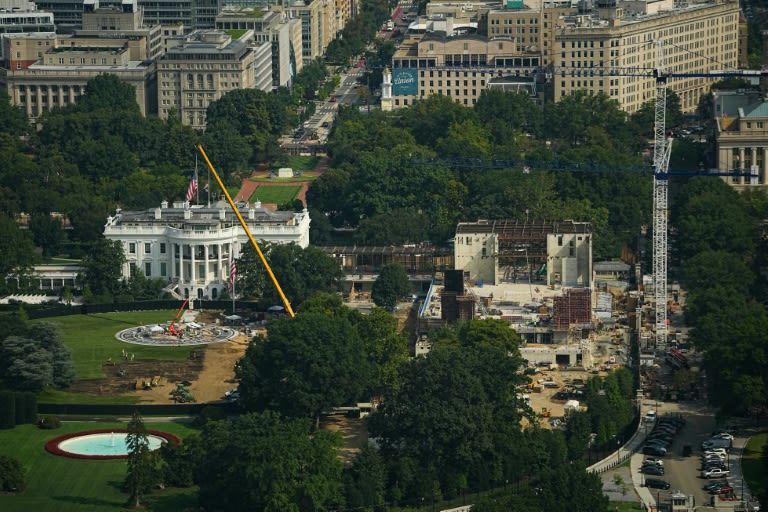
Supreme Court allows contentious White House ballroom construction project to proceed
Anonymous
Key Points
1
Unsigned Supreme Court opinion: The ruling was issued as an unsigned eight-page decision, with the court not ruling on the legality of the East Wing project but instead considering whether the National Trust for Historic Preservation had Article III standing.
2
Underground work allowed to proceed while above-ground construction was blocked: The lower court had halted above-ground portions but permitted underground military-related work to continue; the Supreme Court’s intervention paused that injunction, effectively keeping the below-ground components moving.
3
Standing and injury: The majority reiterated that mere offense or disagreement is not a concrete injury, warning that accepting the Trust’s view would create a world where essentially any citizen could challenge government actions merely because they disagree with them.
4
Disputed vote count across outlets: Coverage presents conflicting tallies—some outlets cite a 5-4 majority, while others report a 6-3 standing decision—highlighting inconsistent reporting of the court’s ruling across sources.
The Supreme Court cleared the way for a $400 million White House ballroom project to move forward, ruling 5-4 that the National Trust for Historic Preservation likely lacks the legal standing to block it CNN. The unsigned decision allows construction to continue while lower courts still consider the broader question of whether the project itself is lawful Tippin Insights. Chief Justice Roberts sided with the conservative majority, while three liberal justices dissented.
The ruling is a major win for President Trump but does not resolve whether the East Wing renovation violates historic preservation laws The Nigeria Lawyer. The lower court had previously blocked above-ground work while allowing underground military facilities to continue. The Supreme Court's decision lifts that injunction, letting all construction proceed as legal challenges move through the courts Ledger-Enquirer.
Standing, Not Legality, Was The Issue
The Supreme Court did not rule on whether the ballroom project is actually lawful Yahoo News. Instead, the justices focused narrowly on a procedural question: whether the National Trust for Historic Preservation had standing—legal grounds—to sue in the first place. The majority said it did not. Their reasoning: mere disagreement with a government project is not enough to give someone the right to challenge it in federal court.
The conservative majority warned that accepting the Trust's argument would open the floodgates The Nigeria Lawyer. Any citizen could then sue over any government action they disliked, the court suggested. The dissenting justices, including Sotomayor, Kagan, and Jackson, countered that at least one member of the Trust likely suffered real, concrete injury from the project's impact on historic preservation.
Underground Military Work Now Moves Forward
The lower court had blocked above-ground ballroom renovations but permitted below-ground military-related facilities to continue Ledger-Enquirer. The Supreme Court's decision erases that distinction. Now all components of the project—both the visible ballroom and the hidden military infrastructure—can proceed while litigation continues elsewhere CNN. The scope and authorization of those underground elements remain disputed.
Chief Justice Roberts Joins Conservative Win For Trump
Chief Justice Roberts sided with the court's four other conservative justices in the majority Tippin Insights. The three liberal dissenters—Sotomayor, Kagan, and Jackson—argued the project was unlawful and that the Trust had a legitimate right to challenge it CNN. Roberts' vote underscores the court's current ideological tilt on separation-of-powers and standing questions.
The ruling comes as Trump moves to reshape Washington's physical and institutional landscape Yahoo News. Preservation groups and opponents view it as a setback, but the underlying legal fight is not over. Future courts will still weigh whether the entire project—funded by private donations—actually complies with federal historic preservation law.
Sentiment
Mostly NegativeNEGATIVENEUTRALPOSITIVE
Publishers
13
Articles
174
Reach
187
A
AnonymousAuthor


