Carney Urges Serious Talks as Canada-U.S. Clashes Deepen
Carney Urges Serious Talks as Canada-U.S. Clashes Deepen
Anonymous
Key Points
1
Carney publicly framed the U.S.-Canada dispute as a lopsided power dynamic, saying the Americans should stop memes and start being serious, and adding a tangential quip that bargaining with Canada would be odd given Canada’s smaller size — even joking, “we are not at war with Canada … 13 times larger” than Canada.
2
U.S. defense leadership was explicitly mocked in public posts, with Defense Secretary Pete Hegseth posting a taunting image about Canada’s Cadet Program; the Pentagon said the X post speaks for itself, highlighting the tone of intergovernmental friction.
3
Independent reporting notes a concrete risk in U.S. terms that would be unfavorable to Canada, describing proposals as potentially “uncompetitive” in autos and including protections for French-language rights as a potential dealbreaker for Ottawa — underscoring the specific policy areas at stake.
4
Carney’s public comments were framed against a backdrop of domestic political momentum for Canada, with reports that Liberal gains in three special elections, including Chicoutimi-Le Fjord, bolstered Ottawa’s position and reinforced the perceived viability of a deal that respects sovereignty.
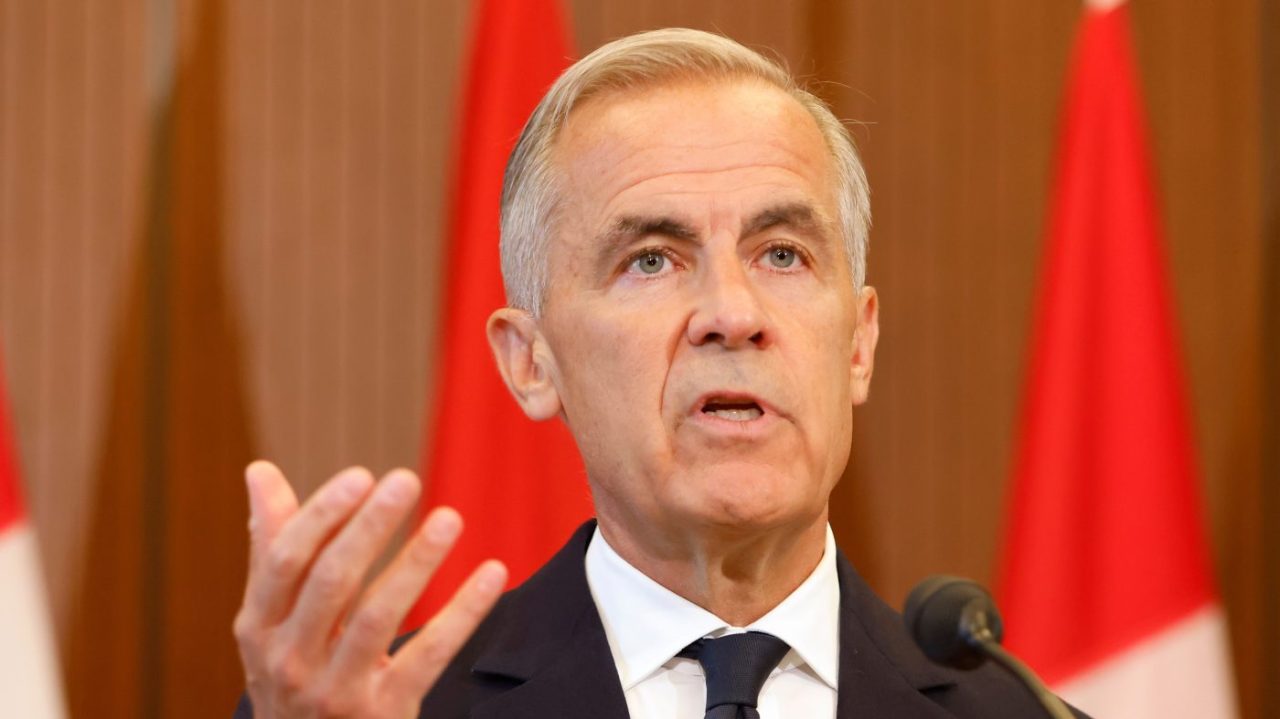
Canadian Prime Minister Mark Carney demanded the U.S. stop online taunts and start serious bargaining over a trade war that has already imposed 50% tariffs on roughly $20 billion of Canadian goods. The Hill reported that Carney urged Washington to quit "doing memes," "throwing shade," and "trying to be tough" — calling such behavior beneath the office of senior officials. Talks collapsed in August, and Canada's retaliatory tariffs on $20 billion of American goods are set to take effect September 8.
The dispute centers on U.S. demands that would gut Canadian protections for French-language rights, auto jobs, and cultural safeguards. Carney warned that any deal turning Canadian industries into "subsidiaries" or leaving them "gradually wound down" is off the table. Despite the acrimony — including President Trump's symbolic move to rename Lake Ontario "Lake America" — Carney signaled a deal remains possible if Washington changes course and respects Canada's sovereignty.
Defense and Treasury Officials Mock Canada Publicly
U.S. officials have fueled tensions with public mockery on social media. The Hill reported that Defense Secretary Pete Hegseth posted an image mocking Canadian cadets with the caption "this is real." The Pentagon said The Hill asked about the post — "The X post speaks for itself." Treasury Secretary Scott Bessent dismissed Canada's retaliation on CNBC, saying "I don't think you can be in a tit-for-tat with someone who's 13 times larger than you are."
Carney called such behavior "beneath their office" and said it undermines serious diplomacy. The mocking posts and taunts have angered Canadian officials and the public. An Angus Reid poll showed 85% of Quebecers backed Carney's decision to walk away from talks that threatened cultural protections.
French-Language Rights Emerge as Dealbreaker
Canada refuses to surrender protections for French-language content and bilingual labeling that the U.S. views as unfair trade barriers. In August, Carney declared in Quebec that French-language cultural safeguards are "fundamental rights, not trade irritants." The Hill reported that U.S. Trade Representative Jamieson Greer dismissed Canadian concerns as a "funny fake story," framing the dispute narrowly around streaming mandates. Quebec Premier Christine Fréchette backed Carney's stance, signaling broad political support for holding the line.
The language issue carries deep weight in Quebec, where citizens fear losing cultural identity in any U.S. absorption scenario. Nelson Wiseman, a University of Toronto professor, noted in media reports that Quebecers have "the most to lose" if French-language protections vanish.
Canada's Political Strength Reinforces Carney's Hand
Recent Liberal election wins have boosted Carney's domestic power to resist U.S. pressure. In August, Canada's Liberal Party swept three federal by-elections, including a major victory in Chicoutimi–Le Fjord. The wins lifted the Liberals to 173 of 343 seats in Parliament — enough breathing room to hold firm on sovereignty demands without fear of immediate political collapse.
This political momentum matters. Carney can tell his own party and public that walking away from bad deals serves Canada's interest. Trevor Tombe, an economist at the University of Calgary, calculated in analysis that Canada's counter-tariffs equal roughly 60 cents of response for every dollar of U.S. tariffs — necessary for leverage but costly internally. Still, Carney has the votes to weather the pain.
Tariff Pain Takes Effect September 8
Canada's retaliation will target U.S. steel, dairy, agricultural equipment, pulp, paper, and electronics with duties ranging from 15% to 50%. The tariffs affect roughly $20 billion to $30 billion in U.S. imports, averaging an effective 30% rate. Ottawa announced $7.5 billion in support packages to help Canadian sectors absorb the blow — a sign the government is bracing for prolonged pain.
The U.S. tariff on Canada amounts to roughly 5% of total Canadian exports, a significant but not catastrophic hit. Both sides face mounting pressure as September 8 nears. The Post Millennial reported Carney's core demand: the U.S. must stop the online ridicule and approach talks with respect and seriousness.
Sentiment
Mostly NegativeNEGATIVENEUTRALPOSITIVE
Publishers
28
Articles
169
Reach
197
A
AnonymousAuthor


