Thames Whale Rescue
Rescue teams successfully guide a pod of pilot whales out of the Thames.
Anonymous
Key Points
1
The whales were first reported near Coalhouse Fort at East Tilbury and Tilbury, with some sightings suggesting they had traveled upstream as far as Purfleet on a high tide.
2
BDMLR volunteers began the guidance operation from Gravesend at 7 a.m., steering the pod toward the Red Sand Towers, about six miles off Whitstable; Civil Air Support helped monitor the whales during the six-hour, more-than-20-nautical-mile journey.
3
BDMLR’s specific safety guidance asked boats to maintain at least 100 metres of distance where possible, travel at no-wake speed, avoid crossing the pod’s path or separating the animals, and report sightings with the whales’ location, direction and notable behaviour directly to the rescue organisation.
4
The Thames has seen other rare whale incidents: a juvenile northern bottlenose whale reached central London in 2006 and died during a rescue attempt, while the beluga known as “Benny” entered the estuary in 2018 and returned to the North Sea unaided. A pilot-whale group also entered Essex’s Blackwater River in 2014, when a separated female calf later died after beaching.
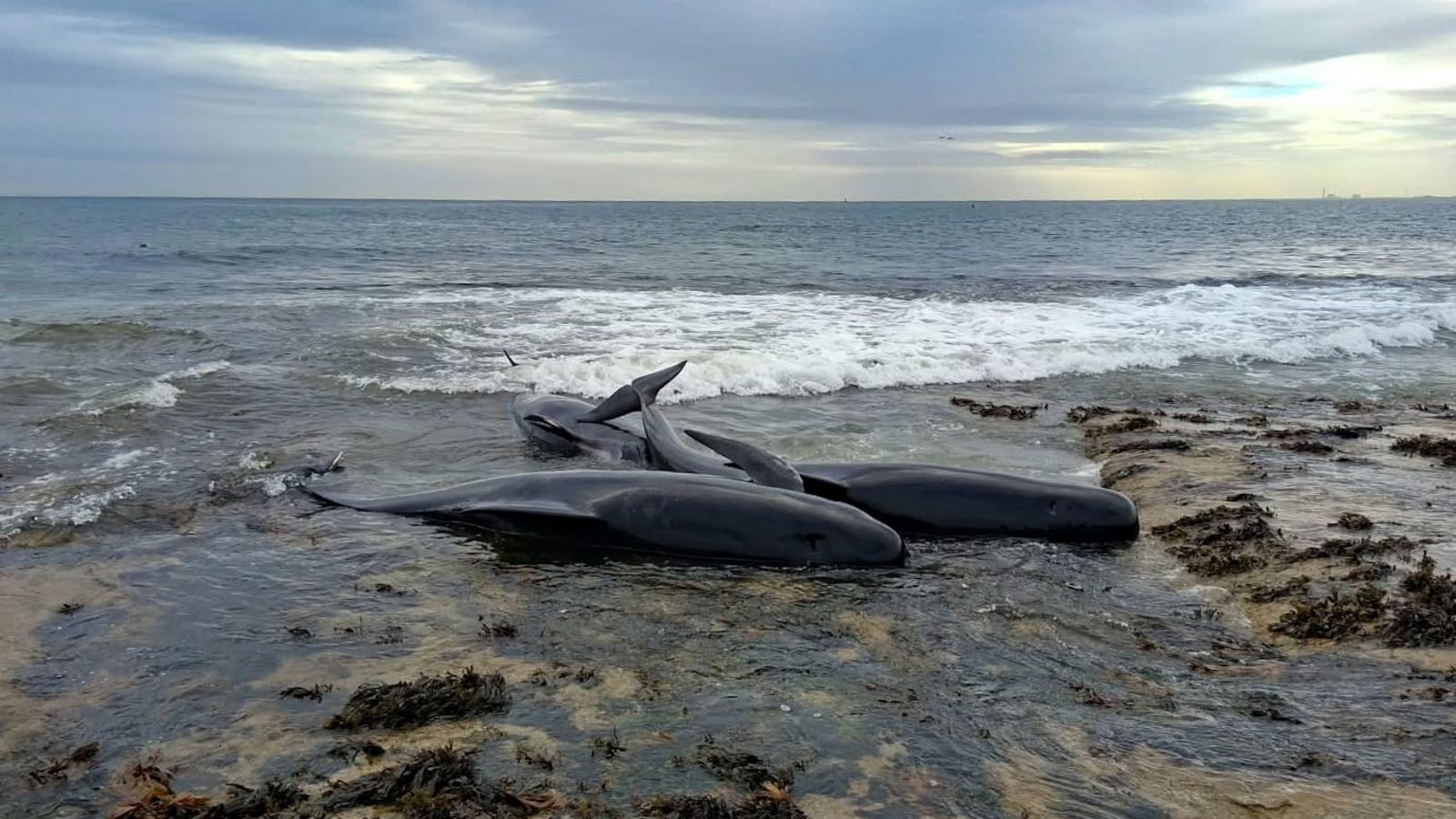
About 25 long-finned pilot whales strayed into the Thames and Thames Estuary, a rare and dangerous journey far from their usual cold, deep waters. British Divers Marine Life Rescue and the Port of London Authority guided the pod more than 20 nautical miles toward safety off Kent and the North Sea. One whale died during the operation, while another separated from the group and showed signs of distress.
Rescue teams warned the public not to approach the whales, share their location, or use drones. Boats were ordered to stay at least 100 metres away, travel slowly, and never split up the animals. Changing tides, ship traffic, noise and crowds all posed serious risks of re-stranding.
Whales Spotted Upstream in Unusual Thames Invasion
The pilot whales first appeared near Coalhouse Fort at East Tilbury and Tilbury. Some sightings placed them even further upstream at Purfleet, pushed inland by high tide. This far into the estuary, the whales faced extreme danger—the Thames is a busy shipping channel with murky water and no deep-sea shelter.
Six-Hour Rescue Push Toward Open Waters
Starting at 7 a.m. from Gravesend, British Divers Marine Life Rescue volunteers began herding the pod toward deeper, safer water. The rescue team guided them to the Red Sand Towers, about six miles off Whitstable. The entire operation covered more than 20 nautical miles. Civil Air Support monitored the whales from above during the six-hour journey.
Thames Has Seen Other Rare Marine Emergencies
Whale emergencies in the Thames are uncommon but not unknown. A juvenile northern bottlenose whale reached central London in 2006 and died during rescue efforts. In 2018, a beluga nicknamed 'Benny' entered the estuary but swam back to the North Sea on its own. A pilot-whale pod also stranded in Essex's Blackwater River in 2014, when a separated female calf died after beaching.
Boats Must Slow Down and Keep Their Distance
Rescue teams issued strict safety rules for all vessels in the area. Boats must maintain at least 100 metres distance where possible and travel at no-wake speed (barely moving). They must never cross the pod's path or try to separate individual whales. Anyone spotting the whales must report their location, direction, and behavior directly to British Divers Marine Life Rescue.
Sentiment
Mostly NegativeNEGATIVENEUTRALPOSITIVE
Publishers
15
Articles
15
Reach
30
Topics
A
AnonymousAuthor


