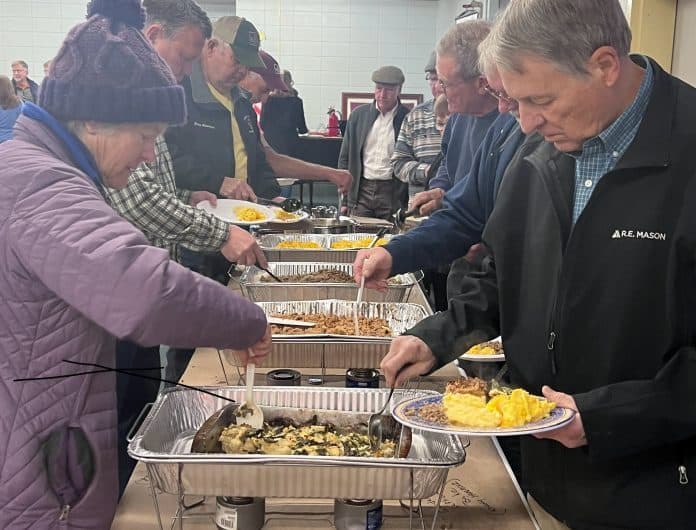
Mobile Eateries Thrive
National Food Truck Day Spotlights Mobile Eateries Powering Local Economies and Community Connection
Anonymous

Key Points
1
Haven Brothers is identified as one of the longest-serving food trucks in the nation, underscoring the enduring legacy of Rhode Island's mobile-eats scene.
2
National Food Truck Day in Birmingham is framed as a local economic and youth-empowerment effort, with Amber Desserts founder Dennis Echoles emphasizing the goal to grow the tax base and reinvest in the community. He also notes the venue as a preferred spot due to strong participation.
3
Regina's YQR Food Truck Wars has expanded to 22 trucks and draws thousands, evolving from a 2018 permit-cost solution into a signature summer festival supported by the Regina Downtown Business Improvement District and partners like Rebellion Brewing.
4
The Regina festival runs Friday 4–9 p.m. and Saturday 12–9 p.m. with free admission, live entertainment, and a broader mix of local food, beverages, and activities designed to revitalize downtown and attract visitors.
5
Rhode Island’s mobile food scene continues to highlight a diverse range of offerings beyond Haven Brothers, including Haitian comfort foods and reinvented ice cream trucks, with attention to the local chefs and builders behind these rolling kitchens.
National Food Truck Day on June 26 brought thousands of people into city parks, downtown squares, and city hall plazas across North America. From Birmingham to Regina to Providence, mobile food vendors used the moment to show their growing role in local economies — and in the lives of the communities they serve.
The U.S. food truck industry now includes roughly 48,400 active trucks and is on track to hit $2.8 billion in revenue by the end of 2026, according to SaskToday and industry data. The average truck brings in $346,000 a year. The average customer spends $12.76 per visit.
Birmingham Turns City Hall Into a Food Truck Hub
In Birmingham, Alabama, vendors gathered outside city hall to mark the day. Dennis Echoles, founder of Amber's Desserts, helped organize the event. Echoles is 71 years old and a Collegeville native. He started his business as a second career and has become a local symbol of entrepreneurship. WVTM13 reported that he sees food trucks as a way to "grow the tax base and reinvest in the community."
Echoles says city hall is a preferred spot because of the strong turnout and engaged crowd. The event was framed not just as a celebration, but as a youth-empowerment effort. Local leaders used it to spotlight how mobile vendors can fund public services and give young people a path into business ownership.
Regina's Food Truck Wars Grew From a Permit Workaround
In Regina, Saskatchewan, the YQR Food Truck Wars returned to Victoria Park for another weekend run. The event started in 2018 — not as a festival, but as a fix. Rising municipal permit costs pushed operators to band together. By pooling resources for one big event, they cut individual overhead. SaskToday and 620 CKRM both reported that the festival has grown into one of the city's signature summer events.
This year, 22 food trucks took part. Saskatchewan craft beverage makers, live musicians, and family activities filled out the schedule. The festival runs Friday 4–9 p.m. and Saturday 12–9 p.m., with free admission. Attendance ranges from 8,000 to 14,000 visitors per weekend. Rebellion Brewing is a key partner. Its president, Mark Heise, said the event boosts downtown "vibrancy and community spirit."
Rhode Island's Haven Brothers Has Served Since 1888
In Providence, Rhode Island, Haven Brothers anchors the state's mobile food history. Founded in 1888 by Anne Philomena Haven, the truck is widely considered the oldest operating food truck in the United States. Its fourth-generation co-operator, Saverio Giusti Jr., calls it a "rite of passage" for the city. WCVB noted the truck has survived world wars, the Great Recession, and COVID-19.
Rhode Island's broader food truck scene has grown well beyond Haven Brothers. Vendors like JA PATTY RI serve Haitian and Jamaican comfort food. Atomic Blonde Ice Cream has reinvented the classic ice cream truck. The state's 2025 Motif Food Truck Awards drew over 1,000 local voters. The scene shows how mobile food can reflect a city's full cultural mix.
The Industry Is Growing, But Launching a Truck Isn't Easy
Starting a food truck costs between $75,000 and $250,000. That is far less than a sit-down restaurant. But the regulatory path is still steep. The average new truck needs six different permits and 37 business days just to launch. Industry experts say cities with clear, simple rules — like Austin and New York — give operators a major head start.
Operating costs have risen 7.9% since 2020. Supply chain problems have hit stainless steel and refrigeration equipment hard. Even so, the model keeps drawing new entrepreneurs. Events like Birmingham's city hall gathering and Regina's Food Truck Wars show that the public appetite — and the community value — is stronger than ever.
Sentiment
Mostly PositiveNEGATIVENEUTRALPOSITIVE
Publishers
12
Articles
3
Reach
15
Topics
A
AnonymousAuthor