Interstellar Stream Discovery
Astronomers Find First Globular Cluster Stellar Stream Beyond Milky Way
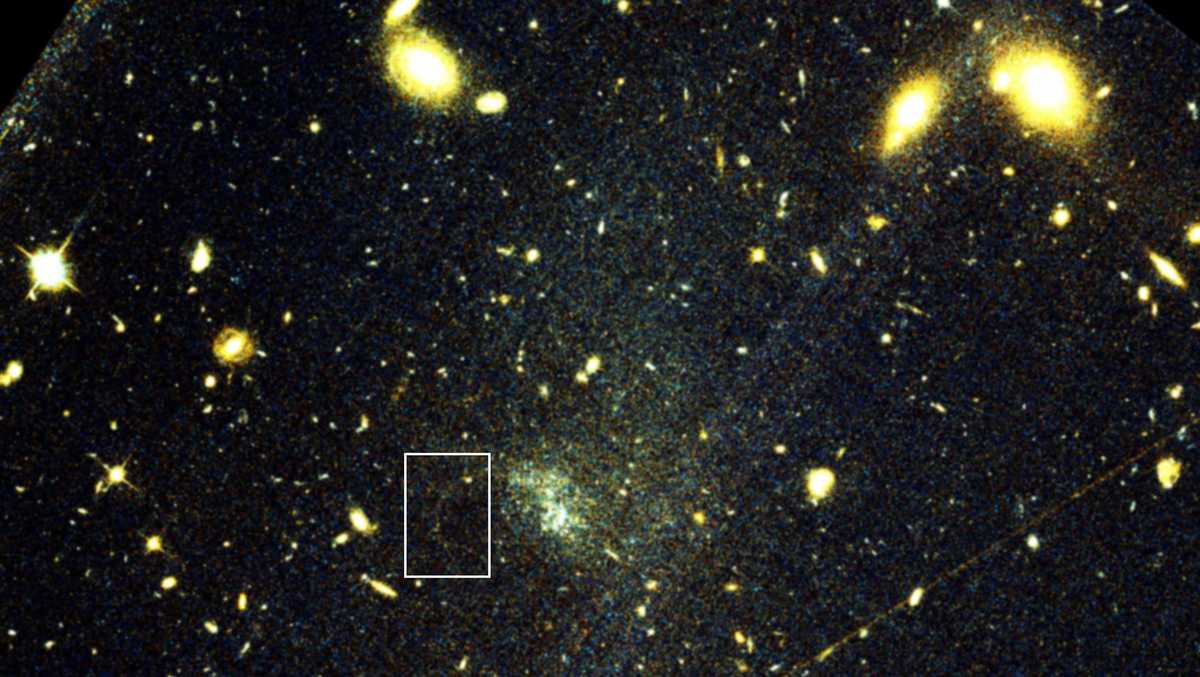
Astronomers have found something never seen before outside our own galaxy: a stellar stream left behind by a disintegrating globular cluster. The discovery, hidden inside archival images from the Hubble Space Telescope, sits 115 million light-years away in a dwarf galaxy called UGC 9050-Dw1, according to WCVB.
The faint ribbon of stars acts like a cosmic breadcrumb trail. It is giving scientists a rare tool to map dark matter — the invisible substance that makes up most of the universe's mass but has never been directly detected, KOAT reported.
What Is a Globular Cluster Stellar Stream?
A globular cluster is a tight ball of hundreds of thousands of stars, all bound together by gravity. When a host galaxy's gravity pulls one apart, the stars scatter into a long, thin arc. That arc is called a stellar stream. Scientists have spotted these streams inside the Milky Way before. But this is the first one ever found in another galaxy, according to KSBW.
The stream in UGC 9050-Dw1 is extremely faint. Researchers only found it by digging through old Hubble data that had already been collected but not yet closely studied. The fact that it survived long enough to be spotted makes it a valuable scientific tool, WVTM13 reported.
Using a Star Trail to Weigh a Galaxy's Dark Matter
The stream's shape and position are not random. Gravity controls exactly how the stars spread out as the cluster breaks apart. By studying that pattern, researchers could map the gravitational field inside UGC 9050-Dw1. That let them estimate the galaxy's total mass and figure out how much of it is made of visible stars versus invisible dark matter, according to WMTW.
This method works like weighing something by watching how it bends a spring. The stream bends in a way that only dark matter's gravity can fully explain. That makes streams like this one a powerful new way to study a substance scientists have never been able to see directly, 4029TV reported.
Why a Dwarf Galaxy Made This Discovery Possible
UGC 9050-Dw1 is a dwarf galaxy, meaning it is much smaller and simpler than galaxies like the Milky Way. That simplicity is actually an advantage. With fewer stars and less noise, astronomers can spot a faint stream more easily. The stream would likely be invisible inside a larger, busier galaxy, according to WCVB.
Dwarf galaxies are also thought to hold a higher share of dark matter relative to their visible mass. That makes them ideal test cases for studying how dark matter shapes the structure of galaxies and drives their formation over billions of years, KOAT reported.
Future Telescopes Could Find Many More Streams
This discovery came from archival Hubble data — images that had already been taken but not fully analyzed. The study's authors say future telescopes, with sharper eyes and wider views, will be able to find far more of these streams in distant galaxies. That could open a new chapter in the search to understand dark matter, according to KSBW.
Each new stream found in another galaxy adds another data point. More data means better models of how dark matter is spread across galaxies. Scientists believe these faint trails of stars could become one of the most reliable tools astronomers have for probing the universe's invisible scaffolding, WMTW reported.
Sentiment
NeutralPublishers
6
Articles
6
Reach
6


