Hungary Media Overhaul
Hungary Suspends State Media Broadcasts for Overhaul, Pledging Independent Reporting
Anonymous
Key Points
1
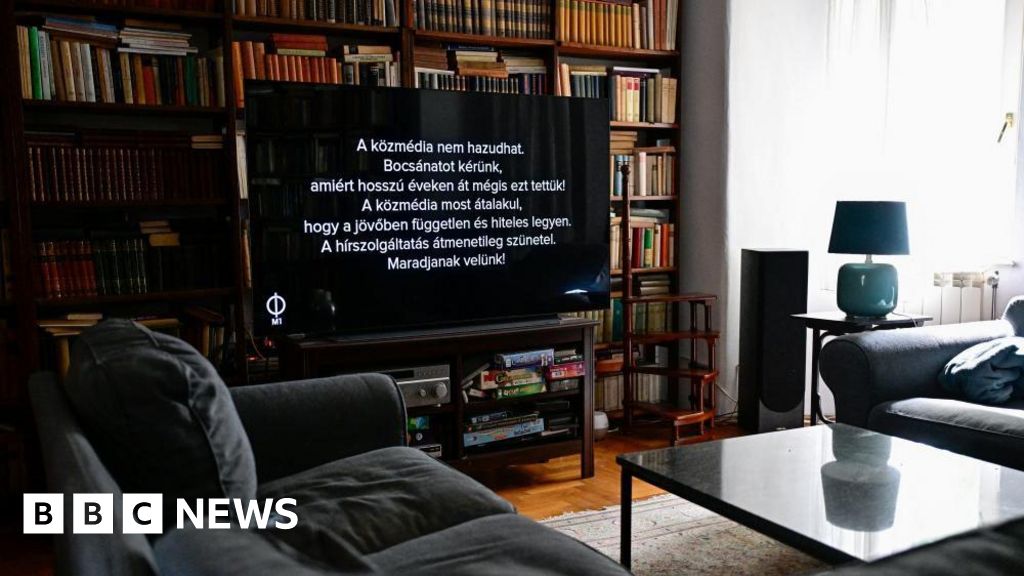
M1 displayed a black screen with an apology stating 'Public media should not lie. We are sorry for doing it for so long,' and the public sites for M1 and Kossuth reportedly went offline during the overhaul.
2
Kossuth radio frequencies were temporarily broadcasting Bartok Radio, a classical music station, instead of its usual news-focused programming.
3
On Monday, MTVA appointed a temporary management team to oversee the transition to a new structure.
4
During the transition, several managers and journalists were dismissed and reports indicated staff were escorted from MTVA’s buildings by security guards.
5
Interim leadership changes included András P. Horváth being named interim CEO and Zsolt Nemeth, the M1 director, being relieved of his duties, along with other shifts in senior editorial roles.
Hungary's main public TV channel, M1, went dark this week — literally. The screen turned black and displayed a message reading: 'Public media should not lie. We are sorry for doing it for so long.' State radio station Kossuth also halted its news broadcasts, switching to classical music instead, according to BBC.
Prime Minister Péter Magyar called it the end of state propaganda. His government installed interim management at MTVA, the public media body, and pledged to rebuild it as an independent institution. The move marks a dramatic break from the media landscape that defined Viktor Orbán's years in power.
Black Screens and Classical Music Replace News Broadcasts
M1, Hungary's flagship public television channel, broadcast a black screen with a written apology to viewers. Kossuth radio — the country's main state news station — stopped its news programming entirely. In its place, listeners heard Bartok Radio, a classical music channel, according to Yahoo News.
The websites for both M1 and Kossuth also went offline during the overhaul. M1 later briefly restarted but aired no news content. The suspension was framed as a necessary pause — time to gut old editorial practices and build something new from the ground up.
New Leadership Installed, Staff Escorted Out by Security
On Monday, MTVA appointed a temporary management team to run the transition. András P. Horváth was named interim CEO. Zsolt Nemeth, the director of M1, was relieved of his duties. Other senior editorial staff were also removed, according to BBC.
The changes were swift and stark. Reports indicated that dismissed managers and journalists were escorted from MTVA's buildings by security guards. The speed of the purge surprised many observers, signaling that the new government intended a clean break — not a gradual reform.
Supporters Cheer Reform, Critics Call It a Hostile Takeover
Magyar's supporters say this is a historic step. Hungary's public media has been widely criticized for years of one-sided, pro-Orbán coverage. The OSCE — the Organization for Security and Co-operation in Europe — had previously flagged biased reporting under the former administration as a serious democratic concern, according to AOL.
But critics are pushing back hard. Opponents argue the action is itself politically motivated — a new government seizing control of a national institution rather than freeing it. They warn that swapping one political master for another does not equal independence. The debate over who truly controls public media in Hungary is far from settled.
What Comes Next for Hungary's Public Media
The interim leadership has promised to build a new editorial framework based on factual, independent reporting. No firm timeline has been given for when full broadcasts will resume. The overhaul covers both television and radio operations under MTVA, according to Yahoo News Canada.
The stakes are high. Hungary's public media reaches millions of viewers and listeners daily. Whether the new structure delivers genuine independence — or simply reflects a different political agenda — will be the real test of this historic shakeup.
Sentiment
Mostly NegativeNEGATIVENEUTRALPOSITIVE
Publishers
12
Articles
4
Reach
16
Topics
A
AnonymousAuthor


