Eurozone Manufacturing Rebound
Eurozone Manufacturing Reaches Four-Year High as Germany Leads Regional Recovery
Anonymous
Key Points
1
Sweden's August PMI breakdown shows production as the largest positive contributor to growth, followed by employment, while orders intake contracted and inventories of purchased materials were reduced.
2
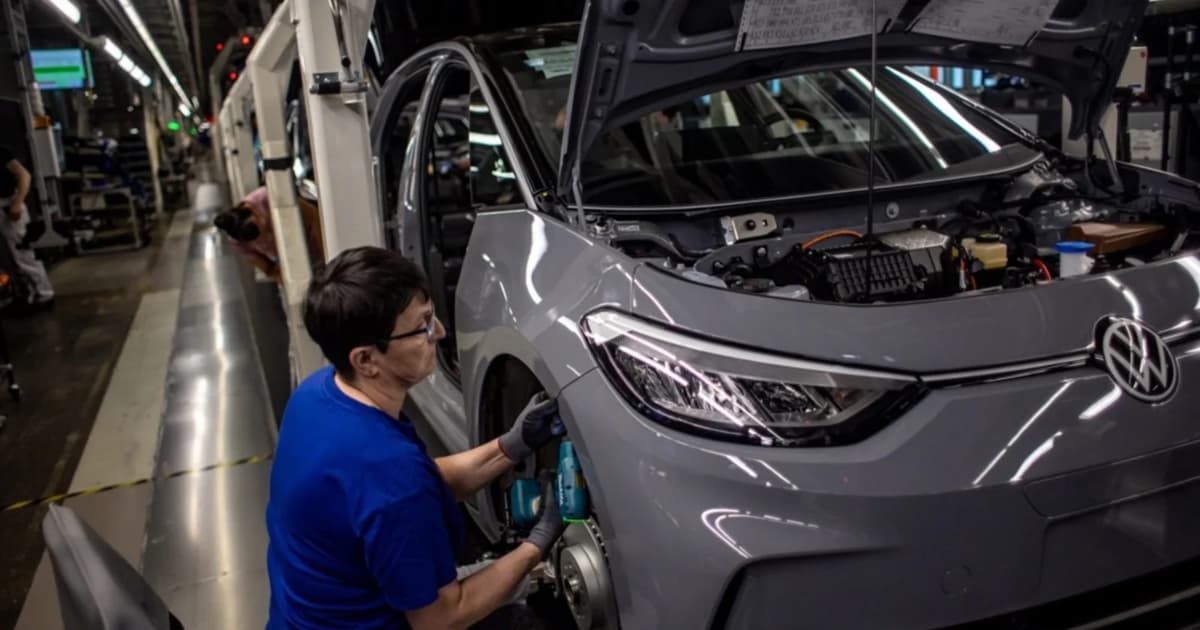
Germany's manufacturing PMI in August rose to 54.3, its strongest in about 51 months, with new orders rising at the fastest pace since February 2022 and export sales also climbing, driven by defense spending, data center construction and stockpiling.
3
Export demand in the euro area showed improvement, with overseas sales growth particularly strong in Austria, Germany and the Netherlands, contributing to the second expansion in four-and-a-half years.
4
Inflation pressures eased in August, with input costs rising at the slowest rate in six months, signaling a cooling but still elevated inflation environment.
The eurozone's manufacturing sector hit its fastest pace in over four years in August, with the PMI climbing to 52.7 S&P Global. Germany led the charge with a reading of 54.3—its strongest in roughly four years—while Sweden's manufacturing PMI surged to 56.1, marking its 14th consecutive month of expansion Swedbank.
New orders rebounded sharply across the region, with Germany posting its fastest order intake since February 2022. Export demand recovered for only the second time in four-and-a-half years, driven by defense spending and data center construction S&P Global. Yet not all countries gained—Italy contracted while Spain remained weak, exposing uneven momentum across member states.
Germany Powers Export Surge With Defense and Data Center Boom
German factories drove the eurozone's rebound. Output rose sharply while new orders climbed at the fastest pace since early 2022 S&P Global. The gains came from two major sources: rising defense spending and booming data center construction. Austria and the Netherlands also posted strong export sales, signaling a genuine recovery in overseas demand rather than a regional blip.
Production and Employment Lift Sweden's 14-Month Winning Streak
Sweden's 56.1 PMI reading reflects a manufacturing sector firing on multiple cylinders. Production jumped as the largest growth driver, followed by employment gains Swedbank. However, new orders contracted and companies trimmed inventories of purchased materials. The country has now expanded for 14 straight months, far above historical norms and suggesting deep-rooted strength in Nordic factories.
Inflation Cools But Supply Chains Still Stretched
Input costs rose at their slowest pace in six months in August, signaling that inflation pressures are finally easing S&P Global. Yet prices remain elevated compared to pre-pandemic levels. Supply chain delays also persisted, with delivery times still longer than normal. The cooling inflation environment offers central banks breathing room, though companies continue to face cost headwinds.
Italy's Contraction Exposes Cracks in the Recovery
While Germany and Sweden surged, Italy's manufacturing actually contracted in August S&P Global. Spain remained subdued, showing minimal expansion. This divergence highlights a key risk: the eurozone recovery is real but highly uneven. Germany's strength masks weakness in southern Europe, raising questions about whether the rebound can sustain if growth remains concentrated in just a few countries.
Sentiment
Mostly PositiveNEGATIVENEUTRALPOSITIVE
Publishers
10
Articles
96
Reach
106
A
AnonymousAuthor


