Slavery Exhibit Debate
National Park Service Replaces Philadelphia Slavery Exhibit, Sparking Debate Over History
Anonymous
Key Points
1
Third Circuit Court of Appeals cleared the way for the National Park Service to replace the panels, ruling that Philadelphia had no legal authority to dictate interpretive content at the federally owned memorial after donating the site to the Park Service.
2
New panels argue Washington had doubts about slavery and took steps to reduce it; the text notes that in 1774 he helped draft the Fairfax Resolves condemning the slave trade as 'wicked,' 'cruel,' and 'unnatural' and that, as president, he signed legislation that 'both upheld and limited slavery,' including the Fugitive Slave Act.
3
Critics, including Michael Coard, say the change sanitizes history; Coard warned, 'This is changing the history of America' and suggested Americans should fear the government could 'fabricate what it wants American history to be.'
4
Security and timing details show the installation occurred overnight, hours after MLB All-Star events, with U.S. Park Police patrolling the site as replacement work proceeded.
5
The signage change replaced 'The Dirty Business of Slavery' with 'Celebrating Independence Throughout the Years,' while the exhibit still references slavery but allocates substantially more space to the early presidency and the executive mansion.
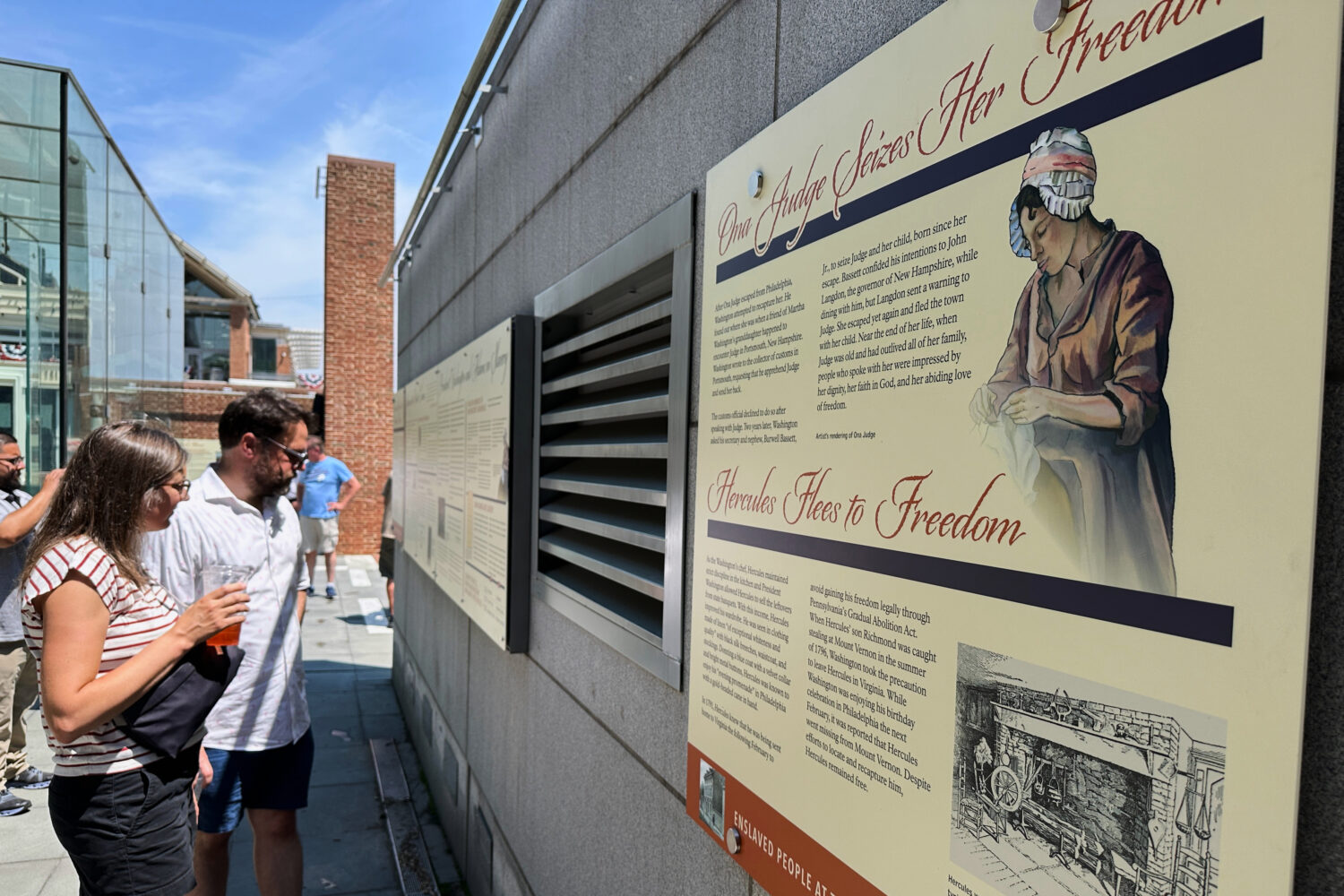
Overnight, the Trump administration quietly swapped out slavery panels at the President's House site in Philadelphia — replacing displays that centered on nine enslaved people held by George Washington with new exhibits critics say soften his legacy, according to CBS News and Los Angeles Times.
The change happened in the early morning hours near Independence Mall, timed around MLB All-Star events. U.S. Park Police patrolled the site as workers made the swap, limiting public scrutiny of the overnight installation, CBS News reported.
Court Ruling Gave Federal Government the Green Light
The Third Circuit Court of Appeals cleared the way for the National Park Service to act. The court ruled that Philadelphia had no legal authority to control what the panels say. Once the city donated the site to the federal government, it lost the right to dictate the content, according to Los Angeles Times.
Philadelphia officials were largely left with two options: appeal further or speak out publicly. The city has done both. But with the federal government owning the site, its power to stop the changes was limited, CBS News reported.
New Panels Reframe Washington as a Reluctant Slaveholder
The updated displays argue Washington had doubts about slavery and took steps to reduce it. The new text points to 1774, when Washington helped draft the Fairfax Resolves, which called the slave trade 'wicked,' 'cruel,' and 'unnatural,' according to The News-Times.
The panels also note that Washington, as president, signed laws that 'both upheld and limited slavery' — including the Fugitive Slave Act. The old section heading 'The Dirty Business of Slavery' is gone. It was replaced with 'Celebrating Independence Throughout the Years.' The new exhibit still mentions slavery but gives far more space to the early presidency and the executive mansion, Los Angeles Times reported.
Critics Warn the Change Rewrites American History
Activist and attorney Michael Coard was blunt in his opposition. 'This is changing the history of America,' he said, warning that the government could 'fabricate what it wants American history to be.' He and other critics say the new framing sanitizes Washington's role as a slaveholder, according to CBS News.
The original exhibit was built specifically to honor the nine enslaved people Washington held in Philadelphia. Critics say the new panels pull focus away from those individuals. Philadelphia officials echoed that concern, arguing the changes erase a crucial part of the nation's story, Los Angeles Times reported.
A Broader Fight Over Who Controls Public History
The President's House dispute is part of a wider national debate. The Trump administration has moved to reshape how federal sites tell American history, particularly around slavery and race. This case shows what can happen when a city donates a site to the federal government — it may lose control of the story told there, according to Head Top Topics.
Philadelphia's legal options are narrow. The city can continue to appeal, but courts have so far sided with federal authority. Public pressure and ongoing debate remain the strongest tools left for those who want the original exhibit restored, Los Angeles Times reported.
Sentiment
Mostly NegativeNEGATIVENEUTRALPOSITIVE
Publishers
25
Articles
192
Reach
217
Topics
A
AnonymousAuthor


