US calls for redeployment
Trump Pressures Netanyahu to Redeploy Israeli Forces from Syria and Lebanon, Sparking Market Volatility
Anonymous
Key Points
1
Local residents in southern Syria have protested the Israeli military presence and clashes with Israeli forces, highlighting regional friction that could influence redeployment discussions.
2
US mediators held talks in Rome with Israeli and Lebanese representatives to discuss implementing a framework agreement, including Israel’s withdrawal from two pilot zones in southern Lebanon.
3
Despite an agreement to withdraw from two pilot zones in southern Lebanon, Israel had not pulled out after roughly two-and-a-half weeks, slowing negotiations with Beirut.
4
Bitcoin jumped about 5% to above $64,000 on initial hopes of de-escalation, then slid back below $63,000 as regional uncertainty persisted.
5
Trump told Netanyahu, 'They don’t want you there. You should redeploy,' signaling direct US pressure on redeployments in both Syria and Lebanon.
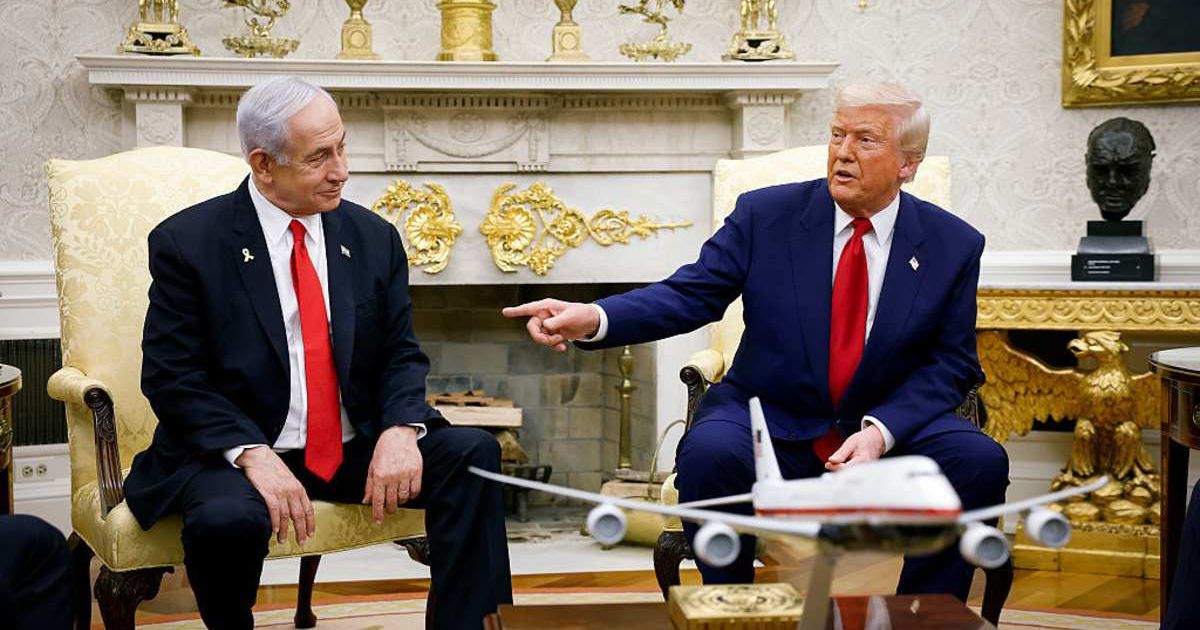
President Donald Trump has privately urged Israeli Prime Minister Benjamin Netanyahu to pull Israeli troops out of parts of Syria and Lebanon, according to Axios via Newsmax. Trump told Netanyahu directly, 'They don't want you there. You should redeploy,' signaling rare US pressure on a close ally to stand down.
The push came as Washington and Jerusalem were already deep in talks over a broader security arrangement. That includes a planned Israeli withdrawal from two pilot zones in southern Lebanon — a deal reached but not yet carried out after roughly two and a half weeks, according to News MEAWW.
Trump Pushes Netanyahu to Pull Back From Both Fronts
Trump made his case during a private conversation with Netanyahu, warning that Israel's continued military presence in Syria and Lebanon risked making a volatile region even more unstable, according to Newsmax. The White House still called the two leaders' relationship strong. But the direct pressure marked a notable moment — the US openly nudging its closest Middle East ally to retreat.
Netanyahu pushed back, stressing Israel's need for security zones along its borders. Those zones are meant to keep Hezbollah and Iranian-backed forces away from Israeli territory. The two sides are still working out what a gradual withdrawal would actually look like on the ground, according to News MEAWW.
Lebanon Deal Stalls as Israel Holds Off on Pullout
US mediators met with Israeli and Lebanese officials in Rome to hammer out details of the framework agreement. The plan calls for Israel to withdraw from two pilot zones in southern Lebanon first, then hand control to the Lebanese army. But Israel had not pulled out of either zone after about two and a half weeks, slowing talks with Beirut, according to News MEAWW.
Local residents in southern Syria have already protested against the Israeli military presence there. Clashes between residents and Israeli forces have added friction to an already tense situation. Those on-the-ground tensions are now feeding directly into the redeployment discussions, according to Newsy Today.
Security Risks if Israel Steps Back Too Soon
Pulling troops out carries real risks. A faster Israeli withdrawal could weaken deterrence against Hezbollah, the Iran-backed militant group based in Lebanon. It could also give Iran more room to rebuild its influence in the region. The security framework is designed to prevent that — but it only works if Lebanon's army actually takes over the zones Israel leaves behind.
Responsibility for making that work is shared. Israel must execute the withdrawals. Lebanon must deploy its forces. And the US must keep the process on track as mediator. If any part of that chain breaks down, the border areas could become unstable quickly, according to Newsy Today.
Bitcoin Briefly Spiked on De-escalation Hopes
News of Trump's push for redeployment rippled through crypto markets. Bitcoin jumped about 5%, briefly climbing above $64,000 on hopes that reduced regional tensions could boost investor confidence, according to Crypto Briefing. The move was fast but short-lived.
Bitcoin slid back below $63,000 as uncertainty about the region returned. The quick spike and retreat showed how sensitive markets are to even a hint of Middle East de-escalation — and how fast that hope can fade when no deal is actually done yet, according to Crypto Briefing.
Sentiment
Mostly NegativeNEGATIVENEUTRALPOSITIVE
Publishers
23
Articles
35
Reach
58
A
AnonymousAuthor


