Trump Calls White House ‘Dump,’ Touts Extensive Renovations
Trump Calls White House ‘Dump,’ Touts Extensive Renovations
Anonymous
Key Points
1
A PolitiFact analysis found that Trump discussed White House renovations and other Washington construction projects in more than a quarter of his public speeches from January through July, rising to nearly half of his speeches from May through July; the tally excluded Truth Social posts and print interviews.
2
Trump has previously described construction oversight as one of his two jobs, saying at a December Kennedy Center speech: “I spent a lot of time there with contractors… I have a construction job, which is really like relaxation for me because I have been doing this all my life.”
3
The planned ballroom’s capacity has expanded to between 900 and 999 people—about 40% larger than the earlier plan for 650 guests in a 90,000-square-foot space.
4
The administration’s broader Washington makeover includes renovations to the Lincoln Memorial Reflecting Pool, a proposed repainting of the Eisenhower Executive Office Building, extensive Kennedy Center renovations, a proposed 250-foot triumphal arch near Arlington National Cemetery and a National Garden of American Heroes.
5
Trump has attributed the ballroom project partly to security needs while insisting that private donors—not taxpayers—will cover its roughly $600 million cost; he has called the project a “gift to the U.S.A. from me and other American Patriots.”
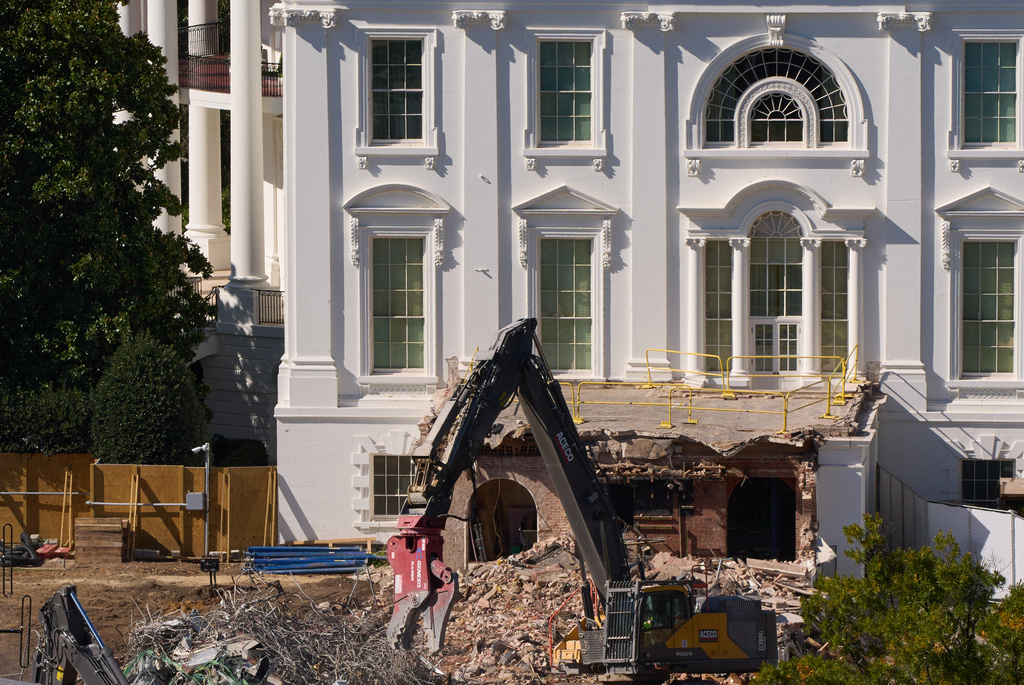
President Trump called the White House a "dump" and claimed his renovations have left it in better shape than when it was built in 1792. The Hill reported that Trump said the executive mansion was in "very bad condition" before his administration began extensive work on the building and grounds, crediting the Interior Department and contractors for the transformation.
The renovation projects include cosmetic Oval Office updates, new entrances, a rebuilt South Lawn helipad, and a redesigned Rose Garden. A planned ballroom project's cost has jumped from roughly $200 million to about $600 million, though Trump insists private donors—not taxpayers—will pay for it. Radar Online noted that Trump has criticized his predecessors for neglecting the historic building during their tenures.
Trump Spends Unusually Heavy Time on Construction Talk
Trump has devoted extraordinary attention to White House construction compared to other policy issues. A PolitiFact analysis found that from January through July, Trump discussed renovations and Washington building projects in more than one-quarter of his public speeches. That share jumped to nearly half of his remarks from May through July, excluding social media posts and print interviews.
Trump has called construction oversight one of his two main jobs. At a Kennedy Center speech in December, he said: "I spent a lot of time there with contractors… I have a construction job, which is really like relaxation for me because I have been doing this all my life." He claims renovation work gives him personal satisfaction despite his heavy schedule.
The Ballroom Ballooned in Size and Cost
The planned White House ballroom has grown dramatically larger and far more expensive. AOL reported that the ballroom's capacity expanded to between 900 and 999 people—about 40 percent larger than the original plan for 650 guests. The project's footprint occupies a 90,000-square-foot space in a demolished East Wing.
The cost explosion is striking. The ballroom's bill jumped from about $200 million to roughly $600 million—a three-fold increase. Trump has framed it as a "gift to the U.S.A. from me and other American Patriots" and partly justified it on security grounds. He insists private donors will cover the expense rather than federal taxpayers.
A Broader Makeover of Washington's Landmarks
Trump's vision extends far beyond the White House itself. The administration is planning extensive renovations to the Lincoln Memorial Reflecting Pool, a proposed repainting of the Eisenhower Executive Office Building, and sweeping Kennedy Center upgrades. A proposed 250-foot triumphal arch near Arlington National Cemetery and a National Garden of American Heroes round out the ambitious scope.
The scale and permanence of these projects reflect Trump's real-estate background and his desire to leave a visible, personal mark on the capital. Each change—from redesigning the Rose Garden to demolishing the East Wing—raises questions about balancing presidential customization with preservation of shared national heritage. Future generations will inherit the consequences of these alterations to historic structures.
Preservationists and Analysts Question the Changes
Historic preservationists and legal experts have criticized the renovations and raised concerns about proper review processes. The alterations challenge the tension between a president's right to customize the White House as his workspace and the building's role as a national historic symbol owned by all Americans.
Broader polling and media analysis suggest Trump has shifted focus away from major governance issues. The economy, foreign policy, and the cost of living have received less emphasis in his public remarks compared to construction projects. Critics argue this allocation of presidential attention may not reflect voters' top priorities or urgent national needs.
Sentiment
Mostly NegativeNEGATIVENEUTRALPOSITIVE
Publishers
23
Articles
61
Reach
84
Topics
A
AnonymousAuthor


