SpaceXAI's Disruptive AI
SpaceXAI's Grok 4.5 Challenges Rivals with Opus-Class AI, Superior Efficiency
Anonymous
Key Points
1
Grok 4.5 is the first model release by SpaceXAI since the company went public, marking a milestone for its enterprise-focused AI push.
2
In SWE Bench Pro, Grok 4.5 records a 64.7% resolve rate, beating GPT-5.5’s 58.6% on the same benchmark, underscoring Grok’s technical problem-solving edge.
3
Grok 4.5 runs at roughly 80 transactions per second (TPS) and was fine-tuned with reinforcement learning across hundreds of thousands of multi-step tasks, with Cursor’s coding data integrated into its training.
4
Grok 4.5 outperforms Opus 4.8 on several benchmarks, according to SpaceXAI’s published materials and charts.
5
SpaceXAI trained Grok 4.5 on the same compute capacity SpaceXAI leases to competitors, signaling a potential capacity-monetization strategy as its own compute needs grow.
SpaceXAI launched Grok 4.5 on Wednesday, positioning it as an "Opus-class" AI model built for coding and enterprise work. The model costs $2 per million input tokens and $6 per million output tokens — a sharp undercut of Anthropic's Opus 4.8, which runs $5 input and $25 output Crypto Briefing.
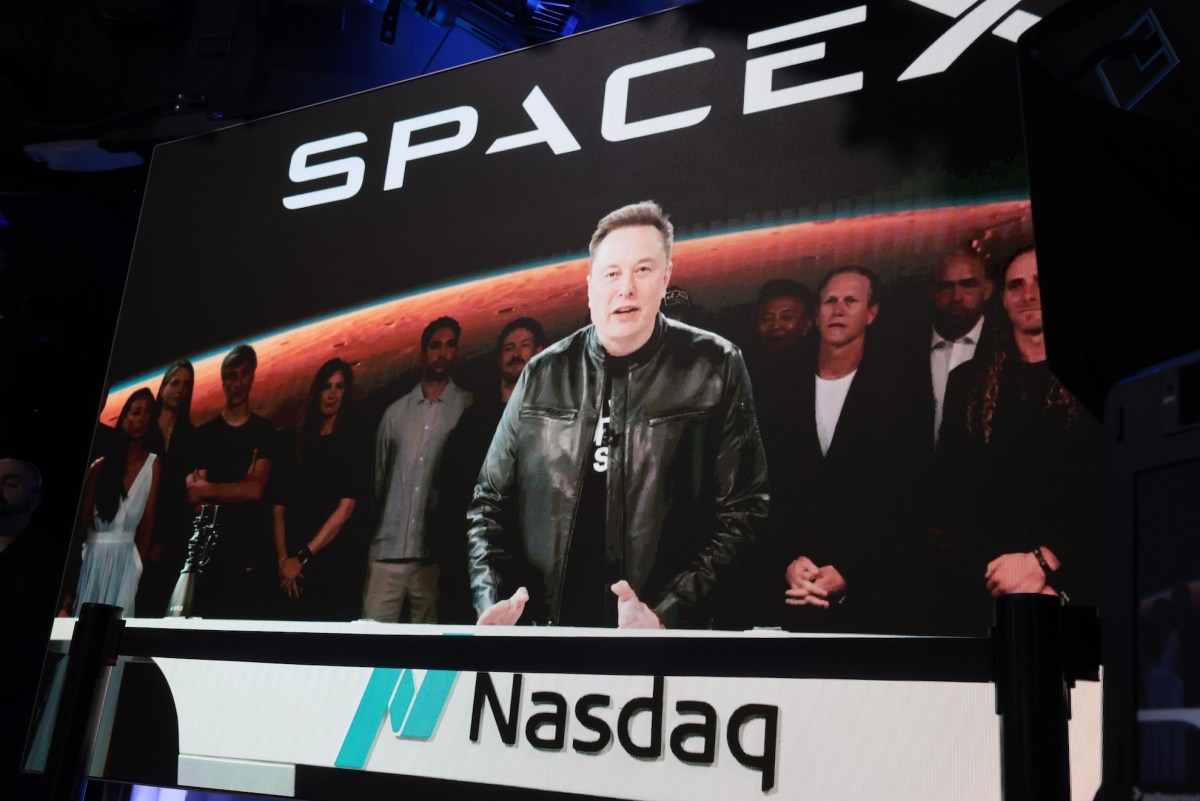
The release is SpaceXAI's first major model launch since the company went public in a $75 billion NASDAQ IPO in June 2026. Grok 4.5 is now available in Grok Build and Cursor on all plans, though not yet in the EU Head Topics.
Grok 4.5 Scores 64.7% on Coding Benchmark, Beating GPT-5.5
On SWE-Bench Pro, the standard test for AI coding ability, Grok 4.5 resolved 64.7% of problems. That beats OpenAI's GPT-5.5, which scored 58.6%. Anthropic's Opus 4.8 landed between them at 69.2%, while Anthropic's newer Fable 5 topped the chart at 80.4% LinkedIn.
SpaceXAI trained the model with data from Cursor, the AI coding editor it acquired for $60 billion in June 2026. The model runs at roughly 80 transactions per second. It was refined using reinforcement learning across hundreds of thousands of multi-step tasks 740 The Fan.
Pricing Built to Undercut Rivals and Win Enterprise Deals
Elon Musk called Grok 4.5 "faster, more token-efficient and lower cost" than competing Opus-class models. At $2/$6 per million tokens, it is far cheaper than Anthropic's Opus 4.8 at $5/$25 and Fable 5 at $10/$50. SpaceXAI also claims the model requires up to 4.2x fewer output tokens than Opus 4.8 on complex coding tasks Crypto Briefing.
There is a catch. The $2/$6 rate only applies to context lengths under 200,000 tokens. For longer tasks, up to the 500,000-token limit, prices double to $4 input and $12 output. OpenAI's GPT-5.6 Luna still undercuts Grok 4.5 at $1 input and $6 output for standard workloads Head Topics.
SpaceX Buyout of Cursor Gives Grok a Direct Path to Developers
SpaceXAI acquired Cursor-maker Anysphere in a $60 billion all-stock deal in June 2026. Cursor's coding data was folded directly into Grok 4.5's training. Critics noted one side effect: an early snapshot of the Cursor codebase was "accidentally included in training," giving the model an unfair edge on CursorBench WTVB AM.
Cursor COO Jordan Topoleski said the merger tackles a real problem: "adoption is uneven, usage is concentrated, and costs vary widely depending on how work is routed." SpaceXAI wants Grok 4.5 to become the default model inside developer tools, not just a consumer chatbot LinkedIn.
SpaceX's $12.7 Billion Compute Bet Now Needs to Pay Off
SpaceX spent $12.7 billion on AI infrastructure in 2025 and another $7.7 billion in Q1 2026 alone. Grok 4.5 was trained on the same Colossus supercomputer — roughly one million H100 GPU equivalents — that SpaceXAI rents to outside companies and competitors 740 The Fan.
The company plans space-based GPU satellites, called Starmind, by late 2027 to get around land-based energy limits. For now, Grok 4.5 is live in the US. The EU rollout is expected mid-July, pending data privacy reviews Crypto Briefing.
Sentiment
Mostly PositiveNEGATIVENEUTRALPOSITIVE
Publishers
42
Articles
87
Reach
129
A
AnonymousAuthor


