Meloni Challenges Trump
Trump's G7 Photo Claim Deemed 'Fabricated' by Meloni, Sparking Italy's Diplomatic Outrage
Anonymous
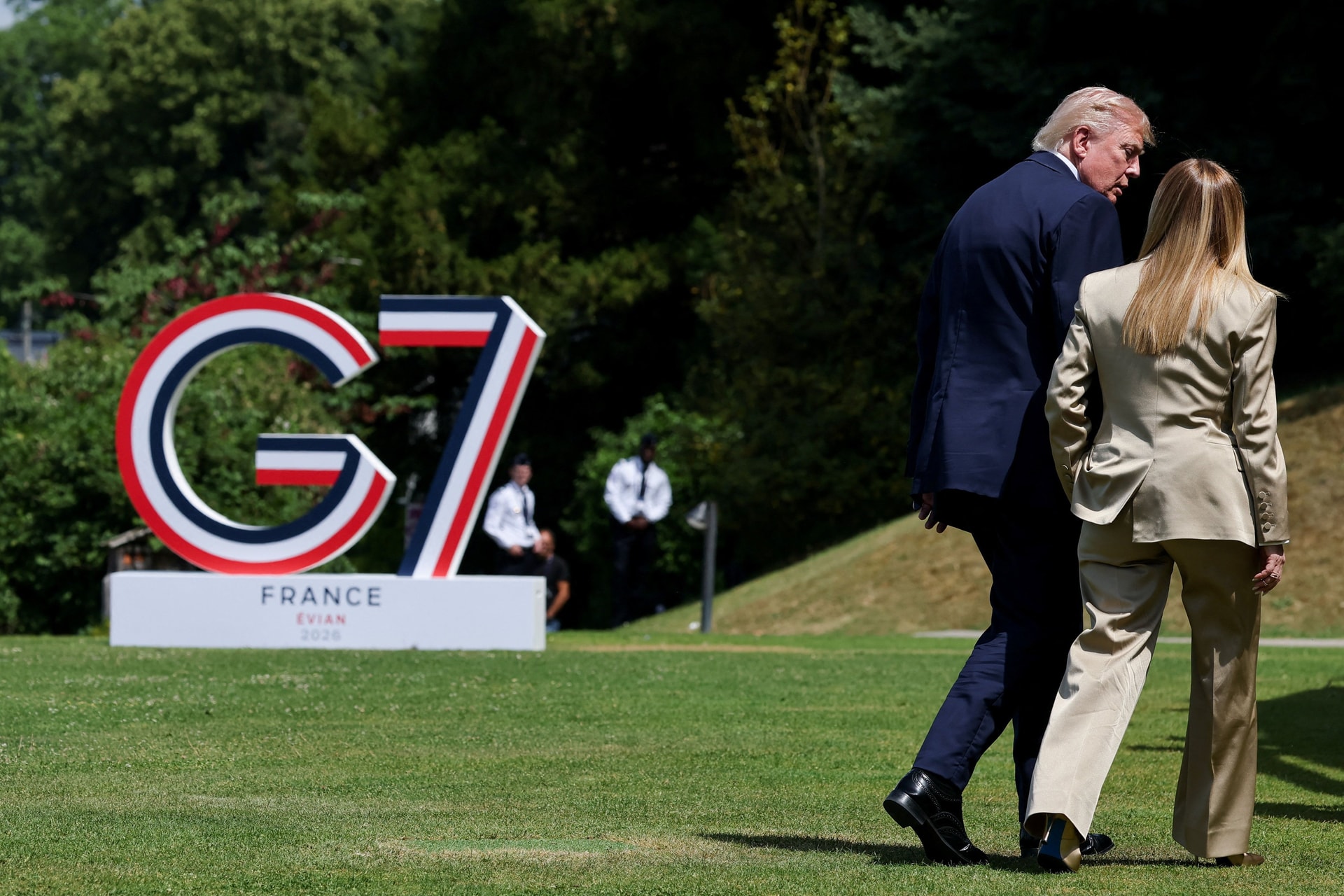
Italian Prime Minister Giorgia Meloni broke sharply with US President Donald Trump on June 19, 2026, calling his latest comments about her "completely fabricated." The clash erupted after Trump told Italian channel La7 that Meloni had "begged" him for a photo at the G7 summit — adding he "felt sorry for her" and agreed. Meloni fired back in a video statement: "Italy and I do not beg," according to Reuters.
The fallout was immediate. Italian Foreign Minister Antonio Tajani canceled a planned visit to the US scheduled for June 21-22. Meloni also accused Trump of showing "greater deference to the enemies of the West" than to old allies — a striking charge from a leader once seen as Washington's closest friend in Europe, Reuters reported.
A Photo Op Ignites a Full Diplomatic Crisis
The dispute traces back to the G7 summit in Evian-les-Bains, France, on June 15-17, 2026. Trump and Meloni were photographed chatting on a sofa on June 16. Then, on the evening of June 18, Trump told La7 in a phone interview that Meloni had desperately sought the moment. His exact words: "She begged me for a picture... I wouldn't have taken it, but I felt sorry for her," according to Press Telegram.
Tajani called Trump's words "serious and offensive" and said they "offend all of Italy," according to Daily Camera. Defense Minister Guido Crosetto backed Meloni, saying he could not imagine her "asking anyone for a photograph, not even under threat." La7 only aired a dubbed Italian version of the interview — not the original English audio — though the Italian government treated the transcript as definitive.
How a 'Trump Whisperer' Became Trump's Newest Critic
Meloni spent much of 2025 building a special bond with Trump. In April 2025, the two leaders met in Washington and called their ties a "strategic alliance." Meloni positioned herself as a bridge between the US and a skeptical Europe. That strategy paid early dividends — after intense lobbying, the US cut punitive tariffs on Italian pasta from a proposed 92% down to a range of 2.26% to 14% by January 2026, according to Reuters.
The relationship frayed fast in 2026. When the US and Israel launched a war on Iran in February, Meloni reportedly opposed the move in private. Then in April, Trump attacked Pope Leo XIV as "weak and terrible on foreign policy." Meloni publicly called those remarks "unacceptable." Trump shot back in Corriere della Sera: "I thought she had courage, but I was wrong." The G7 photo dispute was the final straw, according to Reuters.
Italy's Political Class Rallies Behind Meloni
The backlash inside Italy was swift and unusually united. Across the political spectrum — from Meloni's own Brothers of Italy to opposition leader Giuseppe Conte — leaders condemned Trump's remarks. Conte, a frequent Meloni critic, said Trump showed no respect for Italian institutions, according to Reuters. Such cross-party agreement is rare in Italian politics.
The domestic unity may help Meloni politically. Her Brothers of Italy party polled at 27.8% as of June 18, 2026, remaining Italy's most popular party, according to YouTrend. Her personal approval rating stood at 38% in May 2026 — well above French President Macron at 18% and Germany's Friedrich Merz at 16%. Analyst Piero Ignazi of the University of Bologna told Reuters that Meloni's flattery strategy had backfired and Italy would now need a "firmer approach" with Washington.
Trade Tensions and Italy's Shifting Role in Europe
The diplomatic rupture carries real economic risk. Italian pasta exporters ship roughly €671 million worth of product to the US each year, according to UN Comtrade data. While tariffs were lowered in January 2026, Trump holds the power to reinstate the original 92% dumping margin if the spat deepens. Italy also faces pressure over defense spending — its budget sits at just 1.5% of GDP, far short of the 5% Trump demands from NATO allies, according to Press Telegram.
Analysts now expect Meloni to drop her "bridge" role between the US and Europe. She is likely to align more closely with European Council partners and leaders like Germany's Merz. For over a year, Meloni bet that personal charm could shield Italy from Trump's unpredictability. That bet, Reuters reported, has now clearly failed.
Sentiment
NeutralNEGATIVENEUTRALPOSITIVE
Publishers
204
Articles
641
Reach
845
A
AnonymousAuthor


