Malibu Sinkhole Collapse
Massive Sinkhole Collapses Malibu Driveway at Nicolas Cage's Beachfront Home
Anonymous
Key Points
1
The National Weather Service attributed the severe coastal conditions to the remnants of Hurricane Marie, reporting wave heights of 10 to 15 feet in some areas and significant beach erosion along Southern California.
2
Residents said an approximately eight-foot opening had already formed beneath the driveway on Monday, and another area of concern was developing farther north before the crater rapidly expanded the following morning.
3
The collapse reportedly swallowed additional objects, including parts of a privacy fence and a portable toilet, while a local reporter said the house appeared to be undergoing renovations.
4
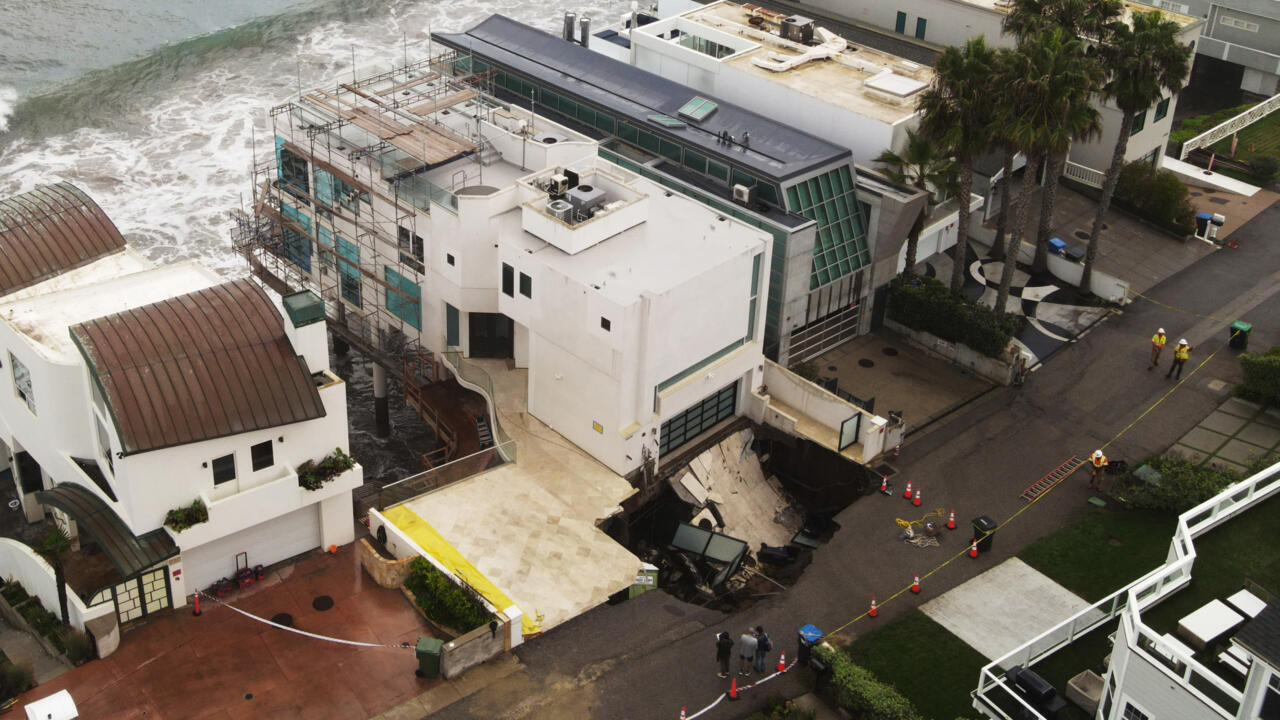
The residence was reportedly unoccupied when the driveway gave way, and workers in orange safety vests were photographed assessing the scene alongside a firetruck with a hose extended.
5
Article 1 linked the broader pattern of powerful Pacific storms to a near-record-strength El Niño episode, while noting that scientists believe human-caused warming could amplify its effects.
A 30-by-30-foot sinkhole swallowed the driveway of Head Topics's reported $10.5 million Malibu beachfront home early Tuesday, collapsing asphalt, concrete, and part of an adjacent street. Firefighters discovered the crater while responding to a suspected gas-main break, with Radar Online reporting that waves washed through the crater and threatened nearby infrastructure. Heavy rain and 10-to-15-foot surf from Hurricane Marie's remnants, combined with coastal erosion, triggered the collapse. No injuries or evacuations occurred, and the house—supported by deep pilings—remained standing, though its access and front section suffered substantial damage.
Deep Pilings Saved the House, But Not the Driveway
Nicolas Cage's Malibu residence survived intact because it rests on deep structural pilings driven deep into bedrock. My News LA noted that the driveway and garage approach, however, sat on exposed soil vulnerable to wave-driven erosion. As high surf pounded the shore and heavy rain saturated the ground, support material beneath the pavement vanished. The surface collapsed suddenly—while the elevated home remained standing—leaving vehicles and utilities at risk.
Hurricane Marie Unleashes Extreme Coastal Conditions Across Southern California
The National Weather Service attributed the severe coastal collapse to Hurricane Marie's remnants, reporting wave heights of 10 to 15 feet in some areas and significant beach erosion along Southern California. Real Estate Australia documented that the sinkhole swallowed asphalt, concrete, and a portable toilet—evidence of the sheer force moving through the Malibu property. Residents had already noticed an eight-foot opening forming beneath the driveway on Monday, with another vulnerable spot developing farther north before the crater rapidly expanded Tuesday morning.
Coastal Adaptation Must Protect More Than Just Homes
The sinkhole exposes a critical vulnerability: shielding houses alone is insufficient when driveways, garages, utilities, and street access remain exposed to erosion. France24 reported that pounding waves opened the sinkhole in the multi-million-dollar property, highlighting how cascading failures can occur. Gas lines break. Vehicle access disappears. Privacy fences collapse into the hole. Even elite Malibu residents—with deep pilings and luxury construction—face mounting risks as ground-level infrastructure crumbles beneath them. Protecting coastal properties requires defending the entire access network, not just the structure above.
Climate Change May Intensify Coastal Erosion and Storm Surge
Head Topics linked the pattern of powerful Pacific storms to a near-record-strength El Niño episode, while noting that scientists expect human-caused warming to amplify similar effects. Rising sea levels and intensified coastal flooding increase damage from storms and unusually large swells. The immediate collapse combined heavy rain and extreme surf—conditions likely to worsen as global temperatures climb. Malibu's multimillion-dollar beachfront properties face not just today's sinkhole, but an accelerating erosion cycle driven by climate change.
Sentiment
Mostly NegativeNEGATIVENEUTRALPOSITIVE
Publishers
47
Articles
180
Reach
227
A
AnonymousAuthor


