U.S.-Israel Aid Debate
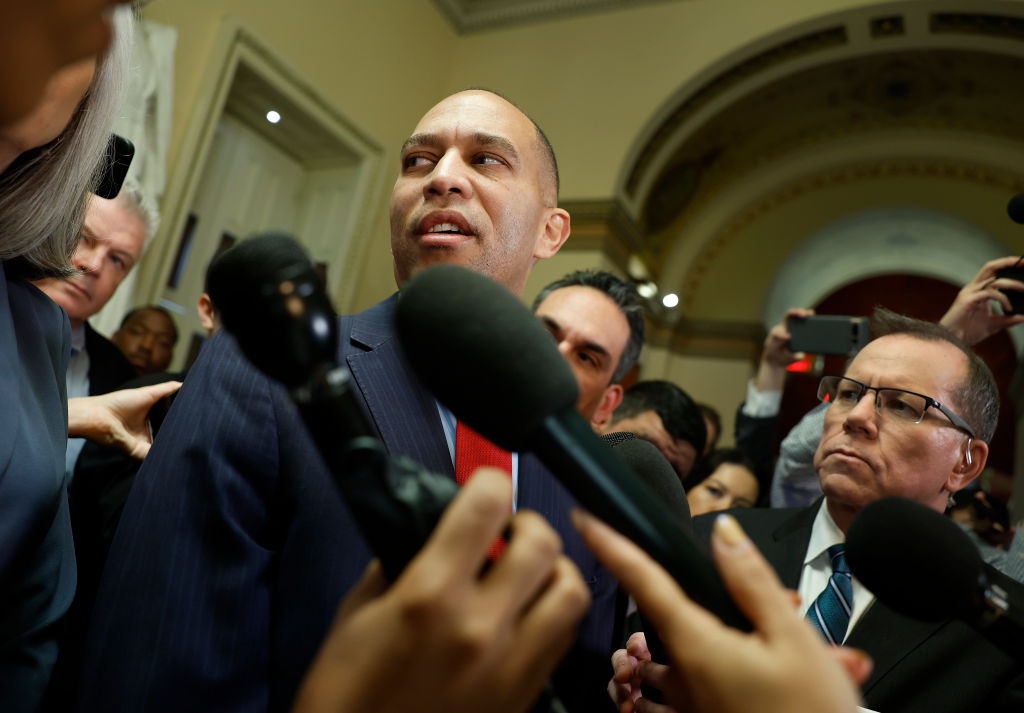
House Minority Leader Jeffries Blocks Plan to End All U.S. Aid to Israel
Anonymous
Key Points
1
The Massie amendment would end roughly $3.3 billion in foreign military aid to Israel but would not touch the additional $500 million Israel receives annually for defensive weaponry such as Iron Dome.
2
Jeffries frames the issue as an urgent need for a major reset in the U.S.-Israel relationship, including a shift in aid direction and a path toward a two-state framework, with changes tied to the end of the current MOU in 2028.
3
J Street opposed the Massie measure, illustrating intra-Democratic tensions: the group says it supports Jeffries’s position while acknowledging he won’t whip, signaling nuanced positions within the party.
4
There is a notable caucus split, with dozens of Democrats reportedly prepared to vote for the amendment to cut off aid, underscoring a broader rift between party leadership and its progressive base.
5
The procedural context places the Massie amendment on the table as part of the National Security, Department of State, and Related Programs Appropriations Act for fiscal 2027, with a potential vote as early as this week as party negotiations continue under Speaker Johnson.
House Minority Leader Hakeem Jeffries announced he will oppose a Republican amendment that would cut all U.S. military aid to Israel, calling the plan "overly broad" and warning it could harm humanitarian programs, refugee resettlement, and even U.S. embassy operations, according to Colorado Politics. The amendment, introduced by Republican Rep. Thomas Massie, would strip roughly $3.3 billion in annual foreign military aid to Israel from a State Department spending bill.
But Jeffries did not simply defend the status quo. He called for an urgent "major reset" in the U.S.-Israel relationship — including shifting how aid is directed and pushing toward a two-state framework — while making clear that Israel can pay for its own weapons, The Guardian reported.
What the Massie Amendment Would Actually Cut
The Massie amendment targets $3.3 billion in direct foreign military financing for Israel, part of the National Security and State Department Appropriations Act for fiscal year 2027, according to Read Sludge. It would not touch a separate $500 million Israel receives each year for defensive systems like the Iron Dome missile shield.
Jeffries warned that a blanket aid cutoff would go too far. He argued it would block funding beyond weapons — including money for humanitarian aid and peace-building programs. He said targeted changes, not a sweeping ban, are the right approach.
Jeffries Calls for a Reset, Not a Blank Check
Jeffries wrote to Democratic colleagues outlining his vision for change, Punchbowl News reported. He wants to reduce offensive military aid to Israel and tie any new support to progress on a two-state solution. The current U.S.-Israel memorandum of understanding — worth $38 billion over ten years — expires in 2028, giving Democrats a potential leverage point.
He also stressed that cutting off aid entirely would hurt Washington's ability to counter regional threats from Hamas and Hezbollah. "Israel can pay for its own weapons," he said, framing the debate as one about direction rather than total disengagement, according to The Guardian.
A Party Divided: Left Flank Ready to Break With Leadership
Dozens of House Democrats are reportedly prepared to vote for the Massie amendment despite Jeffries's opposition, revealing a sharp split between party leadership and its progressive base. Jeffries said he would not "whip" the vote — meaning he won't pressure members to follow his lead — and told lawmakers they could vote their conscience, according to Denver Gazette.
Pro-Israel group J Street opposed the Massie measure but acknowledged Jeffries would not enforce a party line. That nuanced stance shows how difficult it is for Democrats to find a unified position on Israel aid. The party is caught between vocal progressive critics of the Netanyahu government and longtime supporters of the U.S.-Israel alliance.
AIPAC Money and the Politics Behind the Opposition
Jeffries's stance drew scrutiny after Read Sludge noted he opposed the measure following a record-breaking AIPAC earmark. Critics on the left argue that campaign money from pro-Israel lobbying groups shapes Democratic leadership's positions on aid. The timing added fuel to an already heated internal debate.
A vote on the amendment could come as early as this week, as negotiations continue under Speaker Mike Johnson. However the vote goes, the fight has made one thing clear: the old bipartisan consensus on unconditional Israel aid is under more pressure than it has been in years.
Sentiment
Mostly NegativeNEGATIVENEUTRALPOSITIVE
Publishers
13
Articles
16
Reach
29
Topics
A
AnonymousAuthor


