Five EU Countries Plan 2027 Migrant Return Hubs
Five EU Countries Plan 2027 Migrant Return Hubs
Anonymous
Key Points
1
The proposed hubs would allow EU countries to deport people not to their countries of origin, but to facilities in third countries outside the 27-member bloc.
2
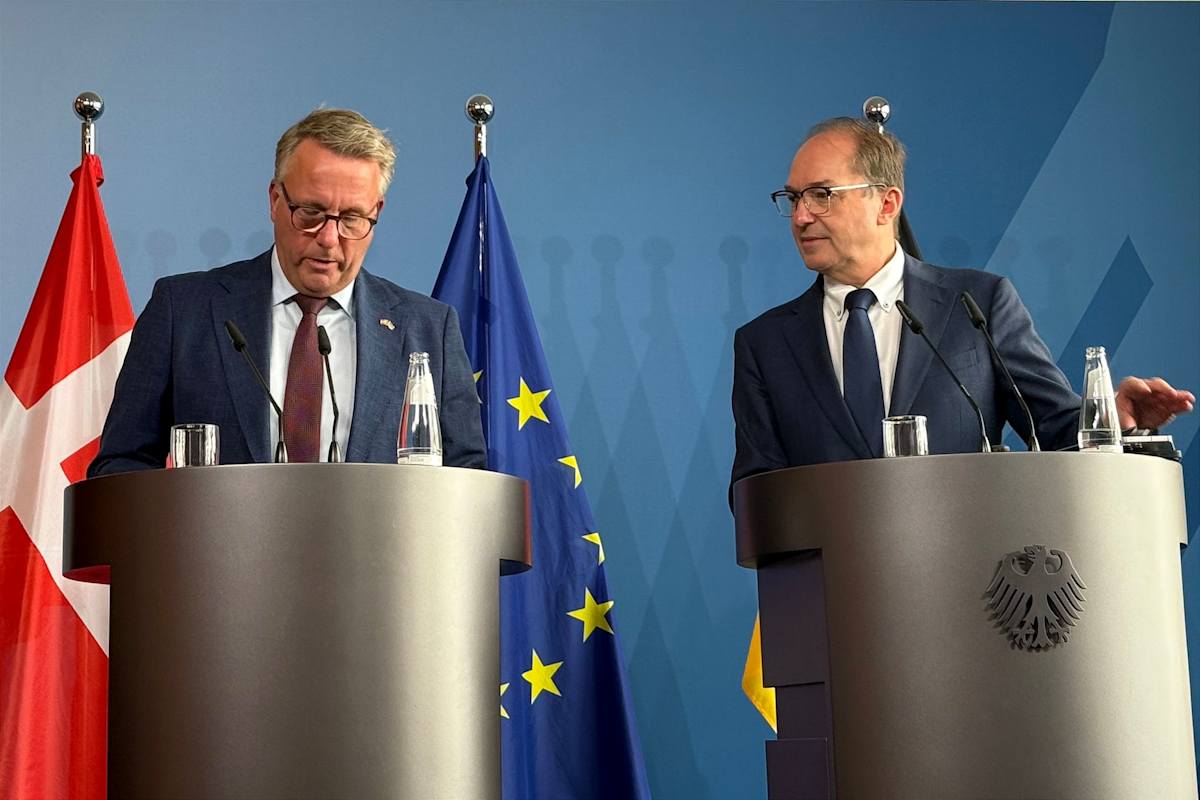
Danish Foreign Minister Lars Løkke Rasmussen said the countries wanted to work with third countries to give irregular migrants “a second chance in a partner country,” while insisting that people without legal residency should not remain in the EU.
3
Austria’s asylum and migration minister, Bart van den Brink, described the Copenhagen meeting as a step toward realizing the hubs “as soon as possible in the upcoming years.”
4
A Rwandan government spokesperson said in August that it was “natural” for Rwanda to negotiate with European countries about potentially hosting asylum seekers who are not allowed to live elsewhere.
Five EU countries — Denmark, Germany, Austria, the Netherlands, and Greece — are moving forward with a plan to send rejected migrants to detention and deportation facilities outside Europe by 2027. Yahoo News reports that Denmark hopes to use its first 'return hub' by the end of that year, while the countries have not yet named a partner nation but say Rwanda and Uganda are among the possibilities. The initiative marks an escalation in Europe's efforts to manage migration by removing asylum seekers beyond EU borders rather than deporting them to their home countries.
The plan follows European Parliament approval of rules allowing member states to establish such facilities outside the 27-nation bloc. Economic Times reported that representatives met in Copenhagen to finalize the model, with officials describing negotiations as entering a critical phase. Human rights groups have already criticized the proposal, while earlier attempts involving Rwanda and Italian-run facilities in Albania faced legal and practical obstacles.
How the Return Hubs Would Work
The proposed facilities would allow EU countries to bypass traditional deportation routes. Instead of sending migrants back to their home countries, the hubs would house rejected asylum seekers in third-country locations. The Local notes the target start date is January 1, 2027, though Denmark's Foreign Minister Lars Løkke Rasmussen framed the goal differently, saying the countries wanted to give irregular migrants 'a second chance in a partner country' while preventing them from staying in the EU.
Denmark Leads Push for Quick Implementation
Denmark has emerged as the driving force behind the initiative. LMT Online reports that the Copenhagen meeting brought together representatives from all five nations to solidify their approach. Austria's asylum minister Bart van den Brink called it a step toward making the hubs 'as soon as possible in the upcoming years,' signaling the countries' urgency to launch operations.
Rwanda and Uganda Emerge as Leading Candidates
The five EU nations have not formally announced a partner, but Rwanda has signaled openness to the arrangement. The Gateway Pundit reported that a Rwandan government spokesperson said in August that it was 'natural' for Rwanda to negotiate with European countries about potentially hosting asylum seekers. Uganda remains another option, though no formal agreements have been signed between either nation and the EU coalition.
Legal Challenges and Rights Concerns Loom
The plan faces significant obstacles. Previous European efforts to establish similar facilities — including Italy's Albanian centers — collapsed due to legal rulings and political backlash. Human rights advocates have already criticized the hubs as potentially violating international asylum protections. The European Court of Justice may ultimately determine whether such arrangements comply with EU law and international conventions protecting refugees and migrants.
Sentiment
Mostly NegativeNEGATIVENEUTRALPOSITIVE
Publishers
19
Articles
99
Reach
118
A
AnonymousAuthor


