BMW i5 LWB Launch
BMW Launches Locally Assembled i5 Long Wheelbase Electric Sedan Starting At ₹79.6 Lakh
Anonymous
Key Points
1
BMW says the i5 LWB has a top speed of 195 km/h, complementing its 0–100 km/h acceleration time of 6.7 seconds.
2
The car includes BMW’s Charging Concierge service, which can recommend routes based on available charging stations and let owners activate compatible chargers through a unified payment system.
3
Its driver-assistance and safety equipment includes adaptive cruise control with Stop & Go, Parking Assistant Professional, Reverse Assistant, Lane Change Warning, Cross Traffic Warning, collision and exit warnings, active pedestrian protection and eight airbags.
4
The i5 LWB offers multiple driving modes—Personal, Efficient, Sport, Expressive, Relax and Digital Art—and uses a 50:50 weight distribution, according to BMW’s feature list.
5
The First Edition is specified with Carbon Black Metallic paint, Titanium Bronze accents, Fineline open-pore fine-wood trim and a “FIRST EDITION” dashboard engraving.
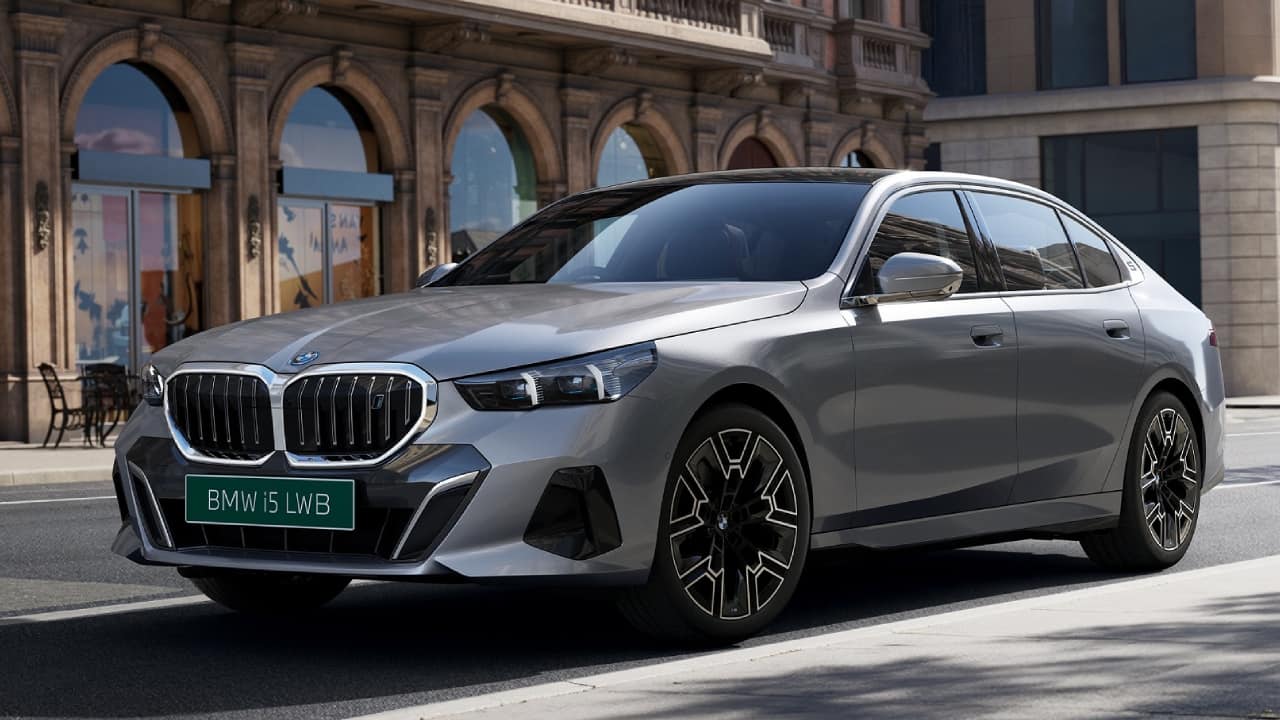
BMW India launched the locally assembled i5 Long Wheelbase electric sedan on September 7, 2026, at an introductory price of ₹79.60 lakh ex-showroom. The rear-seat-focused model uses an 81.6-kWh battery and 268-horsepower rear motor, hitting 0–100 km/h in 6.7 seconds with a claimed range of up to 669 km. Deliveries began immediately from the company's Chennai plant.
All 99 units of the limited First Edition variant sold out before the official launch, signaling strong demand for luxury electric sedans in India. The i5 LWB price sits just ₹3 lakh above the petrol-powered 530Li, making it a competitive alternative for chauffeur-driven executives seeking zero-emission mobility.
A Locally Built EV Matching Petrol-Sedan Pricing
The i5 LWB marks BMW Group India's first locally assembled electric sedan, following the iX1 LWB. By sourcing assembly from Chennai, BMW avoids high import duties on fully built units, allowing competitive pricing. The ₹79.60 lakh introductory rate is just ₹3 lakh above the ICE 530Li petrol sedan, according to Autocar India, making the jump to electric mobility surprisingly affordable for premium buyers.
This pricing strategy contrasts sharply with earlier expectations. Team-BHP noted that luxury EV sedans were predicted to cost ₹85 lakh to ₹1 crore, but BMW's aggressive localization strategy undercut those estimates. Industry analysts say the move sets a competitive benchmark for rivals Mercedes-Benz and Audi in India's luxury sedan space.
Rear-Focused Design for India's Chauffeur Culture
The i5 LWB stretches 5,175 mm long with a 3,105-mm wheelbase—110 mm longer than the standard i5. Four-zone climate control, a panoramic glass roof, and rear-focused seating target India's chauffeur-driven executive market. BMW tailored the suspension and ground clearance specifically for Indian road conditions, avoiding the one-size-fits-all global approach.
The cabin includes vegan upholstery, dual-screen displays, and eight airbags. A limited First Edition adds rear-seat entertainment, Carbon Black Metallic paint, and Titanium Bronze accents. Optional Bowers & Wilkins audio is available for buyers seeking premium sound quality in the back seat.
Fast Charging and 669-Km Range Enable Long Trips
The 81.6-kWh battery powers a rear-mounted motor producing 268 horsepower and 410 Newton-meters of torque. The sedan accelerates 0–100 km/h in 6.7 seconds and reaches a top speed of 195 km/h. Claimed MIDC range stretches up to 669 kilometers, covering most intercity journeys on a single charge.
DC fast charging reaches 160 kilowatts, pushing the battery from 10% to 80% in just 33 minutes. Every car includes an 11-kW AC wallbox for home charging. BMW's Charging Concierge service recommends routes based on available stations and activates compatible chargers through a unified payment system, removing friction from long-distance EV ownership.
Safety and Driving Modes for Every Condition
The i5 LWB packs adaptive cruise control with Stop & Go, professional parking assistance, and reverse guidance. Lane-change warnings, cross-traffic alerts, collision warnings, and active pedestrian protection come standard. Eight airbags and a 50:50 weight distribution enhance stability and occupant safety.
Six driving modes—Personal, Efficient, Sport, Expressive, Relax, and Digital Art—let drivers tailor behavior to road conditions and mood. The balanced weight distribution reflects BMW's emphasis on handling even with the battery slung low in the chassis, a key advantage of electric-car architecture.
Sentiment
Mostly PositiveNEGATIVENEUTRALPOSITIVE
Publishers
35
Articles
45
Reach
80
A
AnonymousAuthor


