XPeng Humanoid Robot Production
XPeng Commissions Guangzhou Production Line for IRON Humanoid Robot Ahead of 2026 Mass Production
Anonymous
Key Points
1
XPeng CEO He Xiaopeng symbolically welcomed IRON to the company by pinning an employee badge on the robot after it completed assembly and walked off the line.
2
IRON’s humanlike walk previously sparked claims that a person was operating or wearing the robot; XPeng responded at its 2025 AI Day by cutting open part of the robot’s leg to demonstrate that it contained mechanical components rather than a hidden performer.
3
He Xiaopeng said the production lines were “created from scratch with no precedent to follow,” describing the milestone as a small step toward building manufacturing infrastructure for an entirely new product category.
4
XPeng said monthly production capacity could reach several thousand robots in 2027, depending on market demand, offering one of the few indications of its planned manufacturing scale.
5
XPeng expects the gross margin on each humanoid robot to be significantly higher than that of its electric vehicles, citing the sector’s high technical barriers and limited supply.
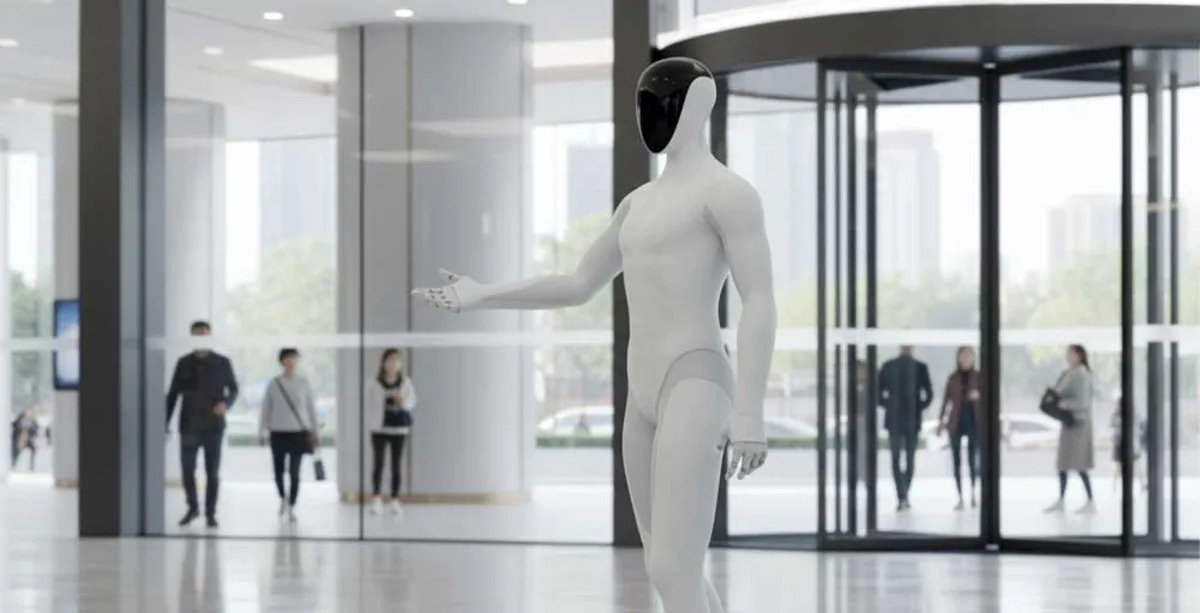
XPeng has commissioned a production line in Guangzhou for its IRON humanoid robot, marking the shift from research prototypes to scaled manufacturing Yahoo Finance. The company says more than 80% of core processes are automated, and IRON autonomously walked off the assembly line after completion Digital Trends. XPeng plans mass production by the end of 2026, with monthly capacity reaching several thousand robots in 2027 Benzinga.
The IRON robot has 76 degrees of freedom, including 21 in each hand, and uses three in-house Turing chips capable of up to 2,250 TOPS for on-device computing Yahoo Finance. XPeng's robotics unit has raised more than $900 million at a valuation exceeding $6.3 billion Benzinga. The company expects humanoid robot gross margins to exceed those of its electric vehicles, though production pricing and capacity details remain undisclosed.
From Lab Prototype to Factory Floor
XPeng CEO He Xiaopeng symbolically welcomed IRON to the company by pinning an employee badge on the robot after assembly Yahoo Finance. The production line uses automotive-grade quality controls and represents what XPeng calls the world's first of its kind, though this claim has not been independently verified Gasgoo. He Xiaopeng said the production lines were "created from scratch with no precedent to follow," describing the milestone as a small step toward building manufacturing infrastructure for an entirely new product category.
Addressing Questions About IRON's Autonomous Walking
IRON's humanlike walk previously sparked claims that a person was operating or wearing the robot. XPeng responded at its 2025 AI Day by cutting open part of the robot's leg to demonstrate mechanical components rather than a hidden performer Yahoo Finance. The demonstration aimed to verify that IRON's movements were genuinely autonomous and not secretly controlled by a human operator inside the suit.
Automotive Manufacturing Applied to Robots
XPeng is applying automotive production methods to humanoid robots, leveraging established capabilities in quality control, precision assembly, and process automation Digital Trends. More than 80% of core robot-line processes are automated, which could reduce production variability and accelerate scaling Yahoo Finance. However, automation does not itself demonstrate that the robots can perform economically useful work or meet real customer demand.
Internal Deployment Before Market Sales in 2027
XPeng plans to begin mass production by the end of 2026, initially deploying robots at its stores and campuses before pursuing sales in China and overseas markets in 2027 Benzinga. Using its own facilities creates a controlled environment for validating safety, autonomy, maintenance, and operational economics before external delivery. This sequencing can generate operating data and reduce reputational risk, but commercial demand and field performance remain unproven until independent customers adopt the robots.
Sentiment
Mostly PositiveNEGATIVENEUTRALPOSITIVE
Publishers
14
Articles
10
Reach
24
Topics
A
AnonymousAuthor


