Ancient Carbon Clue Questioned
Caltech Study Challenges Long-Standing Theory of Ancient Global Carbon Disruption
Anonymous
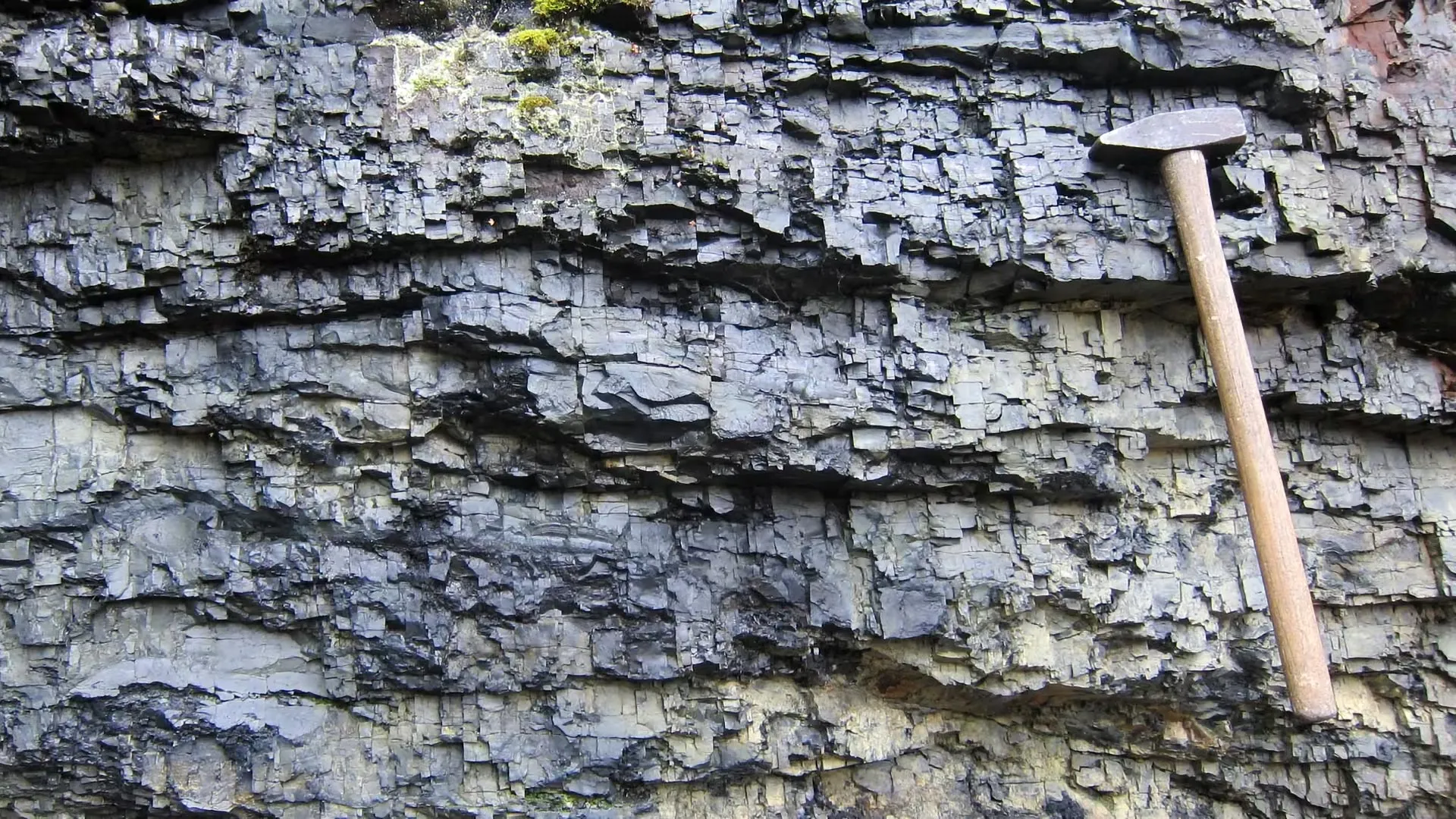
A Caltech-led study challenges the long-standing interpretation that an unusual carbon-isotope signature in rocks from Karelia, Russia, records a global disruption to Earth’s carbon cycle during the Great Oxidation Event. Analysis of gases trapped in microscopic rock pockets suggests the signal could instead have formed through local processes involving heat, hydrocarbons and methane-consuming microbes in a sedimentary basin. The findings do not overturn evidence that oxygenation transformed Earth’s surface, but they raise questions about treating individual rock records as proof of planetwide change. Comparing the Russian evidence with records from Gabon and other sites may help determine how broadly the signal represents conditions on early Earth.
Key Points
1
The Great Oxidation Event occurred roughly 2.5 to 2 billion years ago; the rise of atmospheric oxygen helped set the stage for complex organisms such as plants and animals to emerge about 500 million years later.
2
The traditional global-carbon-cycle interpretation is based in part on the idea that oxygen’s initial rise coincided with the burial of large quantities of microbial material beneath the seafloor, trapping carbon in rocks and leaving the isotope signature.
3
The Russian rocks studied come from the Zaonega Formation, described as one of the world’s oldest known fossil oil fields; the study used gases preserved in microscopic pockets in those rocks.
4
The evidence behind the long-standing interpretation includes drill cores from ancient marine deposits in both Karelia and Gabon’s Francevillian Basin.
Sentiment
Mostly NegativeNEGATIVENEUTRALPOSITIVE
Publishers
6
Articles
3
Reach
9
Topics
A
AnonymousAuthor


