Iran's Strait Control Bid
Iranian Parliament Introduces Bill to Assert Control Over Strait of Hormuz Amid Heightened US Tensions
Anonymous
Key Points
1
The IRGC claimed a strike against a U.S.-occupied air base in Jordan with ballistic missiles, calling it part of Nasr 2 and describing it as the third phase of the operation's second wave.
2
Azizi was elected as chairman of Iran's Parliament's National Security and Foreign Policy Committee for the third session of Iran's 12th Parliament.
3
The head of Parliament, Mohammad Bagher Ghalibaf, is explicitly noted as the parliament's leader and also serves as chief negotiator in talks with Washington.
4
The draft bill titled Strategic Action for the Security and Sustainable Progress of the Strait of Hormuz and the Persian Gulf was formally introduced to Iran’s parliament on the evening of July 13.
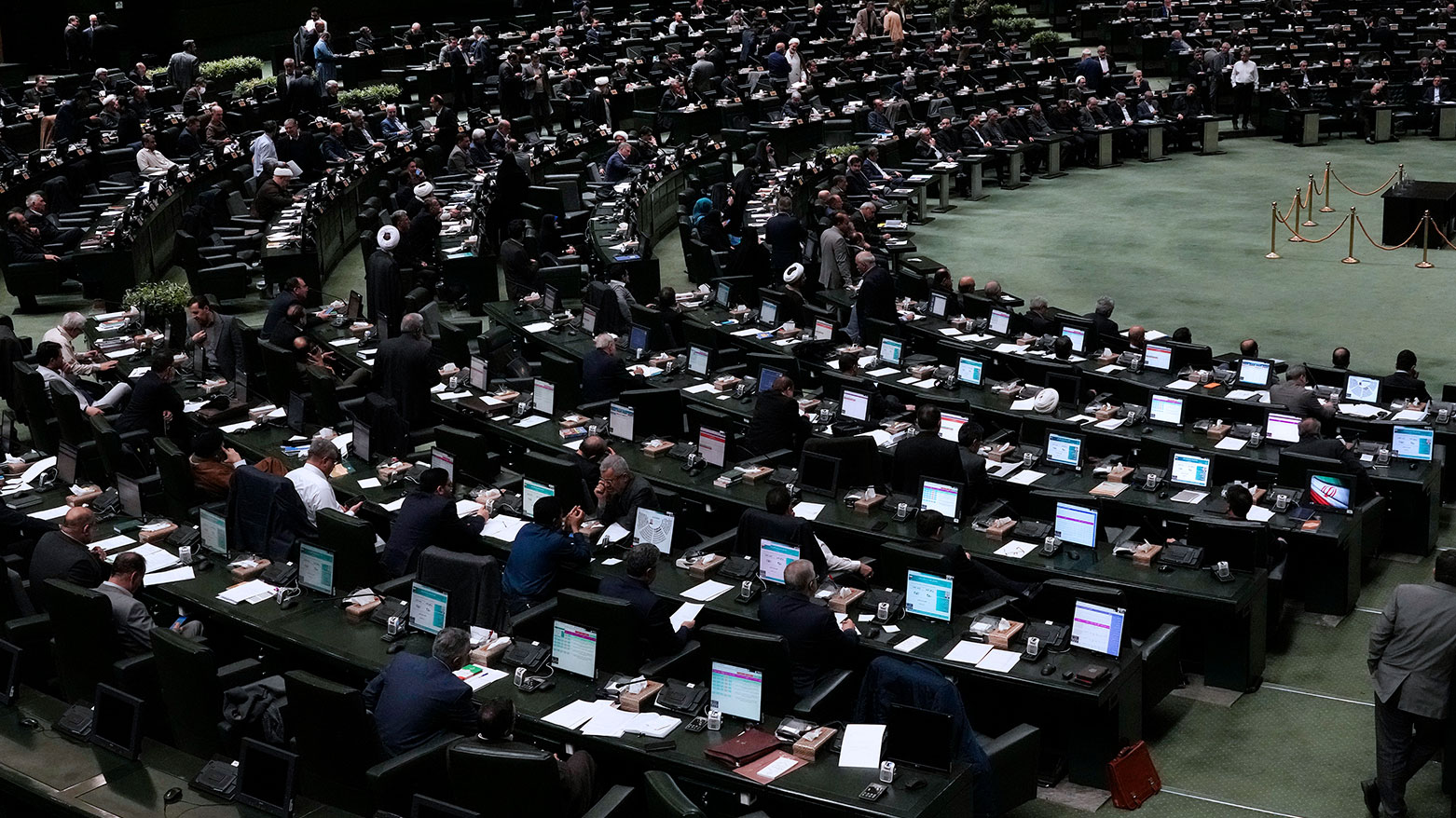
Iranian lawmakers formally introduced a sweeping new bill on the evening of July 13 aimed at expanding Tehran's control over the Strait of Hormuz, according to Al Jazeera. The draft is titled the Strategic Action for the Security and Sustainable Progress of the Strait of Hormuz and the Persian Gulf. It comes after nearly five months of intensifying confrontation between Iran and the United States.
The bill would formalize Iran's authority over the crucial waterway and could include fees on vessels passing through the strait, Kurdistan 24 reported. About 20% of global oil trade flows through the Hormuz every day, making it one of the world's most strategically vital chokepoints.
Parliament Moves to Tighten Grip on the Strait
The head of Iran's Parliament National Security and Foreign Policy Committee introduced the bill to the full chamber, The Frontier Post reported. The committee recently elected Azizi as its new chairman for the third session of Iran's 12th Parliament. His election signals a harder line on foreign policy inside the legislature.
Parliament Speaker Mohammad Bagher Ghalibaf also leads Iran's negotiating team in talks with Washington. Lawmakers backing the bill say Iran should make no compromises in those negotiations, Al Jazeera reported. The bill is seen as a tool to raise pressure on the US at the bargaining table.
IRGC Claims Missile Strike on US Base in Jordan
The bill's introduction coincided with a fresh military escalation. Iran's Islamic Revolutionary Guard Corps claimed it fired ballistic missiles at a US-occupied air base in Jordan, according to Al Jazeera. The IRGC called it the third phase of the second wave of its operation, named Nasr 2.
Iranian officials also pointed to the recent downing of US drones as proof of Tehran's reach. Iran's security leadership framed both moves as defending what they called red lines over Strait management, My India reported. Officials promised more measures would follow.
Why the Hormuz Bill Rattles Global Energy Markets
The Strait of Hormuz sits between Iran and Oman. It is the only sea route out of the Persian Gulf for oil tankers from Saudi Arabia, Iraq, Kuwait, and the UAE. Any disruption there can spike global oil prices within hours. A formal Iranian fee or access regime would be unprecedented.
Iran is now moving to put that leverage into law, Yahoo News reported. The bill would give Tehran a legal basis to stop, tax, or redirect ships it deems hostile. That threat alone is enough to unsettle energy markets that are already on edge from the broader US-Iran conflict.
US Pressure Campaign Meets Iranian Defiance
President Donald Trump's administration says it is steadily increasing pressure on Tehran. The US has expanded sanctions and stepped up military patrols in the Gulf, Kurdistan 24 reported. Washington's goal is to force Iran back to the negotiating table on nuclear limits and regional behavior.
But the Hormuz bill signals Iran is pushing back hard. Iranian lawmakers publicly oppose any deal that they see as a concession to Washington. The coordinated moves — new legislation, missile strikes, and leadership reshuffles — suggest Tehran is running a unified strategy, not a series of isolated reactions, Al Jazeera reported.
Sentiment
Mostly NegativeNEGATIVENEUTRALPOSITIVE
Publishers
22
Articles
34
Reach
56
Topics
A
AnonymousAuthor


