Ancient Roman Art Unveiled
Rome Opens Restored Ancient Fresco and Mosaic at Baths of Trajan
Anonymous
Key Points
1
The artworks were first uncovered during excavations in the 1990s in an underground gallery that served as part of the Baths of Trajan’s foundations.
2
The Baths of Trajan were dedicated by Emperor Trajan in 109 A.D. and covered roughly six hectares, making them the largest bath complex in the world at the time.
3
Rome Mayor Robert Gualtieri described the works as “truly unique in the world” for both their artistic beauty and their historical and documentary value.
4
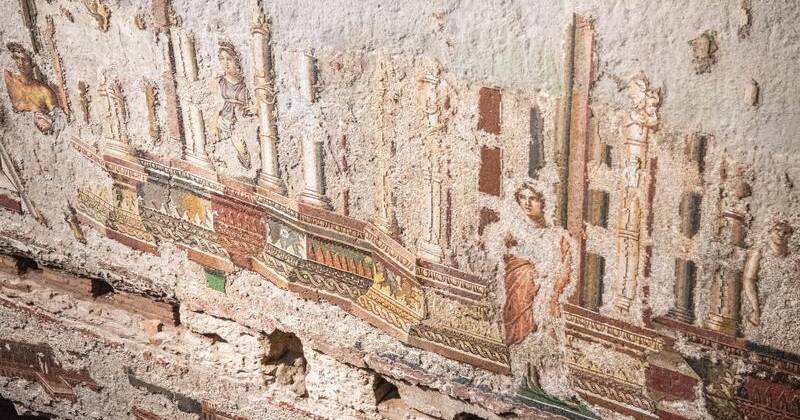
The Great Mosaic extends across four levels, with intricately decorated columns, architectural elements and figures; restoration also revealed previously overlooked lower sections depicting another port-city scene.
5
The restored fresco and mosaic are being presented as among the largest surviving ancient Roman examples of their kind, while cultural superintendent Claudio Parisi Presicce said the depicted city must have been particularly well known despite remaining unidentified.
Rome has opened what officials call the largest known fresco-mosaic complex from ancient times. Located beneath the Baths of Trajan near the Colosseum, the "Painted City" fresco and "Great Mosaic" date to around 100 A.D. Xinhua Perth Now The artworks depict a detailed harbor city with walls, towers, temples, and theaters — but historians still don't know which city it shows.
The restoration work is part of Rome's PNRR Caput Mundi initiative. Right now, visitors can only see the artworks in small groups while officials monitor humidity and other conditions. Dungo Chronicle This trial period will test whether the fragile 1,900-year-old works can handle regular public access before the site fully reopens.
A Lost City Buried Under Ancient Rome's Greatest Baths
The Baths of Trajan were the world's largest bath complex when Emperor Trajan dedicated them in 109 A.D. They covered about six hectares — roughly 15 acres. Examiner Workers discovered the fresco and mosaic deep underground in the 1990s while digging through the bath foundations. The artworks had been sealed away for nearly 2,000 years.
Rome's Mayor Robert Gualtieri called the discovery "truly unique in the world" for its artistic skill and historical value. Perth Now Cultural leaders believe the depicted city must have been famous and important, but they remain stumped about its identity. The fresco alone ranks among the largest surviving examples from ancient Rome.
Restoration Revealed Hidden Sections and Fresh Details
The Great Mosaic spans four levels. Restoration work uncovered sections that had been invisible for centuries. The Rural Below the main scene, workers found another port-city depiction that experts hadn't noticed before. The restored artworks now show intricate columns, architectural elements, and human figures in stunning detail.
The fresco shows a lively urban scene: ships, docks, buildings, and crowds. It reads like a snapshot of ancient maritime trade and city life. Dungo Chronicle Conservation work improved how visitors see these details while also protecting them from further damage. The project took years but restored both pieces to their original glory.
Small Groups Begin Viewing While Scientists Monitor Environmental Risks
The site is not yet open to crowds. Xinhua Officials are carefully tracking humidity, temperature, and air quality in the underground gallery. These conditions matter greatly for fragile 1st-century artworks. Any moisture or air shifts could damage what survived nearly 20 centuries underground.
Only small tours are allowed during this trial phase. Scientists will gather data on how visitors and natural conditions affect the fresco and mosaic. If monitoring shows the artworks stay stable, Rome will expand access to more visitors. The gradual opening balances public interest with preservation needs.
Sentiment
Mostly PositiveNEGATIVENEUTRALPOSITIVE
Publishers
21
Articles
227
Reach
248
A
AnonymousAuthor


