Korea's Stablecoin Leap
Kakao, Toss, and Circle Collaborate to Advance Korea's Digital Asset and Stablecoin Infrastructure
Anonymous
Key Points
1
Circle’s Chief Commercial Officer Kash Razzaghi highlighted Korea’s leadership in the global digital market and said the partnership aims to combine Circle’s global infrastructure with Kakao Group’s platform and financial services to drive innovation that aligns with regulatory requirements.
2
Toss and Toss Bank plan to test biometric authentication integrated with stablecoin-based payment systems and digital wallets as part of their collaboration with Circle.
3
The collaboration includes exploring on-chain programmable payments and USDC‑based financial instruments as part of Kakao and Toss’s digital asset initiatives.
4
Plans emphasize faster and more efficient payment and settlement flows, potential cross-border remittances, and greater interoperability between blockchain networks and existing financial systems, with a view to laying a foundation for stablecoin-based innovation led by Kakao.
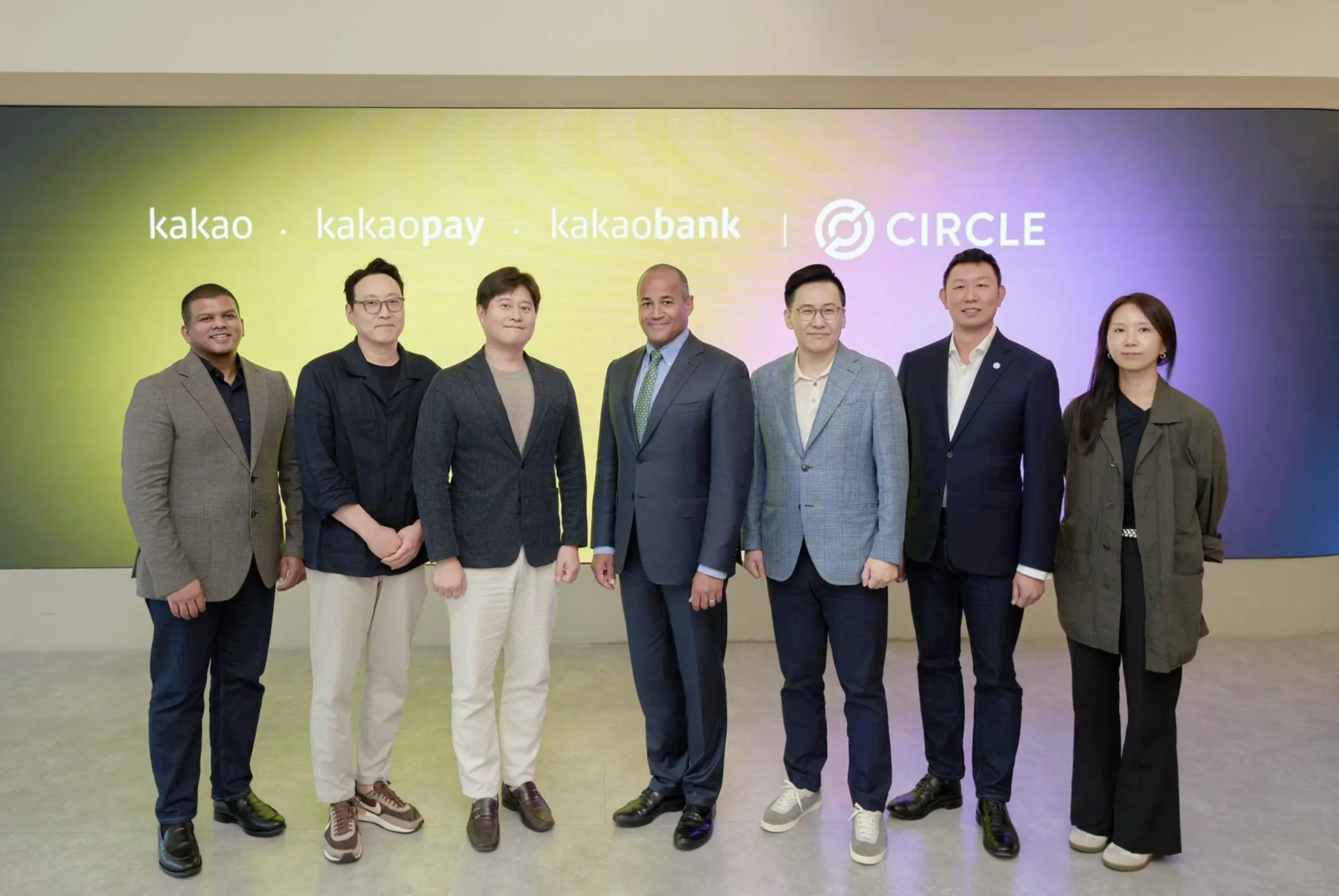
South Korea's biggest tech and fintech players are betting big on stablecoins. Kakao Group — the company behind KakaoTalk, KakaoPay, and KakaoBank — signed a memorandum of understanding with Circle Internet Group on July 23 to build blockchain-based payment infrastructure and explore a Korean won-backed stablecoin, according to Blooming Bit.
Toss and Toss Bank inked separate MOUs with Circle on the same day. The deals signal a coordinated push to reshape how money moves in Korea — from faster settlements to cross-border remittances — using Circle's USDC stablecoin as a foundation, Crypto Briefing reported.
Circle and Kakao Target a Won-Backed Stablecoin
The Kakao partnership is the headline deal. Kakao Corp., KakaoPay, and KakaoBank all signed on. The goal is to build a blockchain payment system and explore a stablecoin tied to the Korean won, according to Blooming Bit. A won stablecoin would give Korean users a digital currency pegged to local money — instead of the US dollar.
Circle will bring its global payment infrastructure and USDC technology to the table. Kakao brings scale. KakaoTalk alone has tens of millions of active users. Together, they plan to test on-chain programmable payments and USDC-based financial tools across Kakao's apps, Crypto Briefing reported.
Toss Bank Adds Biometric Payments to the Mix
Toss and Toss Bank are taking a different angle. Their MOU with Circle focuses on digital wallets and stablecoin-based payments — with a twist. The partners plan to test biometric authentication tied directly to stablecoin payment systems, according to Crypto Briefing. That means users could pay with a fingerprint or face scan, backed by blockchain rails.
Toss is already one of Korea's most popular fintech apps. Adding stablecoin payments and biometric tools could make it a test case for how everyday consumers interact with digital assets — without needing to understand blockchain at all.
Circle Eyes Korea as a Global Digital Market Leader
Circle's Chief Commercial Officer Kash Razzaghi was direct about why Korea matters. He said the country shows "leadership in the global digital market" and that the goal is to combine Circle's global infrastructure with Kakao's platform to "drive innovation that aligns with regulatory requirements," according to Value The Markets.
The deals are designed to work within Korea's evolving crypto rules — not around them. Plans include faster settlement flows, cross-border remittances, and better links between blockchain networks and existing bank systems, Value The Markets reported.
Why This Could Reshape Korea's Financial Plumbing
Industry observers call these MOUs a major step toward a Korean-style digital asset economy. If the partnerships move past the testing phase, stablecoin-based payments could reach millions of users through apps they already use daily — KakaoTalk, KakaoPay, and Toss, according to Blooming Bit.
The bigger picture: banks, fintechs, and tech giants in Korea are no longer watching stablecoins from a distance. They are now building the pipes. Whether a won-backed stablecoin clears regulatory hurdles will be the key test, but the groundwork is now being laid, Crypto Briefing noted.
Sentiment
Mostly PositiveNEGATIVENEUTRALPOSITIVE
Publishers
18
Articles
7
Reach
25
A
AnonymousAuthor


