Rubio's Manila Diplomacy
Rubio Attends ASEAN Meetings in Manila to Bolster U.S. Ties, Prepare for Trump-Xi Summit
Anonymous
Key Points
1
The Philippines, as ASEAN chair, will host the 59th Foreign Ministers' Meeting and the 50th commemoration of the Treaty of Amity and Cooperation, with events scheduled in Manila from July 19 to 24.
2
North Korea will not send its foreign minister to the ASEAN meetings in Manila this year.
3
Trilateral meetings are planned with Brazil, Norway, Switzerland and Turkey alongside the ASEAN events.
4
Iran's war is highlighted as impacting regional energy security, with about 80% of hydrocarbons passing through the Strait of Hormuz bound for Asia, and discussions at a Bangkok summit about a shared fuel reserve.
5
There has been no official confirmation of a Rubio–Wang Yi meeting yet; analysts expect a sideline discussion to prepare for a second Trump–Xi summit planned for late September.
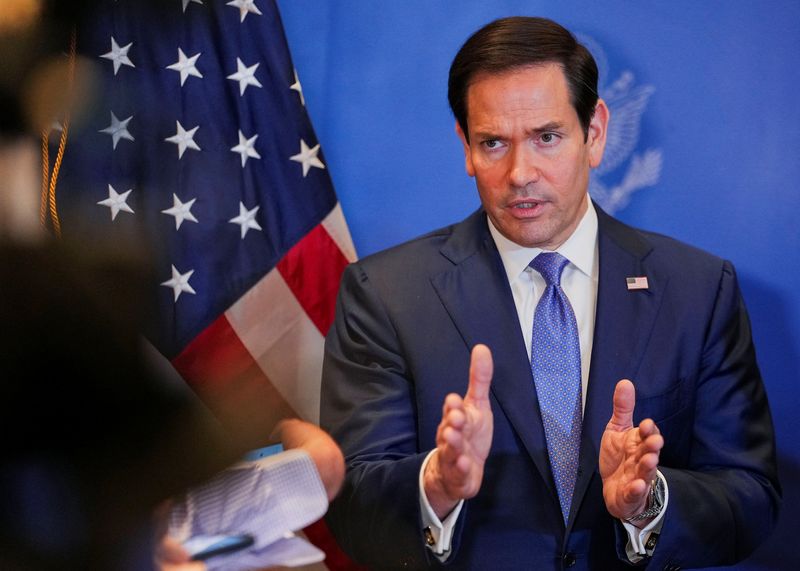
U.S. Secretary of State Marco Rubio is heading to Manila for a packed week of Asia-Pacific diplomacy, running from July 19 to 24. According to WKZO, he is expected to discuss a potential second summit between President Donald Trump and Chinese leader Xi Jinping, tentatively planned for late September.
The Philippines is chairing ASEAN this year and hosting three major gatherings: the 59th Foreign Ministers' Meeting, the East Asia Summit Foreign Ministers' Meeting, and the ASEAN Regional Forum. The events also mark the 50th anniversary of the Treaty of Amity and Cooperation, a foundational regional peace pact.
Rubio and Wang Yi Expected to Meet on the Sidelines
No meeting between Rubio and Chinese Foreign Minister Wang Yi has been officially confirmed yet. But analysts widely expect the two to hold sideline talks, according to RadioUSA. The goal would be to lay the groundwork for a Trump-Xi summit in late September — their second face-to-face meeting since Trump returned to office.
Russian Foreign Minister Sergei Lavrov will also attend the Manila meetings. Ministers from Japan, Australia, Canada, and the United Kingdom are also expected. The breadth of attendance signals how much is at stake in the region right now.
South China Sea and Myanmar Top the Security Agenda
Tensions in the South China Sea are a near-certain topic. The U.S. wants to push back against Beijing's growing influence in the region. The Manila meetings give Washington a platform to rally Indo-Pacific partners around a shared message, according to Q106FM.
Myanmar's ongoing crisis following the 2021 military coup is also expected to come up. ASEAN has long struggled to respond to the conflict there. The forum gives member states a chance to revisit their approach, though progress has been slow and contentious.
Energy Security Looms as Hormuz Disruptions Hit Asia Hard
Iran's war is adding pressure to the agenda. About 80% of hydrocarbons — oil and gas — that pass through the Strait of Hormuz are bound for Asia, according to WKZO. That makes any disruption there a direct threat to energy supplies across the region, including for ASEAN members.
A recent Bangkok summit raised the idea of a shared fuel reserve among regional nations. The goal would be to cushion the blow if Hormuz supplies get cut further. Energy security is now tightly linked to the broader security talks happening in Manila.
North Korea Skips Manila; Trilateral Talks Also Planned
North Korea will not send its foreign minister to the ASEAN meetings this year. Pyongyang's absence removes one flashpoint from the room but does not reduce the overall tension in the region. The Korean Peninsula remains a key concern for the U.S. and its allies.
On the margins, Rubio is also set to hold trilateral meetings with Brazil, Norway, Switzerland, and Turkey, according to Q106FM. These talks reflect the U.S. push to build wider coalitions beyond its traditional alliances, using the Manila forum as a springboard for broader diplomatic outreach.
Sentiment
Mostly PositiveNEGATIVENEUTRALPOSITIVE
Publishers
11
Articles
72
Reach
83
A
AnonymousAuthor


