New Vaccine Trial Begins
DRC Deploys 70,000 Vaccine Doses as Deadliest Ebola Outbreak Continues to Accelerate
Key Points
WHO Director-General Tedros Ghebreyesus described the Congo outbreak as 'remains a global emergency,' signaling the highest level of international concern and mobilization.
Experts say the Bundibugyo outbreak may have begun in Mongbwalu, a mining town in eastern Congo, with transmission dating back to February.
The outbreak is spreading roughly three times faster than the 2014-2016 West Africa outbreak, and the current case fatality rate is about 47.5%, rising to around 70% in hard-hit areas such as North Kivu.
The International Coordinating Group on Vaccine Provision has a target to deliver released doses within 10 days of approval, with Congo’s allocation of 70,000 doses (including 20,000 for a Phase 3 trial to test protection against Bundibugyo).
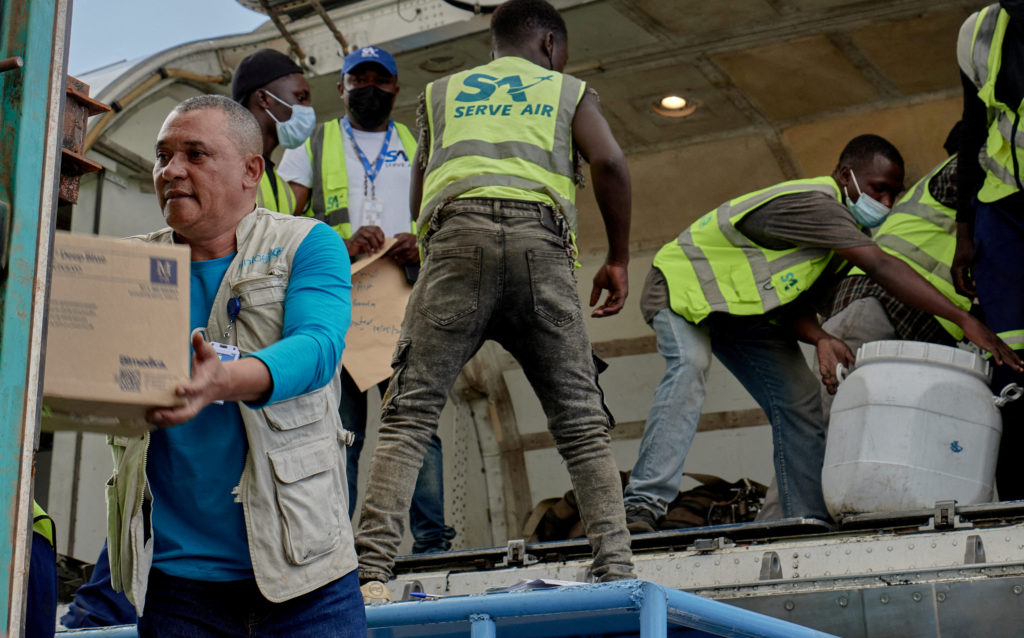
The Democratic Republic of the Congo will receive 70,000 doses of Merck's Ervebo Ebola vaccine to fight the country's deadliest and fastest-spreading outbreak on record, WHO and partners announced. The allocation comes as cases exceed 5,200 and deaths top 2,300 across six eastern provinces. However, the vaccine was designed for the Zaire strain, and the current outbreak is caused by the rare Bundibugyo virus—making this a high-stakes effort to test whether the vaccine works against an unproven target.
Of the 70,000 doses, 20,000 will support a Phase 3 clinical trial to measure protection against Bundibugyo, while 50,000 go to frontline health workers, PBS reported. The outbreak is spreading three times faster than the 2014–2016 West Africa epidemic, with a case fatality rate around 47.5%—rising to 70% in hard-hit areas like North Kivu. Gavi committed $13 million to the response, allocating $7 million for vaccine shipment and $6 million for field campaigns.
A Mining Town's Silent Beginning
Experts believe the Bundibugyo outbreak quietly began in Mongbwalu, a gold-mining town in northeastern Ituri Province, around January or February 2026. Early cases went undiagnosed because diagnostic tests were optimized for the Zaire strain. Symptoms mimicked malaria and seasonal flu, allowing the virus to spread undetected for weeks.
The DRC Ministry of Health officially confirmed Ebola on May 14 after the National Institute of Biomedical Research identified Bundibugyo virus in patient samples. Just two days later, WHO declared it a Public Health Emergency of International Concern. By mid-August, the virus had exploded across six provinces in the eastern DRC—a geographic footprint larger than any previous Ebola outbreak in the country's history.
Ervebo's Unproven Battle Against Bundibugyo
Ervebo is a proven winner against Zaire ebolavirus. It saved lives during previous DRC outbreaks and the West Africa epidemic. But Bundibugyo is different. The vaccine has never been tested in humans against this strain, though early laboratory and animal data hint at possible cross-protection.
That uncertainty is why 20,000 of the 70,000 doses will fuel a Phase 3 trial—a rigorous test to see if Ervebo actually protects against Bundibugyo. Gavi CEO Sania Nishtar warned that this is already the largest Ebola outbreak in DRC history and "could well become the largest outbreak ever." The remaining 50,000 doses will shield frontline health workers, over 160 of whom have already contracted the virus, with 40 confirmed dead.
Armed Conflict and Fragile Healthcare Stall Containment
The eastern DRC's active armed conflict, weak healthcare infrastructure, and massive population displacement have crippled outbreak control. Dense mining-related transit between towns fuels rapid transmission. Field responders from MSF say containment teams are "still not catching up" with the virus's velocity.
The crisis threatens far more than Ebola control. UNICEF reports that fear of infection has caused dangerous drops in childhood immunizations in outbreak hotspots, risking future preventable disease outbreaks. Restrictive quarantine protocols have devastated local livelihoods—fishermen on Lake Albert struggle to afford school supplies for their children. The International Coordinating Group on Vaccine Provision and partners including the Red Cross aim to deliver doses within 10 days of approval.
A Test Case for Future Ebola Variants
This outbreak marks a turning point in global Ebola response. If Ervebo proves effective against Bundibugyo, it could reshape biosecurity policies for future ebolavirus lineages. WHO Director-General Tedros Adhanom Ghebreyesus called the vaccine allocation "an important example of global solidarity in action," reaffirming commitments to rapid detection and surveillance.
Julien Harneis, the UN Senior Ebola Coordinator, highlighted the devastating toll on health workers bearing the outbreak's heaviest burden. Success hinges on speed: dose delivery, trial enrollment, and field vaccination must accelerate faster than transmission itself. With cases and deaths mounting daily, the next 10 days are critical.
Sentiment
Mostly PositivePublishers
26
Articles
108
Reach
134


