Innovation Across Indian Markets
Indian Entrepreneurs Pursue Practical Solutions Across AI, Workforce Skills, And Consumer Markets
Anonymous
Key Points
1
Athvik said he was motivated by seeing discarded business cards “on floors, at tables, at cafeterias, even in trash bins,” prompting him to question whether business networking was still operating as it did in 1995.
2
The World Economic Forum estimates that nearly 39% of workplace skills will be transformed by 2030, underscoring the urgency of AI and big-data training, according to IntelliBI Innovations.
3
Quess Corp’s India AI Workforce Report estimates the country has about 920,000 AI professionals, while demand could absorb nearly 1 million additional workers—an imbalance the article argues should be addressed through internal workforce development rather than only external hiring.
4
The technology companies highlighted are increasingly hiring based on demonstrated work: nearly six in 10 new technology roles at India’s most advanced employers reportedly go to candidates who can show applied AI, cybersecurity or platform-engineering experience, rather than relying primarily on degrees or previous employer brands.
5
The Sweet Change’s formulation contains 30% monk fruit together with prebiotic guar fibre and allulose, while its liquid drops use monk-fruit extract, purified water and vitamin C and avoid erythritol.
Indian entrepreneurs are tackling everyday problems across digital networking, workforce development, and consumer health. An 11-year-old pitched a digital business card replacement on a reality show, while technology companies are racing to build AI talent pipelines and a new startup is reimagining how Indians sweeten their food—all reflecting how innovation responds to real market needs.
These ventures highlight India's entrepreneurial breadth: from Gen Z founders spotting inefficiencies in 30-year-old networking practices, to companies addressing a projected 920,000-person AI skills gap, to health-focused innovators offering familiar tastes through new ingredients CXO Today.
An 11-Year-Old's Vision for Digital Networking
Athvik Amith Kumar, just 11 years old, appeared on an Amazon Prime Video reality show seeking Rs 2 crore ($240,000 USD) to fund ZOZOconnect. His startup replaces physical business cards with a digital networking platform. Athvik noticed business cards discarded "on floors, at tables, at cafeterias, even in trash bins," and questioned why networking still worked like it did in 1995 Indian Startup Times.
The pitch reflects a broader trend: young founders spotting inefficiencies in everyday practices. ZOZOconnect targets professionals who switch jobs frequently and want frictionless contact sharing. At a Rs 25 crore ($3 million) valuation, the startup is betting that digital-first networking will eventually replace paper cards entirely.
India's Growing AI Skills Gap Demands Internal Reskilling
India has roughly 920,000 AI professionals today, but demand could absorb nearly 1 million more workers, according to CXO Today. The World Economic Forum estimates nearly 39% of all workplace skills will transform by 2030. This gap is forcing Indian tech companies to rethink hiring: instead of recruiting externally, they're investing in reskilling existing staff CXO Today.
IntelliBI Innovations and other analysts argue AI education must focus on hands-on learning, real-world projects, and job readiness—not just theory. Nearly six in 10 new tech roles at India's most advanced employers now go to candidates showing applied AI or platform-engineering experience, not just degrees CXO Today. Companies are launching AI academies and career-transition programs to upskill workers from legacy roles into data engineering and AI positions.
The Sweet Change Targets India's Sugar Consumption With Monk Fruit
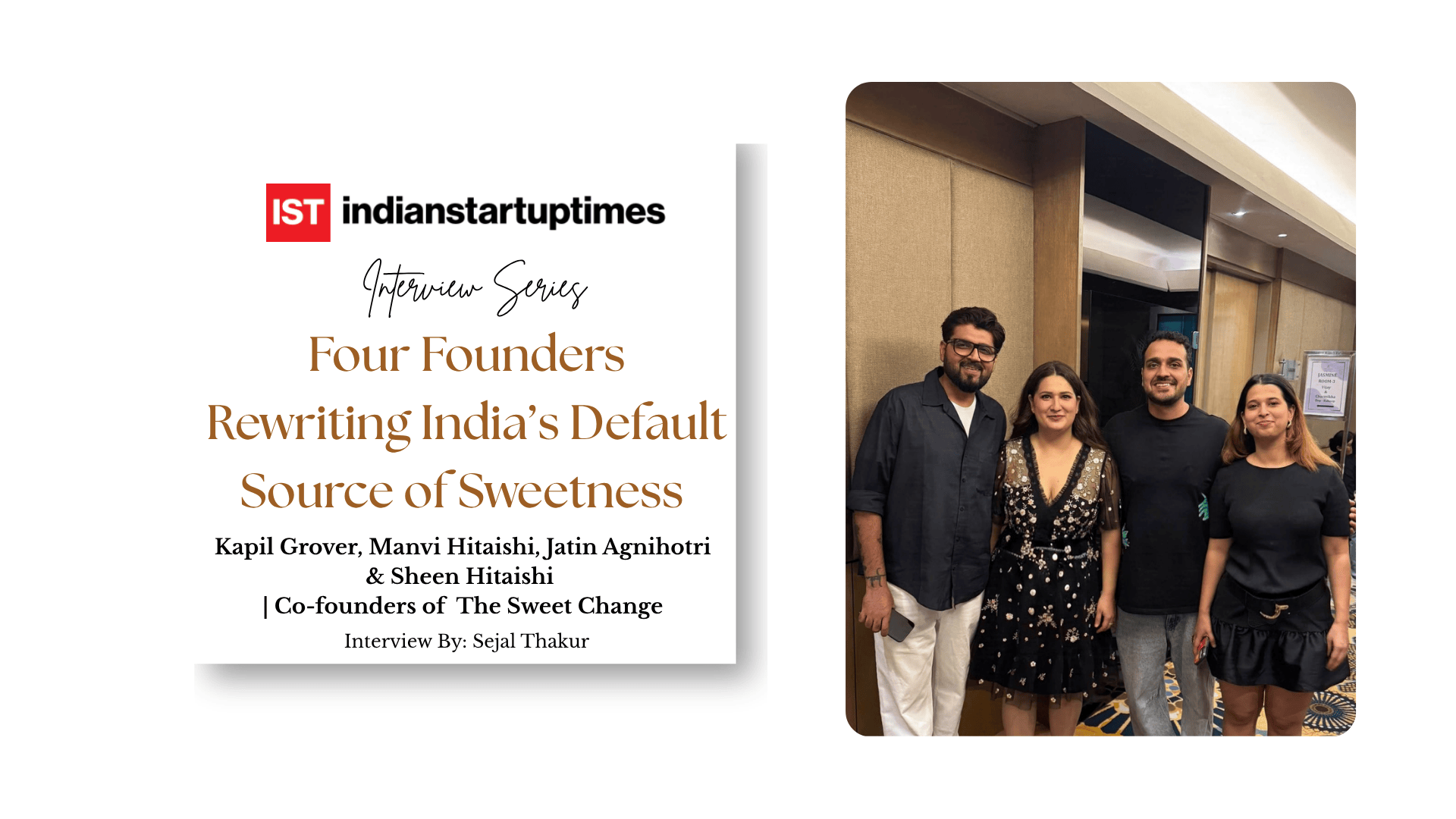
The Sweet Change, founded by clinical nutritionist Manvi Agnihotri and three co-founders, is developing monk-fruit-based products to help Indians reduce sugar without abandoning familiar sweet tastes and rituals Indian Startup Times. The formulation combines 30% monk fruit with prebiotic guar fiber and allulose. Liquid drops use monk-fruit extract, purified water, and vitamin C, deliberately excluding erythritol Indian Startup Times.
The startup addresses a cultural insight: Indians have deep ties to sweets in daily life. Rather than asking consumers to eliminate sweetness, The Sweet Change offers a healthier swap. This approach reflects how successful Indian startups identify behavior shifts—not behavior elimination—that resonate with local consumers.
Sentiment
Mostly PositiveNEGATIVENEUTRALPOSITIVE
Publishers
16
Articles
1
Reach
17
A
AnonymousAuthor


