AI Infrastructure Boom
U.S. Investment in Artificial Intelligence Infrastructure Surpasses Residential Housing
Anonymous
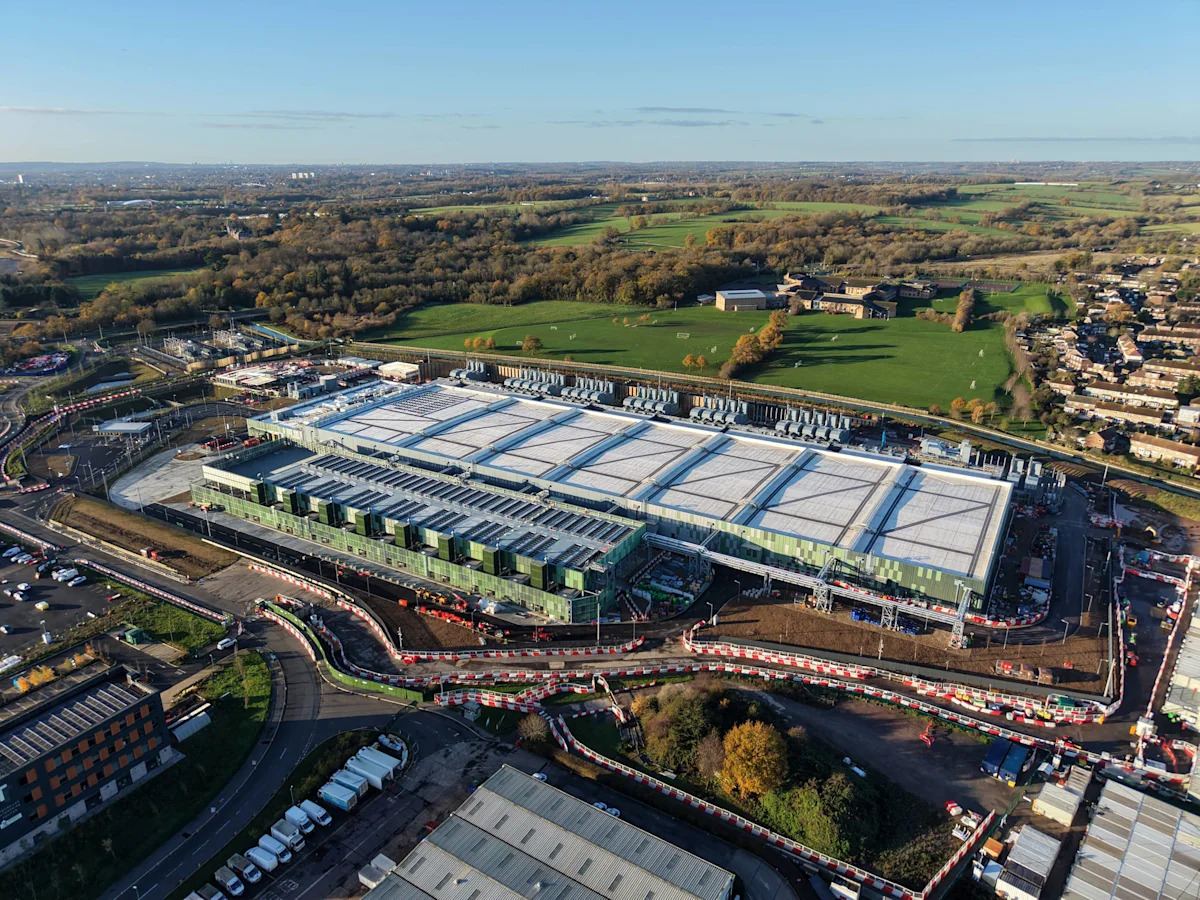
U.S. investment in information-processing equipment, including data centers and computer hardware, surpassed residential housing investment in the second quarter of 2026, reaching $752 billion versus $748 billion. The shift reflects an AI infrastructure boom led by Alphabet, Amazon, Microsoft, Meta, Oracle and SpaceX, whose combined capital spending is projected to exceed $1.3 trillion in 2027. Housing investment has weakened under elevated borrowing costs, while AI spending has remained comparatively resilient, although hyperscalers are increasingly turning to debt as cash reserves decline and some are expected to post negative free cash flow. Economists and credit analysts warn that the pace and financing needs of the buildout could create risks reminiscent of earlier asset bubbles if projected returns fail to materialize. The trend extends beyond the United States, with 59% of surveyed Asia-Pacific companies expecting to increase AI investment by more than 25% in 2026, though markets differ in their ability to convert spending into measurable business results and in their concerns about infrastructure and regulatory compliance.
Key Points
1
Information-processing equipment investment has risen 51% over five years, while residential fixed investment has fallen 18% from its early-2021 peak, underscoring the scale of the shift rather than merely a one-quarter crossover.
2
Data-center capital expenditure is projected to increase from 1.4% of U.S. GDP in 2025 to 3.1% in 2027. Apollo Chief Economist Torsten Slok said, “The AI cycle is building at close to twice the pace of the housing boom at its fastest.”
3
S&P Global expects all six major hyperscalers to generate negative free operating cash flow in 2026 and 2027, with a recovery not projected until 2029.
4
The Asia-Pacific survey found that Australia is ahead of the regional average in converting AI into returns: 33% of organizations reported realizing AI return on investment, compared with 16% across APAC, while 47% had real-time AI deployed versus 36% regionally.
5
Japan places greater emphasis on compliance than the broader APAC region: 30% of respondents ranked compliance with AI and data-privacy rules as the top requirement for an AI strategy, compared with 18% across APAC; 22% also ranked regulatory compliance as the leading consideration when choosing where to host AI workloads, versus 12% regionally.
Sentiment
Mostly NegativeNEGATIVENEUTRALPOSITIVE
Publishers
32
Articles
205
Reach
237
A
AnonymousAuthor